Self Loading Concrete Mixer Operation Guide
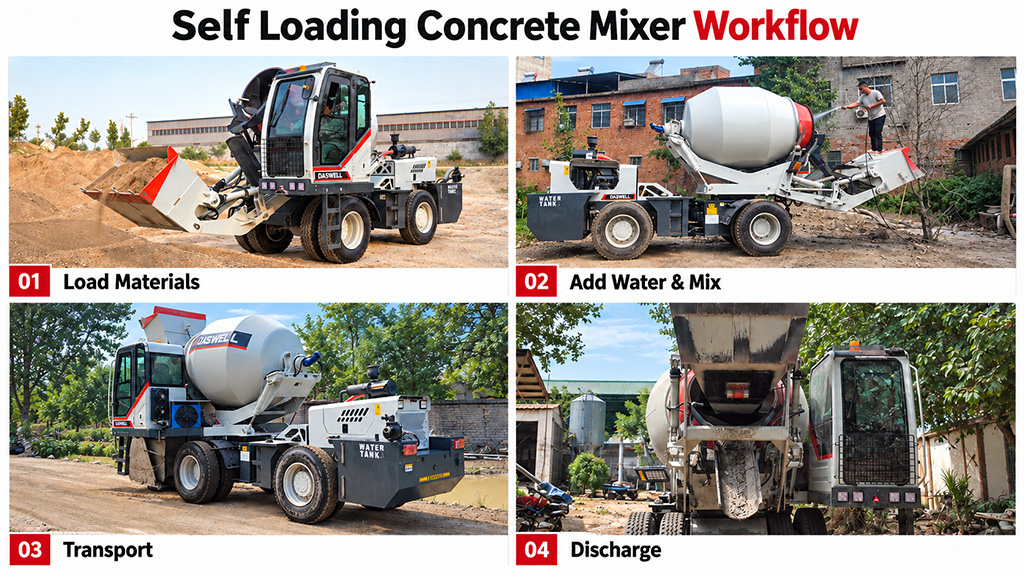
A self loading concrete mixer combines loading, weighing, mixing, transporting, and discharging in one machine. Its basic working process is: loading – mixing – transporting – discharging.
Beginners can also learn to operate the machine quickly after simple training and hands-on practice.
What Is a Self Loading Concrete Mixer Actually Used For?
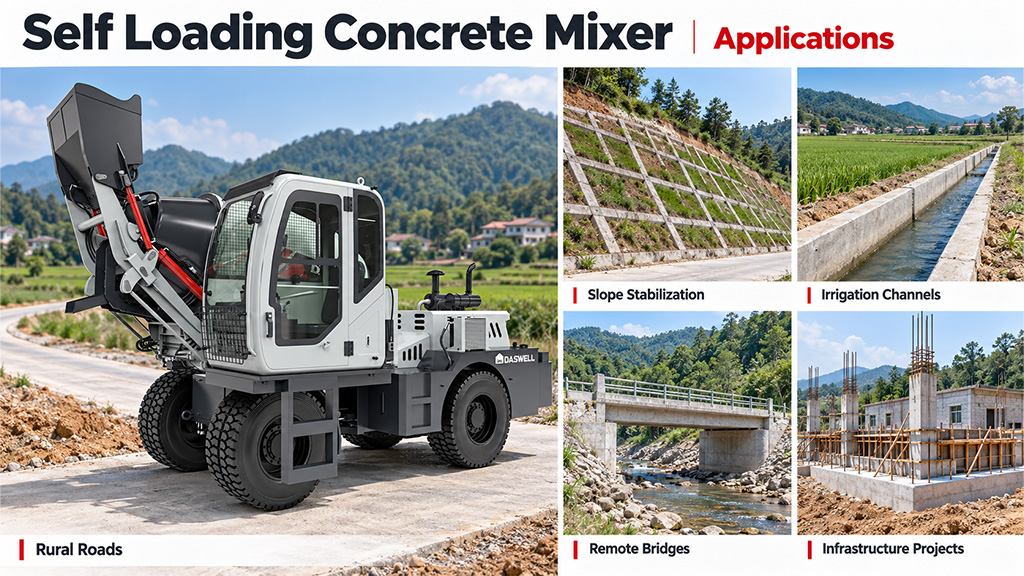
A self loading concrete mixer combines several functions in one machine. It is equipped with a hydraulic loading bucket for loading materials by itself. An onboard weighing system helps control the amount of raw materials. The mixing drum mixes the concrete. The vehicle itself can also transport the concrete and discharge it directly after reaching the construction site.
Self loading concrete mixers are commonly used for rural roads, slope reinforcement, irrigation canals, bridges in remote areas, and small to medium-sized infrastructure projects.
These projects are often far from a fixed concrete batching plant, or their construction sites are widely scattered. If several separate machines are used in the traditional way, transportation and scheduling costs can be relatively high. A self loading concrete mixer can produce and transport concrete directly on site.
Checks Before Operating a Self Loading Concrete Mixer
- Make sure the diesel fuel, hydraulic oil, and coolant are sufficient and within the normal level range.
- Inspect the tire pressure and wear. The machine often operates on uneven or gravel roads, so incorrect tire pressure can accelerate tire wear.
- Remove any foreign objects around the loading hopper and bucket, and check the bucket edge for visible deformation or damage.
- Confirm that there is enough water in the tank, and inspect the water pump and pipelines for leaks.
- Look inside the mixing drum for any concrete residue left from the previous operation.
- Make sure the braking and steering systems are working properly.
- Confirm that the dashboard instruments and electronic weighing display in the cab are functioning normally.
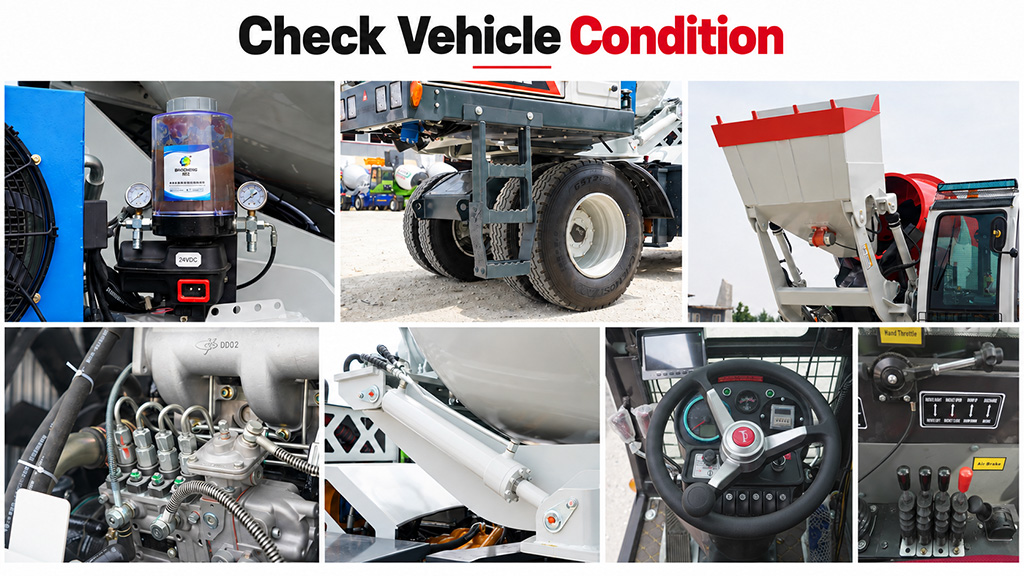
Developing the habit of checking the machine before work is more important than troubleshooting after a failure occurs.
Step-by-Step Self Loading Concrete Mixer Operation
Step 1: Loading
A self loading concrete mixer is equipped with a hydraulic loading bucket, which can load sand, aggregate, and other raw materials by itself without an additional loader.
Some models are equipped with an electronic weighing or measuring system. During loading, try to keep the material pile relatively level.
Step 2: Add Water and Start Mixing
After the raw materials are loaded into the mixing drum, an appropriate amount of water should be added according to the concrete mix design. Some machines can control the amount of water through an onboard water supply system.
After adding water, start the mixing drum to mix the materials.
The operator should control the mixing time according to the mix design, material conditions, and actual mixing performance.
Step 3: Transport the Concrete to the Pouring Point
After batching and mixing are completed, the machine can drive directly to the pouring location. There is no need to transfer the concrete to another transport vehicle. For projects with scattered construction locations or sites far from a fixed batching plant, this method can reduce intermediate transfer procedures.
During transportation, the mixing drum should normally keep rotating at an appropriate speed to help reduce segregation and changes in concrete consistency.
A self loading concrete mixer is mainly designed for on-site concrete production and short-distance transportation within the project area.
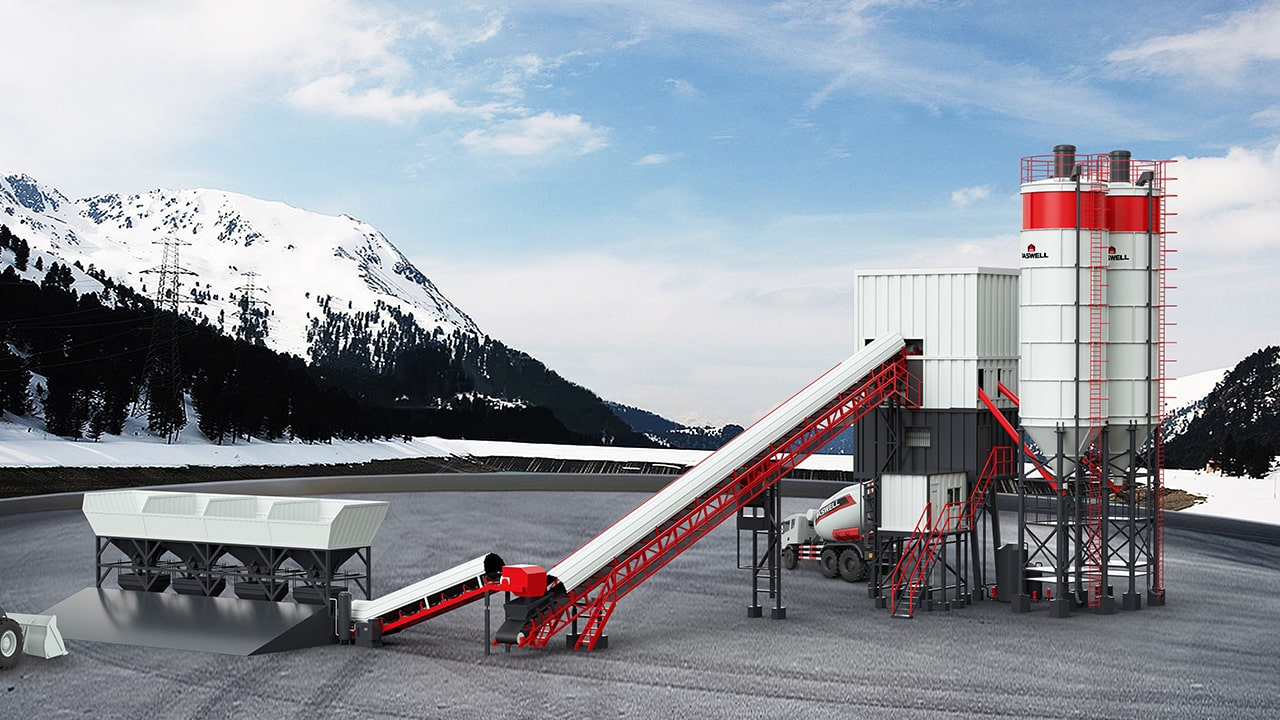
For projects where concrete needs to be produced directly at the jobsite, Daswell also provides an on-site concrete mixing solution based on self loading concrete mixers.
Step 4: Discharging
Some self loading concrete mixer models feature a rotating mixing drum or multi-angle discharge design. This is useful on construction sites with limited space because it can reduce the need to reposition the machine repeatedly.
The discharge speed should be controlled according to actual site conditions. If the concrete is discharged too quickly, it can accumulate in one place and affect the construction workflow.
Common Mistakes Made by Beginners
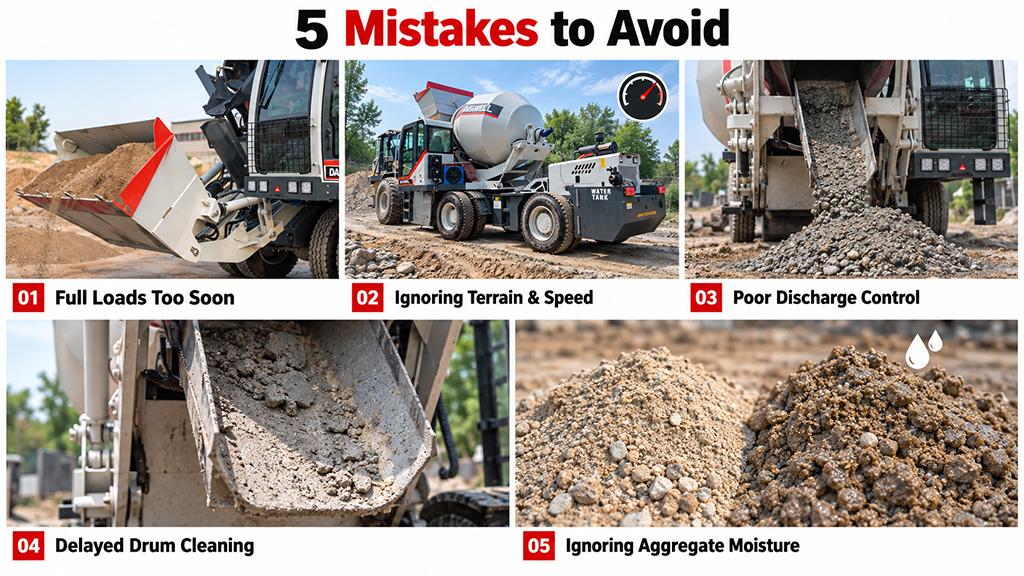
◇ Starting with a full load before becoming familiar with the machine.
◇ Ignoring terrain limitations and only focusing on driving speed.
◇ Failing to control the discharge speed properly.
◇ Not cleaning the mixing drum promptly after operation.
◇ Ignoring changes in aggregate moisture content.
Daily Self Loading Concrete Mixer Maintenance
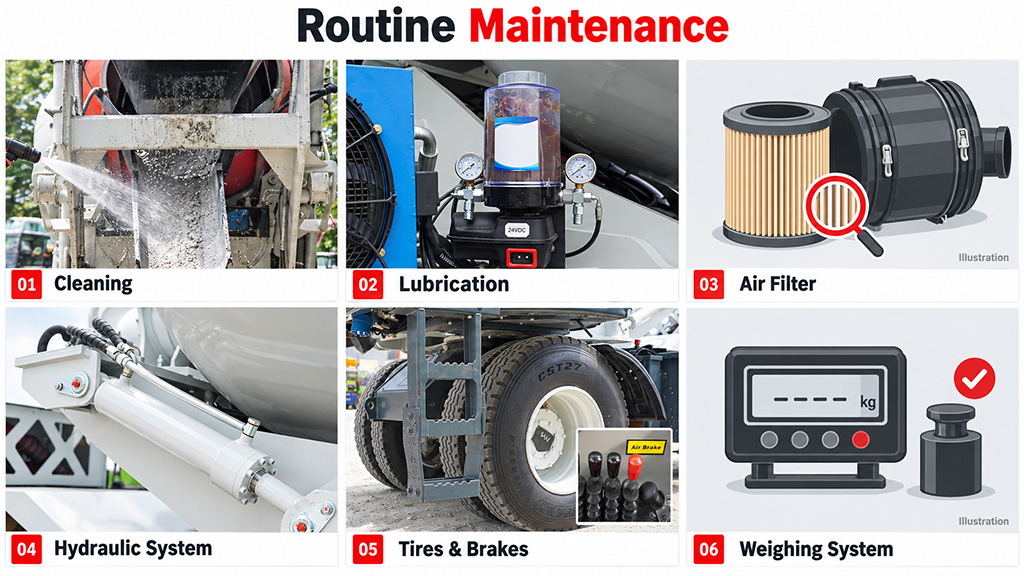
- Clean the mixing drum, bucket, and discharge area after each operation to prevent concrete residue from hardening.
- Regularly inspect and lubricate rotating and connecting parts, especially the bucket mechanism, articulated joints, and other components that require lubrication.
- Check the air filter. Construction sites are usually dusty, and a clogged filter can affect normal engine air intake.
- Pay attention to the operating condition and oil temperature of the hydraulic system. During long periods of continuous operation, check whether the hydraulic system shows any abnormal temperature rise.
- Check the tires and braking system. If abnormal tire wear, insufficient tire pressure, or braking problems are found, they should be handled promptly.
- Regularly check the weighing system. After long-term use, confirm that the weighing and measuring system remains accurate to avoid affecting concrete batching.
Proper daily maintenance can reduce equipment failures and downtime. It can also help extend the service life of the self loading concrete mixer.
How to Choose the Right Self Loading Concrete Mixer for Your Project
First, How Much Concrete Does Your Project Need Each Day?
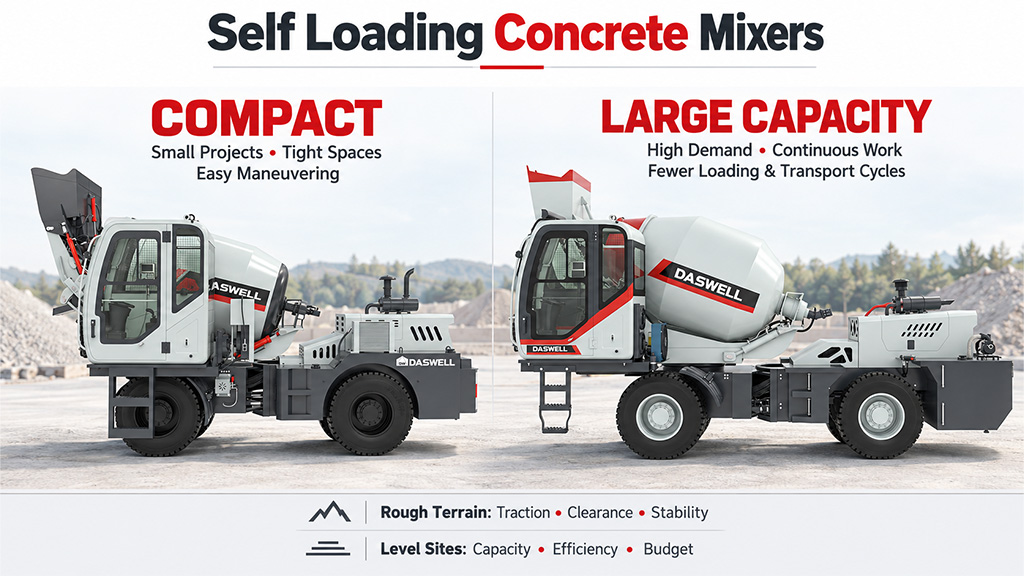
For rural construction, small building projects, road repairs, or scattered concrete work, a smaller-capacity model can be selected.
Smaller machines have a relatively compact body and better maneuverability. They are also more suitable for projects with limited working space.
If the project requires a larger amount of concrete or continuous construction, a larger-capacity model can be considered to reduce repeated loading and transportation.
Second, What Are the Terrain Conditions at the Jobsite?
Mountainous areas, slopes, muddy roads, or soft construction sites place higher requirements on the drive system, ground clearance, and overall mobility of the machine.
If the road conditions at the jobsite are complicated, vehicle mobility and stability should be given more attention.
If the construction site is relatively flat, you can focus more on balancing capacity, working efficiency, and purchase budget.
Contact Us
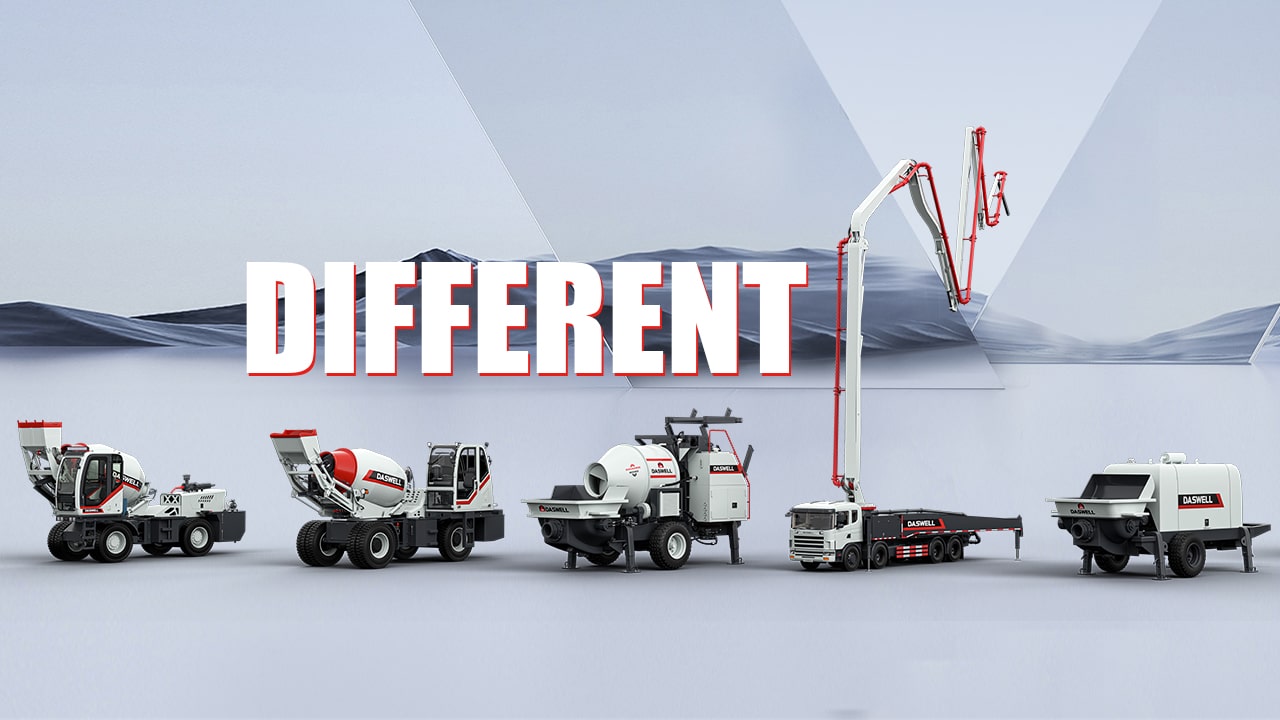
Daswell provides self loading concrete mixers in different capacities and configurations. They can be used for rural construction, road construction, water conservancy projects, and other small to medium-sized infrastructure projects.
If you want to know more about specific models, specifications, configurations, or self loading concrete mixer prices, please contact Daswell.
Share your required concrete output, jobsite conditions, and road conditions with us. Daswell Group will recommend a suitable machine for your project.