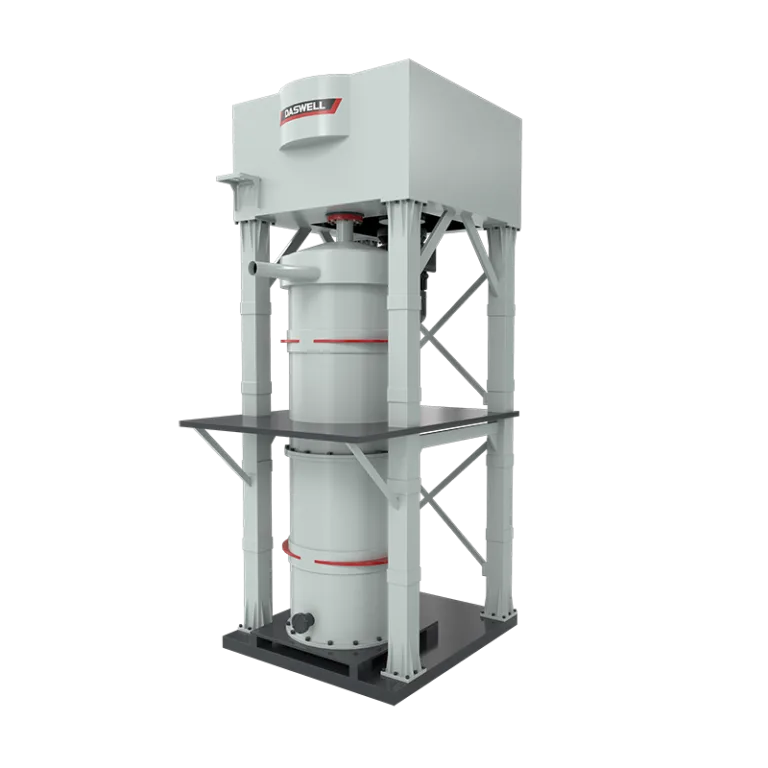
Wet Grinding Mill
Wet grinding mill is a large, continuous wet grinding machine designed for the production of ultrafine non-metallic mineral slurries. It is mainly used for the fine and ultrafine grinding of ground calcium carbonate, talc, kaolin, quartz, barite, and other minerals.
Daswell can supply a single wet grinding mill, auxiliary equipment, or a complete wet grinding production line.
What Is a Wet Grinding Mill?
A wet grinding mill is a continuous grinding machine that mixes mineral materials with water and dispersants to form a slurry. Grinding media inside the grinding chamber generate impact, shear, and friction forces, gradually reducing the mineral particles to the required size.
Compared with dry grinding equipment such as Raymond mills and ring roller mills, wet grinding is more suitable when:
- The final product will be used directly as a slurry;
- A high proportion of particles below 2 μm is required;
- Better slurry dispersion and particle size distribution are needed;
- The material tends to agglomerate during dry ultrafine grinding;
- Downstream processes require direct coating, mixing, or slurry formulation.
If the final product is a dry powder and dry grinding equipment can economically achieve the required fineness, a dry grinding process normally has a shorter flow and does not require dewatering or drying.
If the product will be used directly as a slurry, or if a high proportion of ultrafine particles is required, a wet grinding process may offer better performance. The final choice should consider the material properties, target particle size, required capacity, final product form, and downstream drying cost.
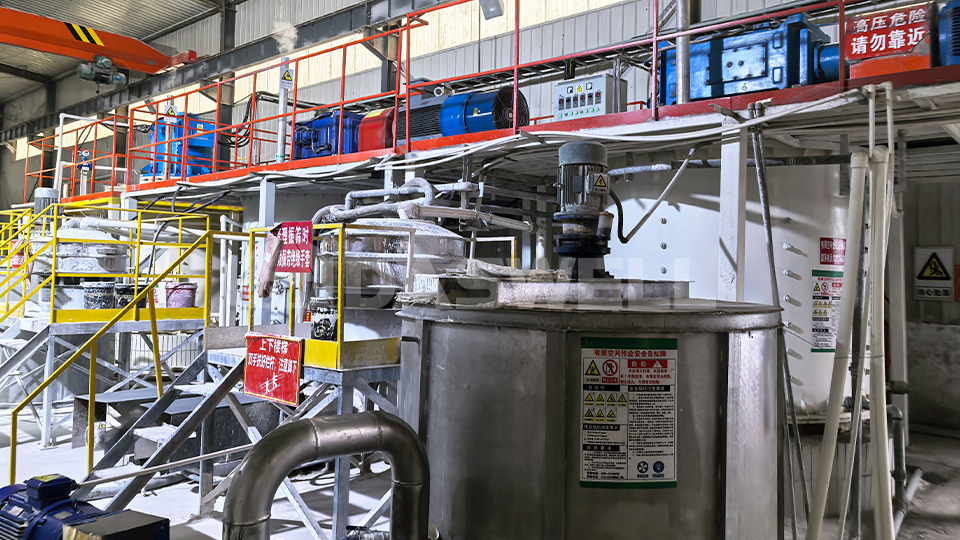
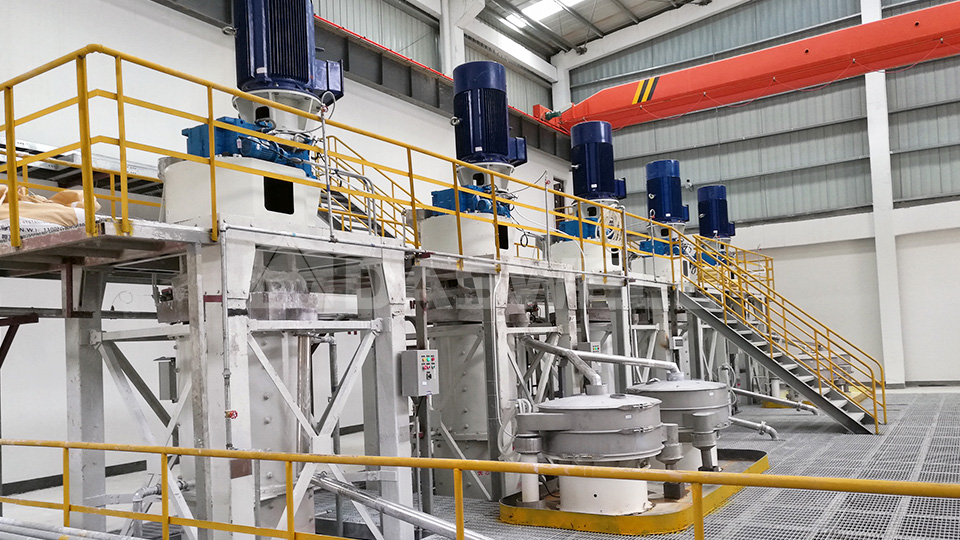
Materials & Applications for Ultrafine Wet Grinding
The Daswell wet grinding mill can be used for the fine and ultrafine grinding of various non-metallic minerals. The equipment configuration should be selected according to the material hardness, abrasiveness, purity requirements, and target particle size.
| Material | Typical Applications | Configuration Considerations |
|---|---|---|
| Ground Calcium Carbonate (GCC) | Paper coating, paints and coatings, plastic fillers, and rubber fillers | Control of particles below 2 μm, product whiteness, and slurry solids content |
| Quartz | Glass, ceramics, coatings, and industrial fillers | High hardness and abrasiveness require enhanced wear protection |
| Talc | Coatings, plastics, papermaking, and ceramics | Balance between fineness, lamellar structure, and slurry flowability |
| Kaolin | Paper coating, ceramics, rubber fillers, and plastic fillers | Control of whiteness, dispersion, and impurities |
| Barite | Drilling fluids, coatings, and industrial fillers | Configuration based on material density, target fineness, and slurry stability |
| Zeolite | Environmental materials, adsorbent materials, and industrial fillers | Actual capacity depends on the material structure and hardness |
| Soapstone | Fillers for plastics, coatings, and ceramics | Product fineness and slurry solids content can be adjusted for different applications |
| Magnesium Hydroxide | Flame-retardant materials and functional fillers | Suitable grinding media and liners are required when purity and contamination control are important |
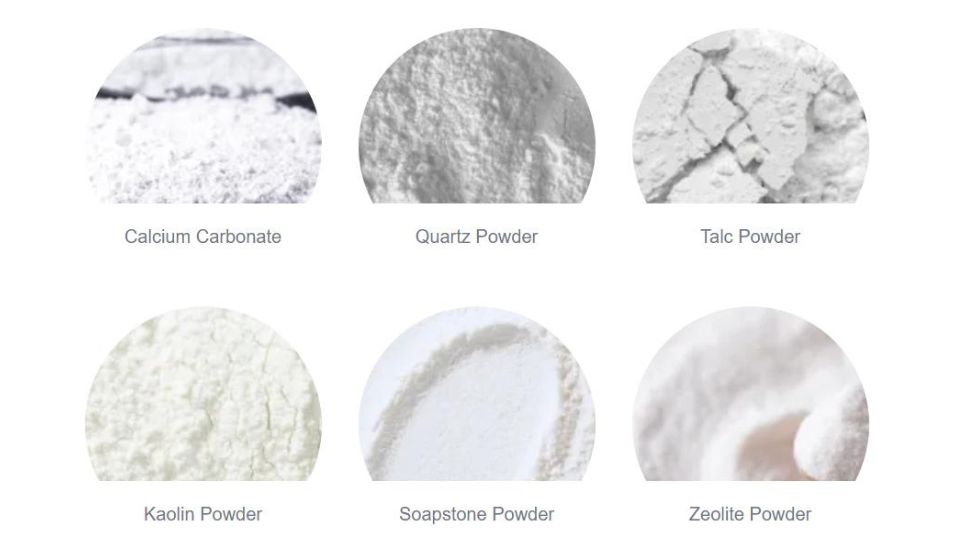
The achievable fineness, production capacity, power consumption, and grinding media consumption vary with different materials. Final equipment specifications and operating parameters should be determined according to the actual material and project requirements.
Wet Grinding Mill Process Flow & Technical Specifications
Process Flow:
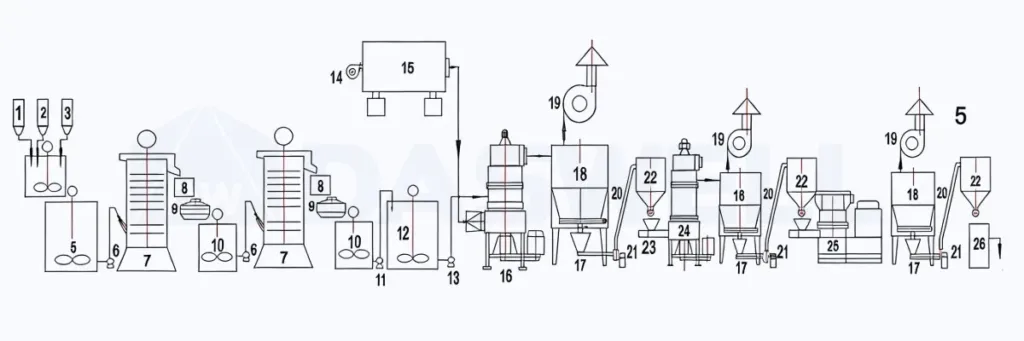
(1. Coarse Powder Silo; 2. Water Supply; 3. Dispersant Dosing System; 4. Slurry Mixing Tank; 5. Buffer Tank; 6. Diaphragm Pump; 7. VGM1600 Large Ultrafine Wet Grinding Mill; 8. Intermediate Tank; 9. Grinding Media Separation Screen; 10. Inspection Tank; 11. Transfer Pump; 12. Slurry Storage Tank; 13. Screw Pump; 14. Burner; 15. Hot Air Generator; 16. Coal Pulverizer; 17. Feeding Hopper; 18. Pulse Jet Bag Dust Collector; 19. Induced Draft Fan; 20. Ducting / Pipeline; 21. Centrifugal Fan; 22. Material Silo; 23. Discharge Device; 24. Continuous Surface Coating Machine; 25. Powder Disperser; 26. Automatic Packing Scale.)
Technical Specifications:
| Item | Reference Range |
| Feed Size | ≤ 5 mm, depending on the material |
| Adjustable Product Fineness | D50: approximately 1–10 μm, depending on the material and operating conditions |
| Typical Ultrafine Specification | D60 ≤ 2 μm |
| Slurry Solids Content | Approximately 30%–75% |
| Total Installed Power | Approximately 90–560 kW |
| Single-Machine Throughput | Approximately 2.0–5.0 t/h on a dry-solids basis |
| Grinding Media | Ceramic or alloy steel |
| Control Mode | Manual, semi-automatic, or PLC-based automatic control |
| Cooling System | Optional water-cooled jacket |
Final wet grinding mill specifications should be determined according to the material hardness, abrasiveness, feed size, slurry solids content, and target fineness.
For projects requiring a higher capacity, multiple wet grinding mills can be installed in parallel. The total production line capacity should be calculated according to the number of machines, material properties, and the capacity of the upstream and downstream systems.
Advantages of the Daswell Wet Grinding Mill
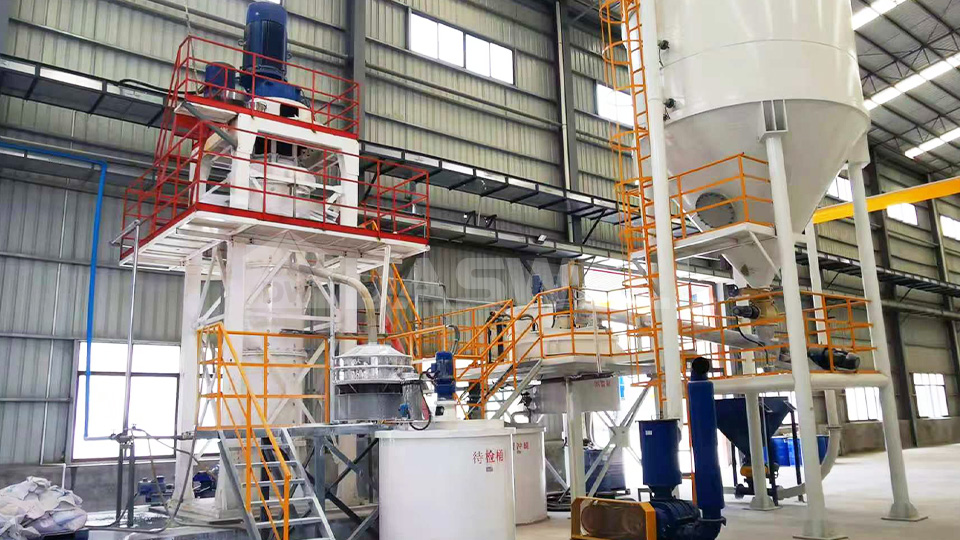
- Under suitable material and operating conditions, the Daswell wet grinding mill can achieve a typical fineness of D60 ≤ 2 μm. The liquid medium helps disperse fine particles and reduce re-agglomeration, supporting a stable particle size distribution and consistent slurry quality.
- The optimized rotor, grinding chamber, and grinding media distribution improve energy transfer during ultrafine grinding. Under reference conditions, specific energy consumption is approximately 40–45 kWh per tonne of dry solids. Actual consumption depends on the material, feed size, target fineness, and operating parameters.
- After grinding, the finished mineral slurry can be transferred directly to storage, formulation, or downstream applications such as paper coating and paint production. When dry powder is not required, this can avoid separate drying and redispersion stages.
- Slurry preparation, wet grinding, storage, drying, optional classification, surface modification, and packaging can be integrated into a continuous production system. PLC-based control options help maintain stable operation, simplify process monitoring, and reduce manual handling.
- The compact vertical configuration requires relatively little floor space and can operate as a standalone mill or with multiple units installed in parallel. This makes it easier to expand production capacity and adapt the system to different plant layouts.
- Grinding media, liners, and other product-contact components can be selected according to material hardness, abrasiveness, whiteness, and purity requirements. A suitable wear-resistant configuration helps extend service life, limit contamination, and maintain stable grinding performance.
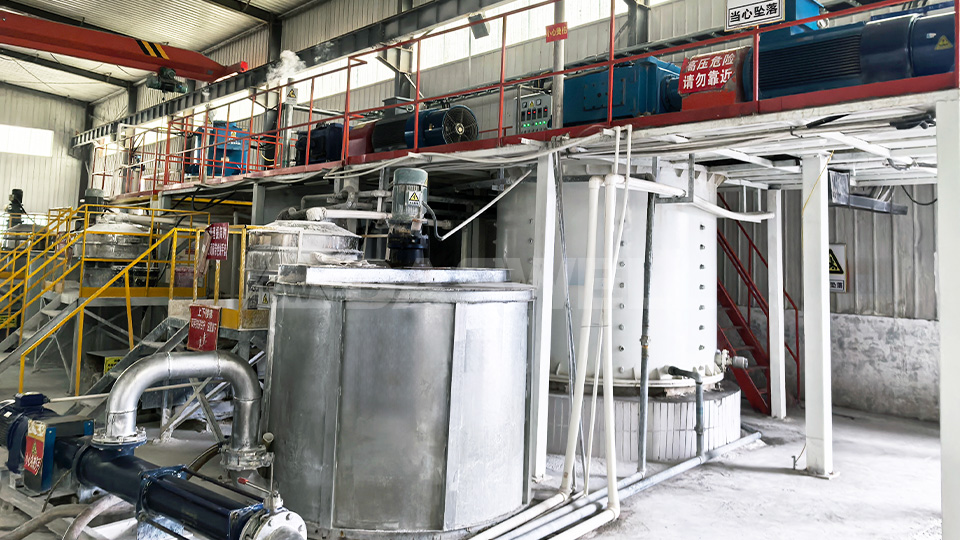
Contact Daswell for a Wet Grinding Mill Solution
Tell us your material, target fineness, required capacity, and final product form—slurry or dry powder. Daswell engineers will recommend a suitable wet grinding mill and production line configuration for your project. Contact us today for wet grinding equipment selection support and a quotation.