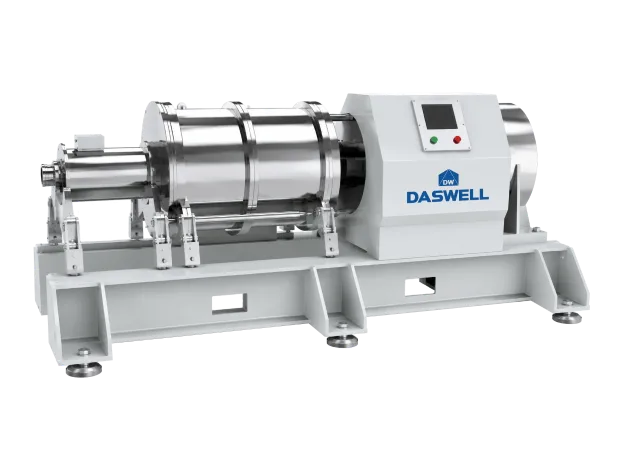
Bead Mill
A bead mill, also known as a sand mill, is a continuous wet grinding and dispersion machine widely used for mineral slurries, coatings, inks, advanced ceramics, battery materials, pigments, and specialty chemicals.
As a bead mill manufacturer and wet grinding solution supplier in China, Daswell Powder can provide individual machines and customized bead mill production systems for customers worldwide.
What Is a Bead Mill?
A bead mill is a wet grinding machine that uses small grinding media to reduce particle size and improve slurry dispersion.
Daswell bead mill focuses on fine particle grinding, deagglomeration, and high-quality dispersion. Depending on the selected model, material properties, grinding media, and process conditions, it can support applications ranging from micron-scale grinding to nano-scale dispersion.
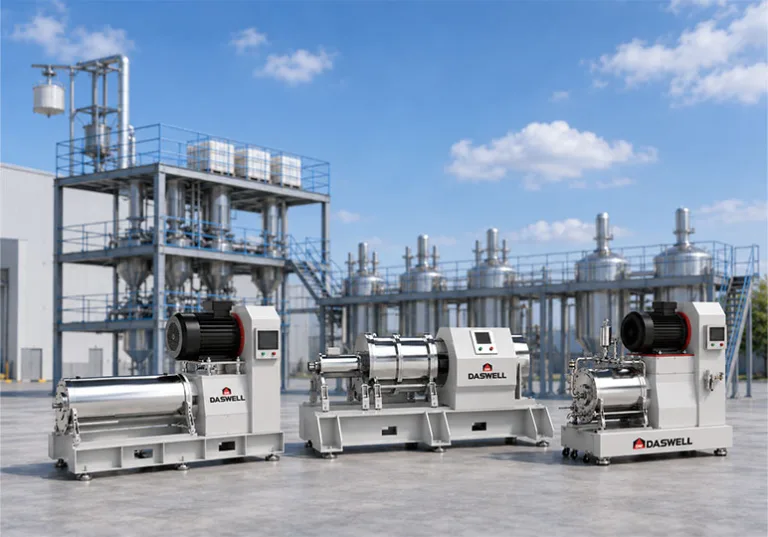
How Does a Wet Grinding Bead Mill Work?
A typical bead mill process includes three main stages:
Step 1. Slurry Premixing and Predispersion
The solid material, liquid carrier, and required additives are first mixed in a high-speed disperser or mixing tank.
This stage forms a pumpable slurry and breaks down large, loosely bonded agglomerates before the material enters the bead mill. Proper predispersion can improve grinding efficiency and reduce unnecessary energy consumption in the grinding chamber.
Step 2. Wet Grinding and Dispersion
The premixed slurry is pumped into the grinding chamber, where a high-speed rotor drives the grinding media to generate impact, shear, and friction.
As the slurry circulates, coarse particles and agglomerates are gradually reduced. A cooling jacket removes grinding heat and controls slurry temperature, helping maintain viscosity, dispersion stability, media life, and final product quality.
Step 3. Grinding Media Separation and Slurry Discharge
After grinding, the slurry passes through a media separation system. The grinding media remain inside the chamber, while the finished slurry is continuously discharged.
The system may use a screen, gap separator, or centrifugal separator. This closed process helps maintain stable operation and consistent slurry quality.
Bead Mill Materials and Industrial Applications
Daswell industrial bead mills can be configured for different materials, viscosities, fineness requirements, and contamination-control standards.
| Material Category | Representative Materials | Typical Applications |
|---|---|---|
| Ceramic materials | Alumina, zirconia, zirconium silicate, silicon carbide, electronic ceramic powders | Electronic ceramics, structural ceramics, precision ceramic components |
| Battery materials | Lithium iron phosphate, graphite, conductive carbon black, silicon-based anode materials | Cathode slurry, anode slurry, conductive slurry, separator slurry |
| Coatings and inks | Water-based coatings, solvent-based coatings, architectural coatings, printing inks, UV inks, color pastes | Pigment dispersion, coating production, ink and color paste manufacturing |
| Pigments and fillers | Titanium dioxide, carbon black, iron oxide pigments, organic and inorganic pigments | Pigment production, color paste manufacturing, functional filler processing |
| Specialty chemicals | Agrochemicals, dyes, catalysts, functional nanomaterials | Suspension concentrates, dye dispersion, catalyst slurry production |
| Mineral slurries | Ground calcium carbonate, talc, kaolin, barite, silica | Mineral slurry for paper, coatings, plastics, and specialty applications |
Bead Mill for Advanced Ceramic Materials

Advanced ceramic production often requires fine particle size, controlled particle size distribution, and low contamination.
A ceramic slurry bead mill can be used for alumina, zirconia, zirconium silicate, silicon carbide, and electronic ceramic powders. Depending on the purity requirement, the grinding chamber lining, rotor material, and grinding media can be selected to reduce unwanted metallic contamination.
Typical applications include:
- Electronic ceramic components
- Structural ceramics
- Precision ceramic parts
- Ceramic substrates
- High-purity ceramic slurries
Bead Mill for Battery Materials
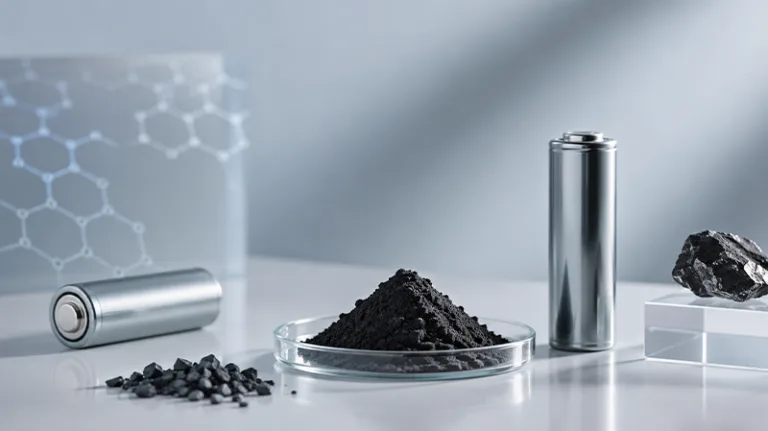
Battery slurry performance depends strongly on particle dispersion, viscosity stability, and the uniform distribution of active materials and conductive additives.
A bead mill for battery materials can process:
- Lithium iron phosphate slurry
- Cathode materials
- Anode materials
- Conductive carbon black slurry
- Graphite
- Silicon-based anode materials
- Battery separator coating slurry
For battery and electronic material applications, contamination control, temperature control, and grinding media selection must be considered together.
Bead Mill for Coatings, Inks, and Color Pastes
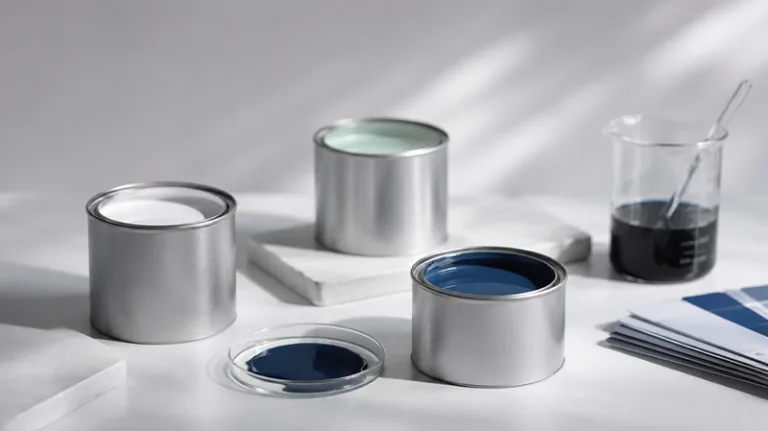
In coatings and ink production, pigment particles must be evenly distributed in the liquid system.
A bead mill for coatings and inks helps improve:
- Pigment dispersion
- Color development
- Gloss
- Opacity
- Storage stability
- Surface quality
- Product consistency
Disc and pin-type bead mills can be selected according to the required fineness, slurry viscosity, pigment type, and production capacity.
Bead Mill for Mineral Slurry Production
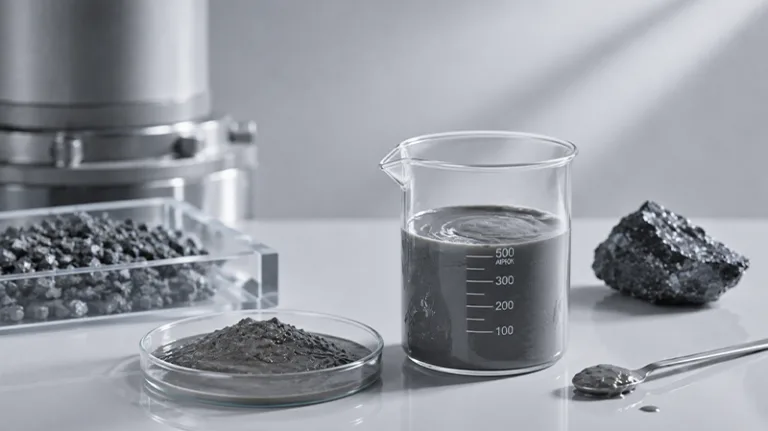
Bead mills can also be used for the fine grinding and dispersion of ground calcium carbonate, kaolin, talc, barite, and silica slurries.
Typical downstream industries include:
- Paper filling and coating
- Architectural and industrial coatings
- Plastic fillers
- Functional mineral materials
- Specialty chemical products
For large-volume mineral slurry production, Daswell engineers will evaluate whether a conventional bead mill or a VMG wet grinding mill is more suitable based on the required capacity, product fineness, slurry concentration, and process configuration.
Types of Daswell Bead Mills
Daswell provides nano, pin-type, and disc bead mills for different particle size, viscosity, capacity, and contamination-control requirements.
Ⅰ.Nano Bead Mill for Ultrafine Grinding and Nano Dispersion
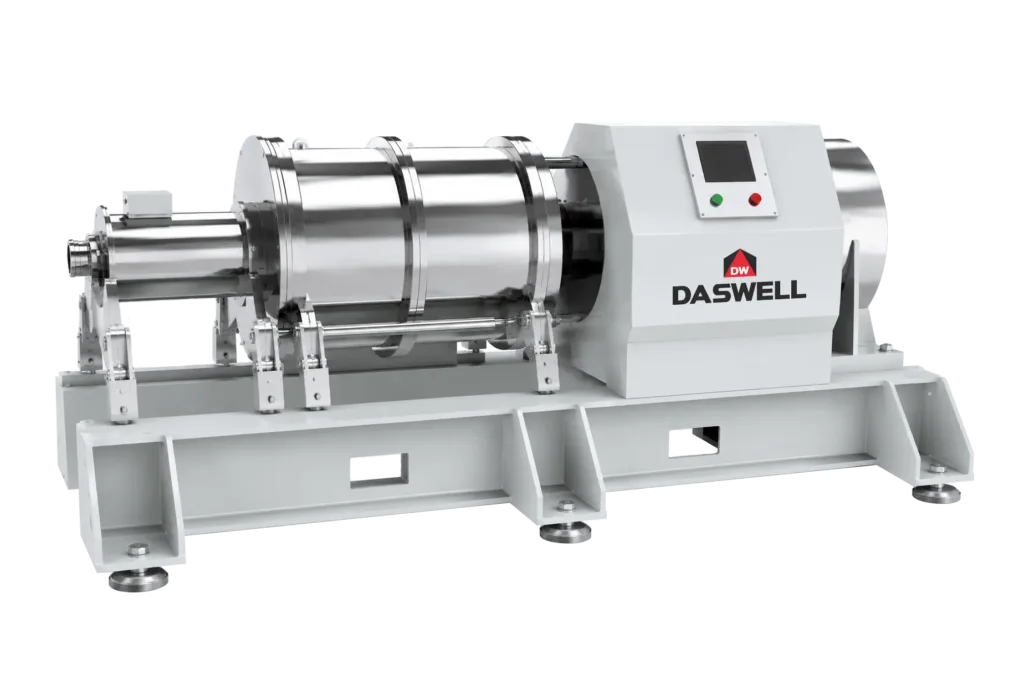
The nano bead mill combines a dual-drive design, high-energy rotor, and centrifugal media separation system for ultrafine grinding and nano-scale dispersion. Its optimized chamber provides intensive energy input while retaining fine grinding media for stable operation.
Achievable fineness depends on the material, slurry formulation, media size, process temperature, and grinding cycles.
Typical Applications of Nano Bead Mills:
- Alumina and zirconia slurries
- Electronic ceramic and semiconductor materials
- Lithium battery and conductive materials
- Functional nanomaterials
| Model | Active Volume (L) | Grinding Main Motor Power (kW) | Centrifugal Separator Motor Power (kW) | Recommended Batch Volume (L) | Grinding Media Size (mm) | Weight (kg) | Dimensions L × W × H (mm) |
|---|---|---|---|---|---|---|---|
| DPNB-L-2L | 2 | 7.5 | 5.5 | 5–50 | 0.30–1.0 | 500 | 1200 × 770 × 1100 |
| DPNB-L-6L | 6 | 18.5 | 7.5 | 15–100 | 0.03–1.0 | 1200 | 2000 × 950 × 1350 |
| DPB-L-10L | 10 | 22 | 11 | 30–200 | 0.03–1.0 | 1400 | 2100 × 950 × 1400 |
| DPNB-L-30L | 30 | 45 | 15 | 60–500 | 0.30–1.0 | 1900 | 2300 × 1250 × 1650 |
| DPNB-L-60L | 60 | 75 | 18.5 | 150–1000 | 0.03–1.0 | 3600 | 2600 × 1450 × 1900 |
| DPNB-L-150L | 150 | 185 | 30 | 300–3000 | 0.30–1.0 | 7500 | 3200 × 1600 × 2100 |
Ⅱ. Pin-Type Bead Mill for High-Shear Fine Grinding
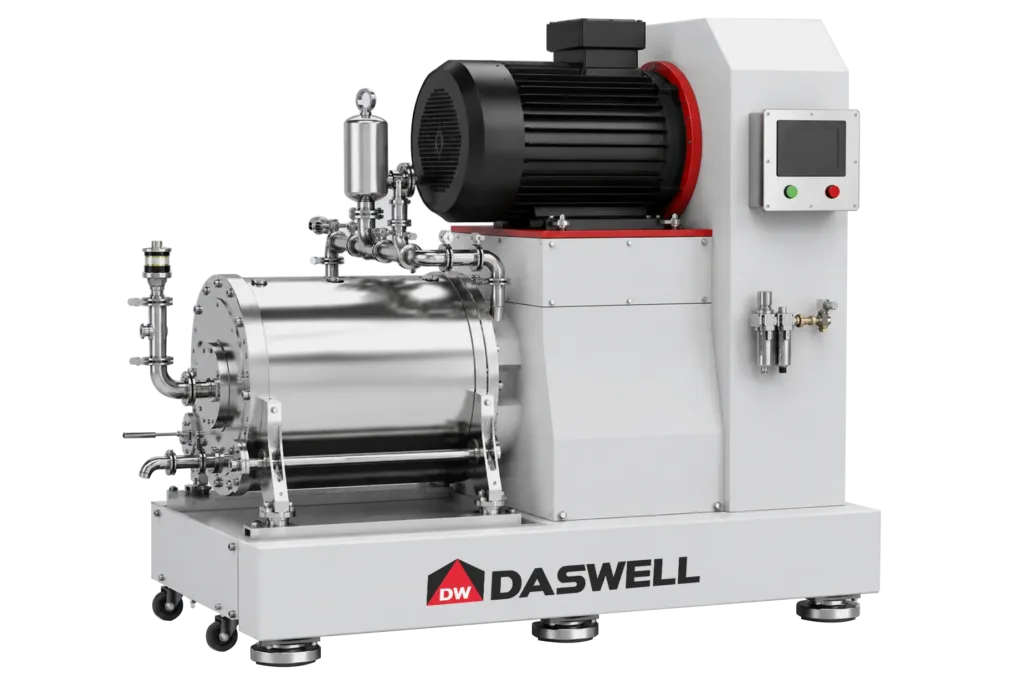
The pin-type bead mill uses a high-speed pin rotor to generate strong impact and shear forces. Compared with a conventional disc bead mill, it offers higher energy density for fine grinding, deagglomeration, and medium- to high-viscosity slurries.
Typical Applications of Pin-Type Bead Mills:
- Battery materials and conductive slurries
- Battery separator coating slurries
- Water-based and industrial coatings
- Fine ceramic materials and graphite slurries
| Model | Active Volume (L) | Main Motor Power (kW) | Recommended Batch Volume (L) | Grinding Media Size (mm) | Weight (kg) | Dimensions L × W × H (mm) |
|---|---|---|---|---|---|---|
| DPB-S-0.3L | 0.3 | 2.2 | 0.3–5 | 0.1–2.0 | 60 | 500 × 560 × 540 |
| DPB-S-0.5L | 0.5 | 4 | 2–10 | 0.1–2.0 | 170 | 910 × 670 × 750 |
| DPB-S-1L | 1 | 4 | 3–20 | 0.1–2.0 | 190 | 910 × 670 × 750 |
| DPB-S-3L | 3 | 11 | 5–100 | 0.1–2.0 | 400 | 1000 × 900 × 1550 |
| DPB-S-6L | 6 | 18.5 | 20–200 | 0.1–2.0 | 550 | 1000 × 900 × 1550 |
| DPB-S-10L | 10 | 22 | 30–300 | 0.1–2.0 | 1300 | 1000 × 900 × 1750 |
| DPB-S-25L | 25 | 37 | 50–1000 | 0.1–2.0 | 1700 | 1650 × 1050 × 1550 |
| DPB-S-30L | 30 | 37/45 | 80–1000 | 0.1–2.0 | 1900 | 1650 × 1050 × 1550 |
| DPBS-60L | 60 | 75/90 | 200–2000 | 0.1–2.0 | 3600 | 2100 × 1650 × 1900 |
| DPB-S-100L | 100 | 110 | 300–4000 | 0.1–2.0 | 5600 | 2400 × 1650 × 2200 |
| DPB-S-150L | 150 | 185 | 800–6000 | 0.1–2.0 | 6800 | 2780 × 1780 × 2680 |
| DPB-S-400L | 400 | 355 | 1000–10000 | 0.1–2.0 | 10500 | 4000 × 1900 × 2900 |
Ⅲ. Disc Bead Mill for Cost-Effective Wet Grinding
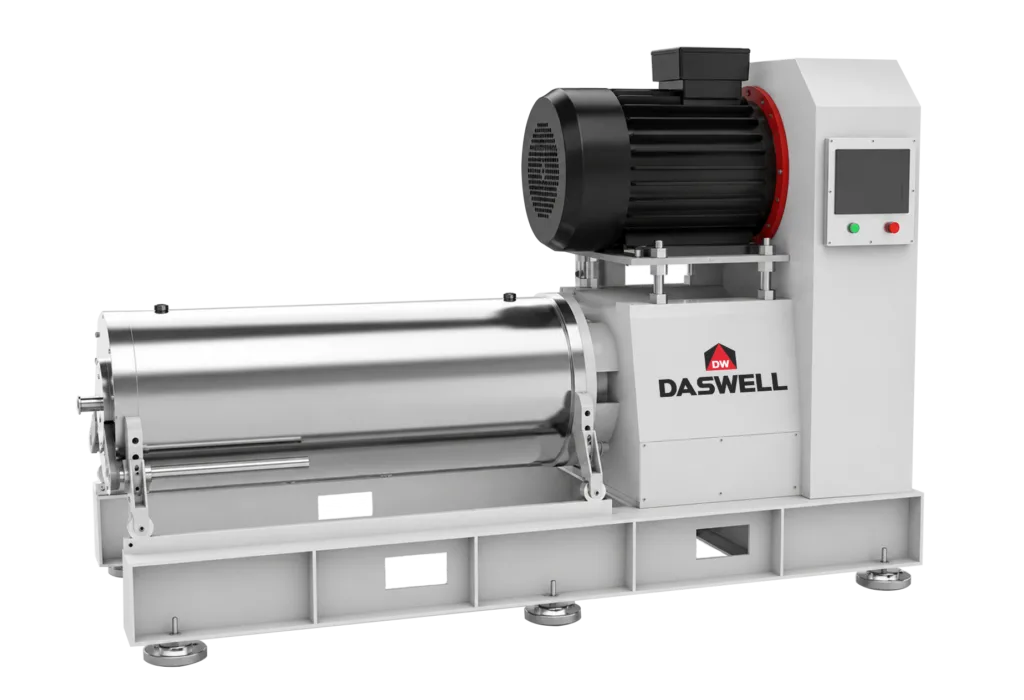
The disc bead mill uses multiple grinding discs to generate turbulence and media movement for stable, economical wet grinding. It is suitable for micron-scale size reduction and uniform dispersion, with reliable temperature control and lower energy density than pin-type or nano bead mills.
Typical Applications of Disc Bead Mills:
- Ground calcium carbonate and titanium dioxide slurries
- Architectural and industrial coatings
- Conventional printing inks and carbon black dispersions
- Pigments and functional fillers
| Model | Active Volume (L) | Main Motor Power (kW) | Recommended Batch Volume (L) | Grinding Media Size (mm) | Weight (kg) | Dimensions L × W × H (mm) |
|---|---|---|---|---|---|---|
| DP-S/D-1.4L | 1.2 | 4 | 3–20 | 0.6–2.0 | 150 | 910 × 670 × 750 |
| DP-S/D-5L | 5 | 7.5 | 10–200 | 0.6–2.0 | 550 | 1000 × 900 × 1550 |
| DP-S/D-15L | 15 | 15 | 30–400 | 0.6–2.0 | 800 | 1000 × 900 × 1550 |
| DP-S/D-20L | 20 | 22 | 50–500 | 0.6–2.0 | 1100 | 1600 × 1000 × 1800 |
| DP-S/D-30L | 30 | 30 | 100–1000 | 0.6–2.0 | 1300 | 1600 × 1000 × 1800 |
| DP-S/D-50L | 50 | 45 | 200–1000 | 0.6–2.0 | 1700 | 2000 × 1150 × 1650 |
| DP-S/D-60L | 60 | 45 | 200–2000 | 0.6–2.0 | 1800 | 2150 × 1150 × 1650 |
| DP-S/D-100L | 100 | 75 | 300–3000 | 0.6–2.0 | 2500 | 2600 × 1450 × 1950 |
| DP-S/D-150L | 150 | 90 | 500–5000 | 0.6–2.0 | 3100 | 2700 × 1450 × 1950 |
| DP-S/D-300L | 400 | 110 | 1000–10000 | 0.6–2.0 | 4500 | 2970 × 1550 × 2200 |
| KP-S/D-500L | 500 | 165 | 1500–12000 | 0.6–2.0 | 6500 | 3200 × 1650 × 2400 |
| KP-S/D-1000L | 1000 | 400 | 2000–15000 | 0.6–2.0 | 9500 | 3800 × 1850 × 3050 |
Advantages of Daswell Bead Mills for Slurry Production
- Micron-to-Nano Processing: Supports applications from conventional micron-scale grinding to nano-scale dispersion.
- Uniform and Consistent Dispersion: Closed wet grinding, stable feeding, temperature control, and proper media loading help maintain consistent slurry quality.
- Laboratory-to-Industrial Scale-Up: Grinding chamber volumes from 0.3 L to 1,000 L support laboratory testing, pilot trials, and industrial production.
- Flexible Material Configuration: Grinding media, chamber linings, rotors, seals, and other contact parts can be selected for different materials and contamination-control requirements.
Contact Us
Looking for a suitable bead mill for your application? Contact us with your material, target particle size, capacity, and special requirements. Daswell Powder will recommend a suitable bead mill and customized wet grinding solution.