Concrete Mixer Pump Pumping Distance: What Buyers Should Check Before Choosing
Concrete Mixer Pump Pumping Distance Explained in Real Construction Projects
Clients experienced in construction projects often find a gap between concrete mixer pump pumping distance specifications and real job site conditions.
When purchasing a concrete mixer pump, many buyers simply ask:
“Can it pump concrete to the second floor?” or “Can concrete reach the back of the house if the machine stays outside the yard?”
These real construction pumping distance questions are more practical than theoretical maximum values.
In many real cases, customers make decisions based only on the datasheet without considering site limitations. For example, equipment may be parked far from the building entrance, or the pipeline must pass through narrow passages or around obstacles. These real conditions significantly affect the actual concrete mixer pump pumping distance.
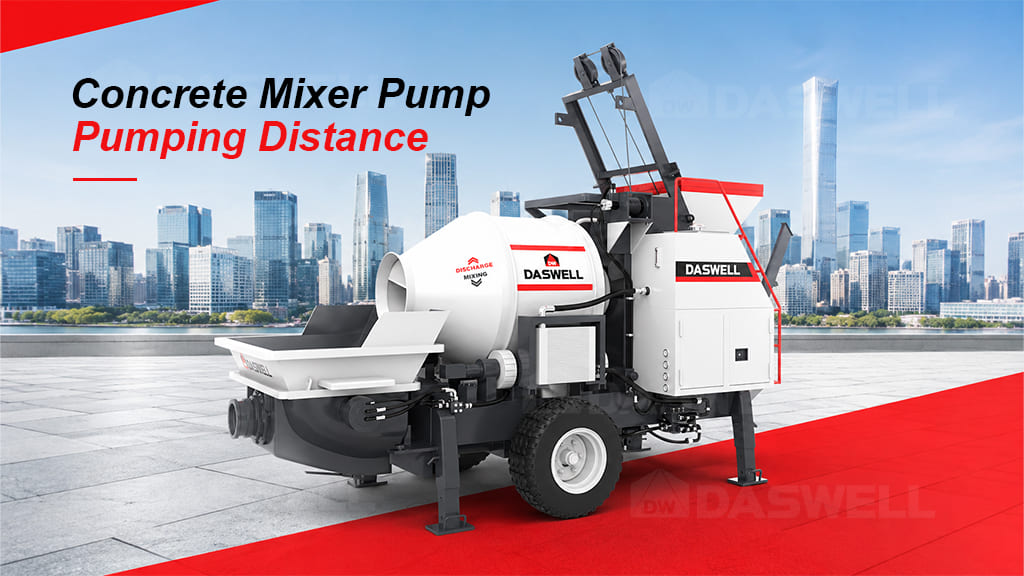
Why Concrete Mixer Pump Pumping Distance Is Different From Specifications
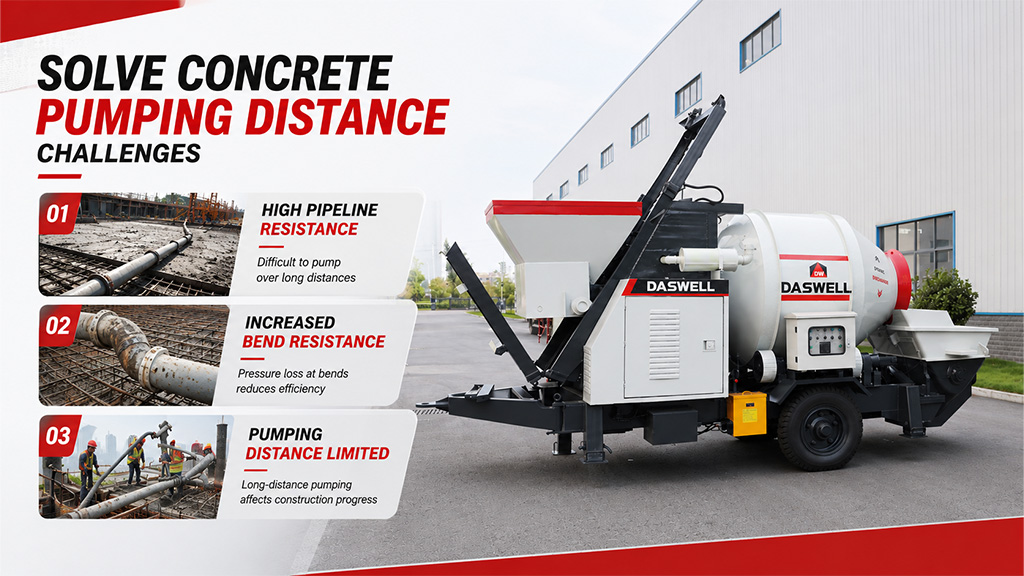
The main factor affecting concrete mixer pump pumping distance performance is resistance loss in the pipeline.
A concrete mixer pump system relies on pressure to push concrete through pipes. The longer the pipeline, the higher the friction resistance. Elbows and vertical lifting further increase pressure loss.
Therefore, instead of only asking “how far can a concrete mixer pump pump?”, buyers should focus on:
whether the concrete mixer pump for construction site can work under real job conditions.
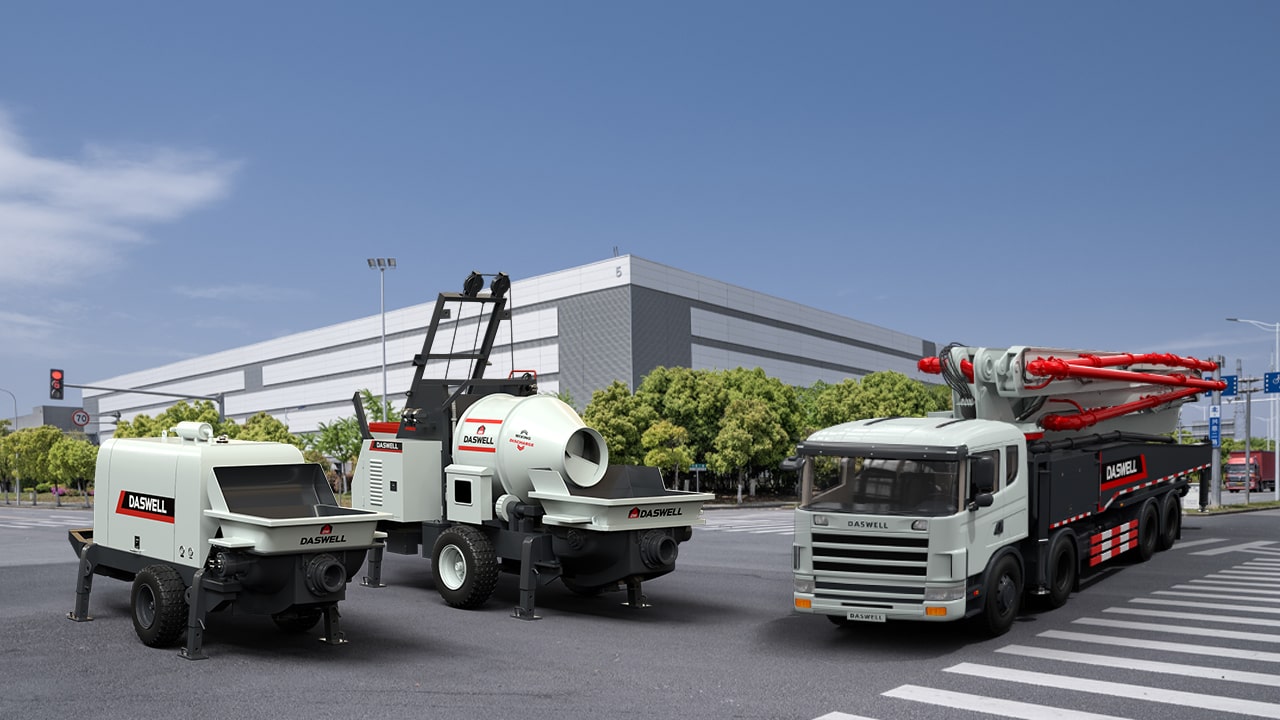
For long-distance or high-rise requirements, a trailer concrete pump with higher pressure may be more suitable.
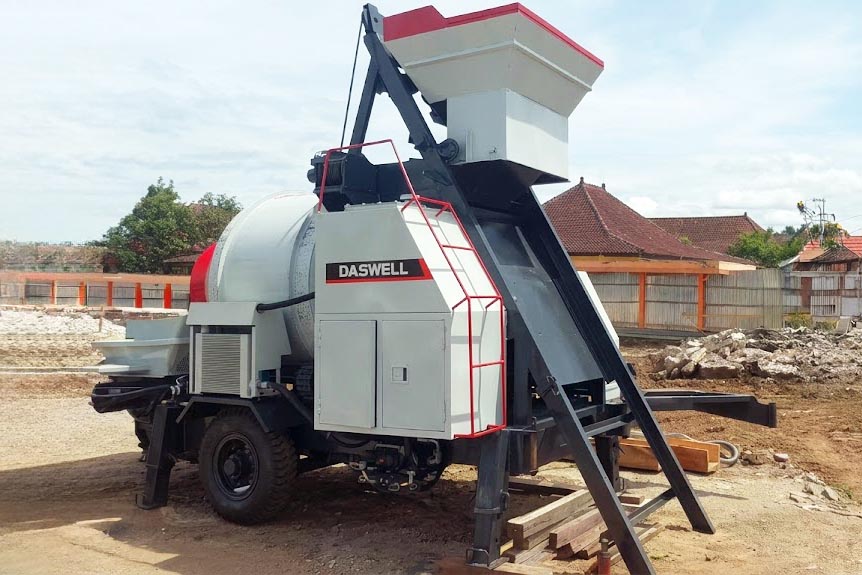
A concrete mixer pump works by combining a mixing drum and a hydraulic pumping system. After concrete is mixed on-site, it is directly transferred into the pumping system. The hydraulic pressure then pushes the concrete through the pipeline continuously. This integrated structure is the reason why pipeline resistance and pressure control directly affect the final pumping distance.
Three Types of Concrete Mixer Pump Pumping Distance in Construction Projects
Understanding concrete pumping distance measurement helps avoid wrong equipment selection:
- Straight-Line Concrete Mixer Pump Pumping Distance
This refers to the direct distance between the concrete mixer pump equipment position and pouring point.
- Actual Pipeline Length in Concrete Mixer Pump Operation
This is the real working length of the pipeline in a concrete mixer pump construction site, often longer due to:
- wall bypass
- gate access
- vertical lifting
- floor extension
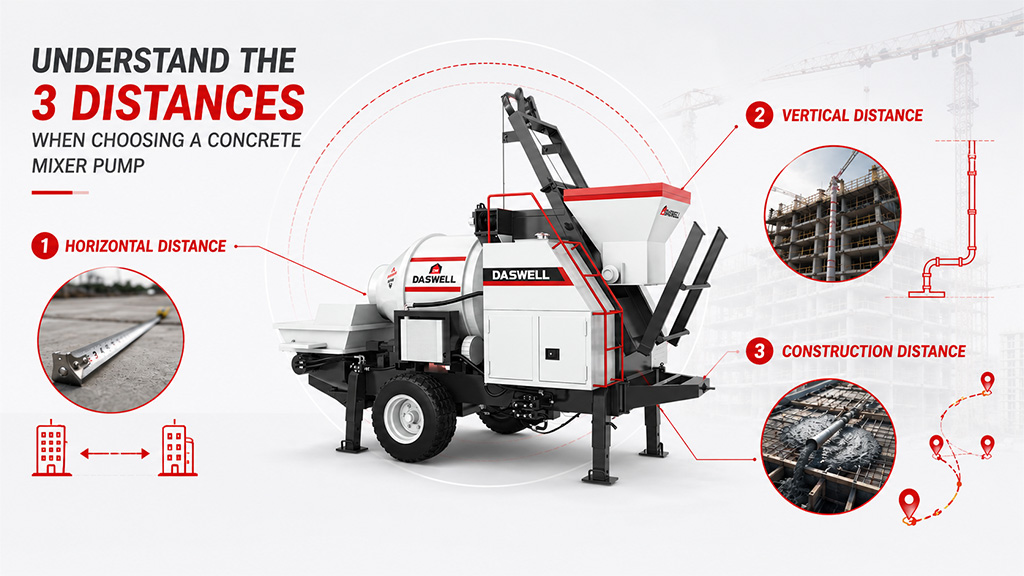
- Construction Coverage Area for Concrete Mixer Pump Projects
Some concrete mixer pump applications involve multiple pouring points:
- foundation
- columns
- floor slabs
- courtyard or road sections
In some projects where pumping distance exceeds the capability of a standard concrete mixer pump, a trailer concrete pump becomes a more suitable option. Trailer concrete pumps provide higher discharge pressure and are designed for long-distance and high-rise concrete delivery. Therefore, selecting between a mixer pump and a trailer pump should be based on actual site distance, not theoretical specifications.
Horizontal Concrete Pumping Distance vs Vertical Height in Concrete Mixer Pump Projects
For concrete mixer pump for rural house construction, horizontal pumping distance is often more important than height.
For multi-story buildings, concrete mixer pump vertical pumping height depends not only on floors but also on:
- equipment parking location
- pipeline entry point
- horizontal pre-distance before vertical lifting
A common mistake is assuming “second floor pumping” is a fixed condition, without analyzing real pipeline layout.
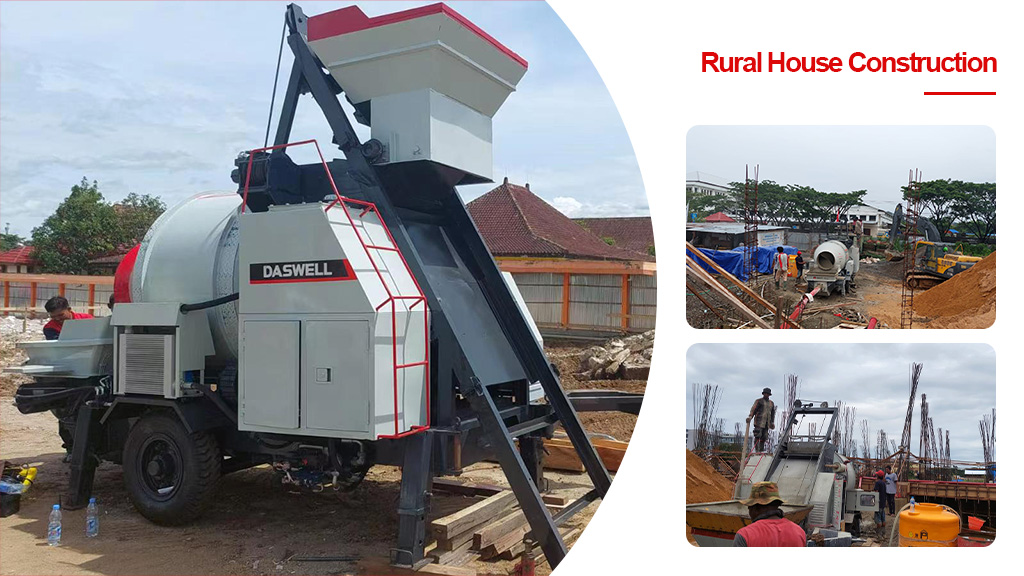
Concrete Mixer Pump for Rural House Construction Projects
A concrete mixer pump for rural construction is widely used in residential projects.
In some cases, the concrete mixer pump machine can be placed next to the building. In others, it must stay outside the gate, increasing pipeline length.
This type of equipment integrates concrete mixing and pumping in one machine, improving efficiency for small construction sites and reducing labor demand.
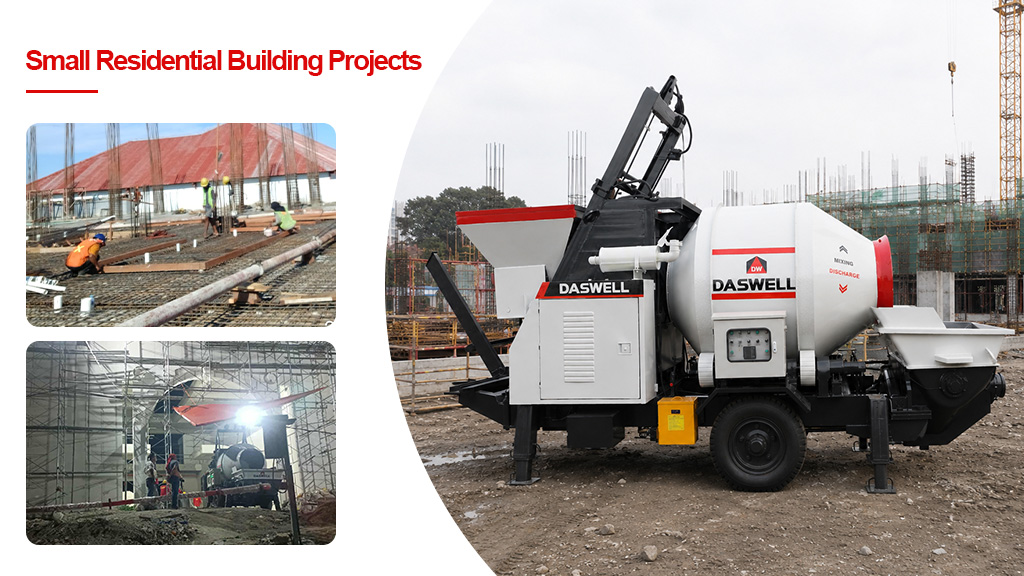
Concrete Mixer Pump Pumping Distance in Small Building Construction
In small building construction projects using concrete mixer pump, pipeline layout is often more important than floor height.
If the concrete mixer pump equipment can be placed close to the wall, pumping is direct. If not, concrete must travel longer horizontal distance before vertical lifting.
Concrete quality also affects performance:
- improper slump increases resistance
- oversized aggregate may cause blockage
- elbows increase friction loss in concrete pipeline systems
Example:
“15 meters from building + second floor pumping + 6–8 meters slab extension”
This is a more accurate concrete mixer pump pumping distance calculation than simply saying “second floor requirement”.
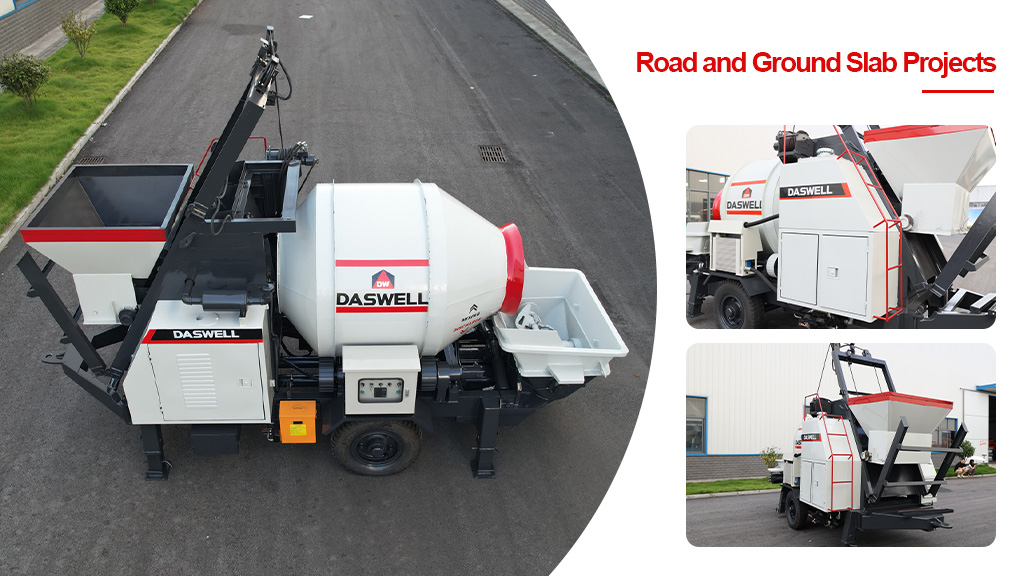
Concrete Mixer Pump Application in Road and Flooring Construction
For concrete mixer pump road construction projects, coverage area is more important than height.
In flooring and road paving applications, some contractors use long pipelines from a fixed position. However, this increases:
- setup time
- pipeline friction loss
- cleaning difficulty
In many concrete mixer pump road paving projects, section-based pumping is more efficient.
Concrete Mixer Pump Pipeline and Concrete Conditions Affect Pumping Distance
Actual concrete mixer pump pumping performance depends on both equipment and materials:
- aggregate size must match pipeline diameter
- concrete slump must be stable
- dry mix increases resistance
- wet mix may cause segregation
Before pumping, pipeline lubrication is required to reduce friction in concrete mixer pump pipeline system.
Pressure monitoring is also important. Sudden pressure rise may indicate blockage risk in the concrete pumping system.
What Information Is Needed for Concrete Mixer Pump Selection
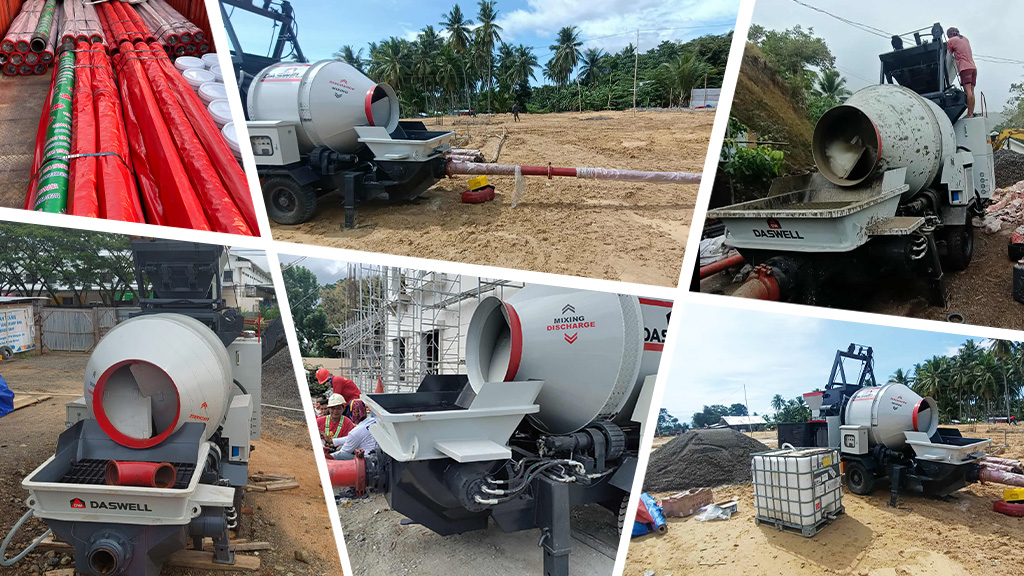
Before starting concrete pumping operations, proper pipeline layout planning is essential for concrete mixer pump construction projects. All pipe joints should be securely connected, and the number of bends should be minimized wherever possible. These preparation steps help ensure stable flow, improve overall efficiency, and significantly reduce the risk of blockage during concrete mixer pump operation. To recommend the correct concrete mixer pump model, buyers should provide:
- project type (house, road, building, etc.)
- site access conditions
- concrete mixer pump parking location
- horizontal and vertical pumping distance
- pipeline routing plan
- concrete mix specifications
- on-site photos or videos
These details ensure accurate concrete mixer pump selection for real job sites.
Choosing the Right Concrete Mixer Pump for Your Project
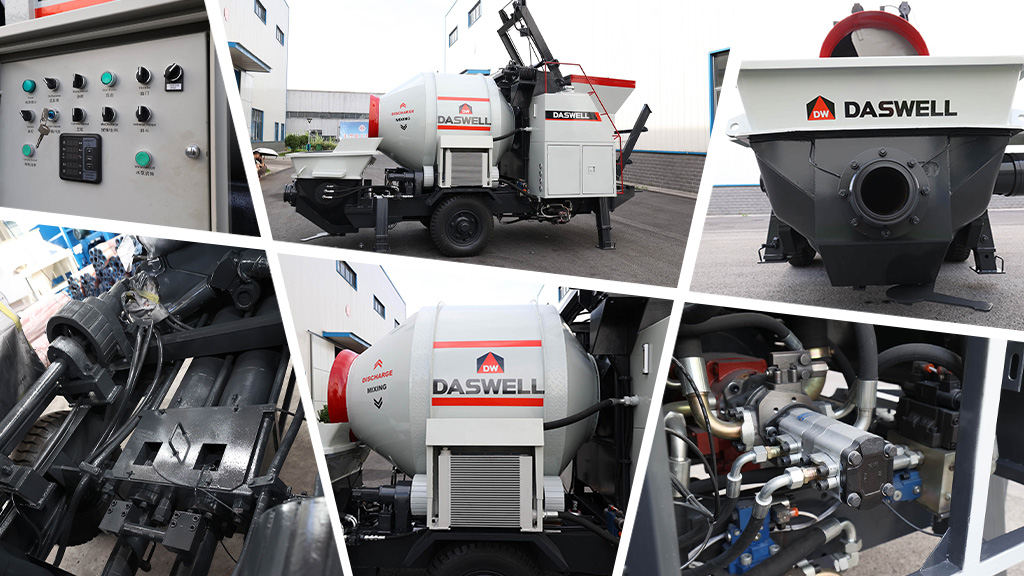
When selecting a concrete mixer pump for construction projects, buyers should evaluate:
- actual pipeline layout
- pumping distance requirements
- vertical and horizontal conditions
- concrete properties
- number of pouring points
For long-distance or high-rise requirements, a trailer concrete pump may be more suitable due to higher discharge pressure.
If you are unsure about concrete mixer pump pumping distance capability for your project, send us your site details. DASWELL will evaluate and recommend the right model for your construction needs.