Stone Crusher Plant Cost: Equipment, Setup & Operation
If you are considering investing in a stone crushing production line, you are probably most concerned about one question: how much will it cost?
The price of a complete crushing line is affected by many factors, such as crusher type, production capacity, raw material hardness, site conditions, and future maintenance.
Below are the main factors that determine the total stone crusher plant cost.
Complete Stone Crushing Plant Equipment
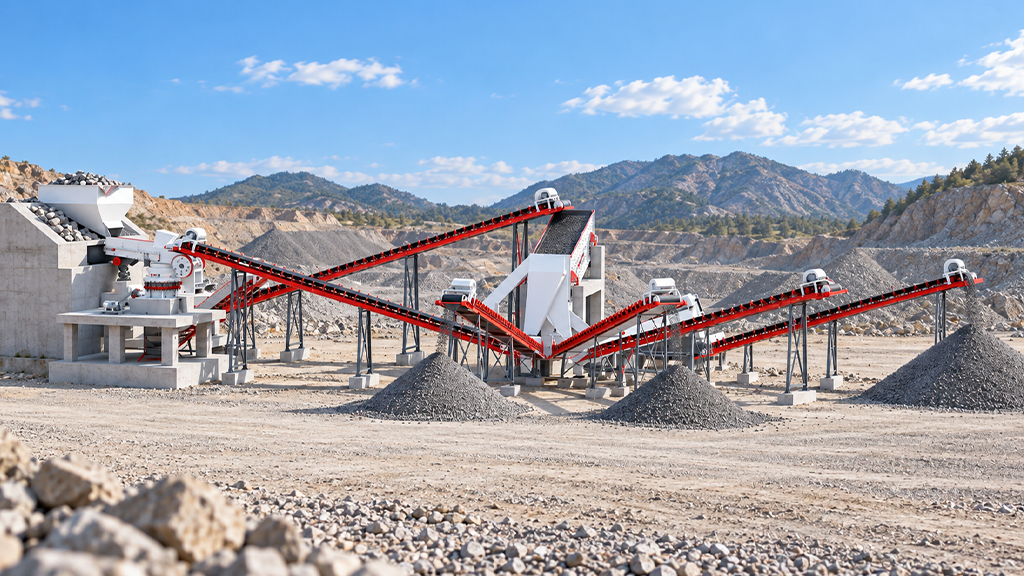
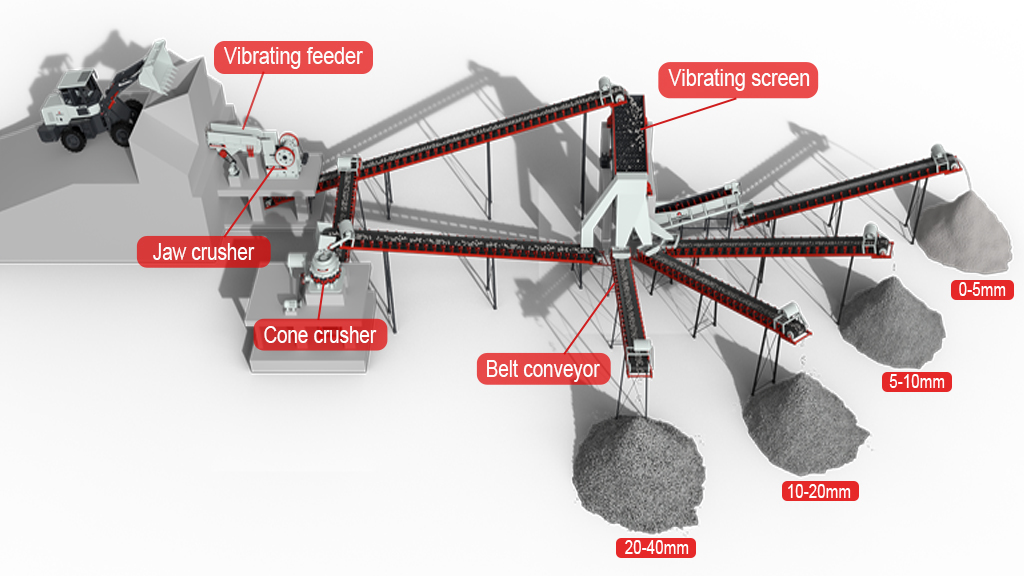
Most stone crushing plants consist of the following parts:
- Feeder: Feeds the raw material evenly into the crusher and helps prevent blockages.
- Primary crushing equipment: Usually a jaw crusher, which handles the first crushing stage.
- Secondary and fine crushing equipment: Cone crushers and impact crushers are commonly used.
- Sand making equipment: A sand making machine is also required if manufactured sand needs to be produced.
- Vibrating screen: Separates materials according to particle size.
- Belt conveyors: Connect the machines and transport the material to the next stage.
- Auxiliary facilities: These include dust collection equipment and control systems.
Daswell can match the feeding, crushing, screening, and conveying equipment according to the raw material hardness, feed size, required output sizes, and production capacity. This helps avoid unnecessary equipment and capacity mismatches between different machines.
Stone Crusher Plant Cost by Equipment Type
The cost of the main equipment usually makes up the largest part of the total stone crushing production line cost. Different types of equipment can vary greatly in price.
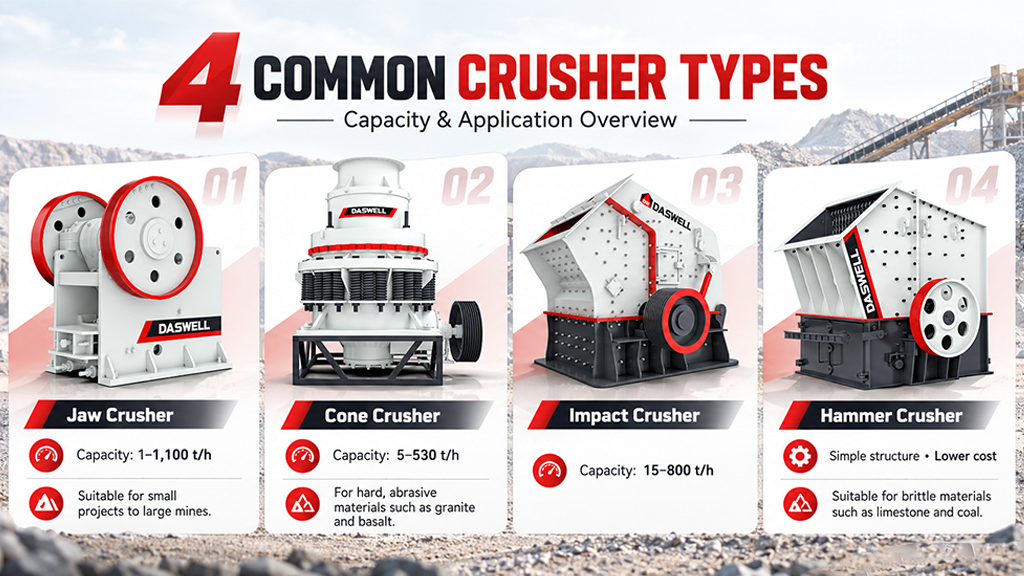
Jaw crusher: A jaw crusher is suitable for primary crushing and can process large pieces of hard material. It has a simple structure, a low failure rate, and a relatively affordable price. Therefore, it is the first crusher chosen by many customers. Daswell jaw crushers have capacities ranging from 1 to 1,100 tons per hour, covering the needs of both small projects and large mines.
Cone crusher: A cone crusher is suitable for secondary and tertiary crushing. It offers high crushing efficiency and produces well-shaped aggregate. Its structure is more complex than that of a jaw crusher, so its price is also higher. Daswell cone crushers have capacities ranging from 5 to 530 tons per hour. They are mainly used for hard and abrasive materials, such as granite and basalt.
Impact crusher: An impact crusher uses impact force to break materials. The finished aggregate has a good particle shape. It is particularly suitable for construction waste recycling and medium-hard stone. Daswell impact crushers have processing capacities ranging from 15 to 800 tons per hour.
Hammer crusher: A hammer crusher has the simplest structure and usually the lowest price. It is suitable for brittle materials, such as limestone and coal.
You can send us your raw material, maximum feed size, required output sizes, and hourly capacity. The Daswell team can then provide an initial equipment configuration and price estimate.
Stone Crusher Plant Setup Cost
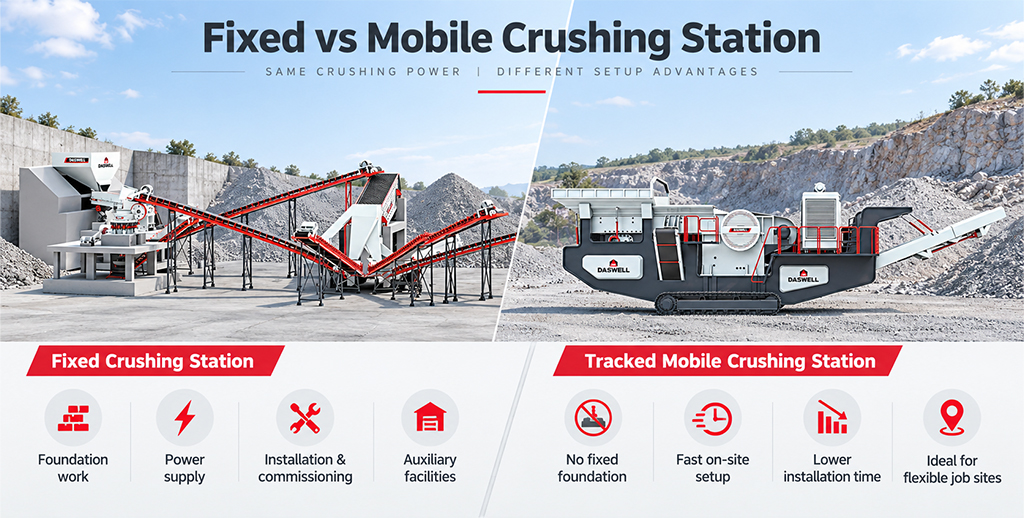
When planning the budget for a stone crushing plant, you need to consider not only the price of the equipment itself but also the installation and supporting costs. These include:
- Site preparation: Construction of foundations and drainage systems
- Transportation: Logistics costs, which may increase if the project site is in a remote area
- Power supply: Transformers and cable installation
- Installation and commissioning: Connecting belt conveyors and adjusting the output size and production capacity
- Auxiliary facilities: Storage bins, dust collection equipment, and other supporting facilities
Mobile crushing equipment has clear advantages during installation. A Daswell crawler mobile crushing plant does not require a fixed foundation. It can be put into operation soon after arriving at the site, which saves intermediate steps and installation time. A mobile crushing plant is particularly suitable for customers with scattered projects or temporary working sites.
Stone Crushing Plant Operating Costs
Daily operating costs directly affect project profit. They mainly include:
- Electricity: Crushers consume a considerable amount of electricity, especially cone crushers and impact crushers. Therefore, the energy efficiency of the crusher is important.
- Replacement of wearing parts: Jaw plates, hammer heads, liners, and other parts wear during operation and need to be replaced regularly.
- Labor costs: The more operators, maintenance workers, and site managers required, the higher the labor cost will be.
- Routine maintenance: Lubrication, servicing, and regular inspections are continuous small expenses.
- Transportation and logistics: Material transportation costs should also be included in the overall operating cost.
Cheap equipment does not always save money. If the wearing parts are of poor quality, maintenance is frequent, or energy consumption is high, the overall cost may be higher after several years of use. Therefore, when selecting equipment, do not compare only the purchase price. Future operating costs should also be estimated.
When preparing a crushing solution, Daswell considers not only the equipment purchase price but also the material characteristics, equipment power, wearing parts, and maintenance requirements.
Stone Crushing Cost per Ton
The stone crushing cost per ton can be estimated by adding the electricity, wearing parts, labor, maintenance, and material transportation costs over a certain period, and then dividing the total by the actual output during the same period.
Different electricity prices, raw material hardness, operating hours, and equipment loads will result in different crushing costs per ton.
How to Reduce Stone Crushing Plant Cost?
Based on Daswell’s decades of industry experience and customer feedback, here are several practical suggestions:
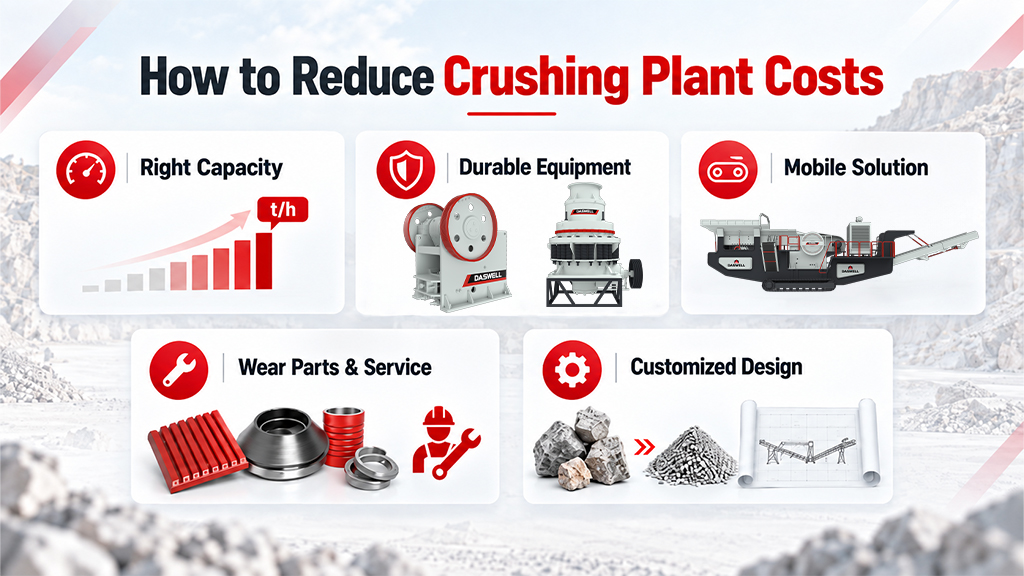
- Set a clear capacity target. Many customers purchase equipment that is larger than they actually need. Idle equipment is also a waste of money. Selecting equipment according to the actual project requirements is more economical.
- Give priority to equipment with a simple and durable structure. Especially for small and medium-sized projects with a limited budget, a jaw crusher and cone crusher combination is one of the options considered first by many of our customers.
- Consider mobile equipment. If the projects are scattered or the working site is not fixed, a mobile crushing plant can save a considerable amount of installation and civil engineering costs.
- Check wearing parts and after-sales service. Ask about the replacement cycle and price of wearing parts in advance. This will give you a clearer idea of future expenses.
- Customize the solution according to the actual material and capacity. Different types of stone have different hardness, moisture content, and feed sizes. Direct communication with the technical team will usually result in a more suitable solution.
Stone Crusher Plant Price & Quote
The total cost of a stone crushing production line is the combined cost of equipment, installation, and operation. Careful budgeting and site assessment at the beginning can save many additional expenses later. Daswell supplies jaw crushers, cone crushers, impact crushers, hammer crushers, and complete stationary and mobile crushing production lines. The available capacity ranges from 1 to 1,000 tons per hour.
If you are preparing a budget for a crushing plant project, please contact Daswell Group.