Trailer Concrete Pump Price: How to Plan Your Budget
Many buyers focus only on the quoted price when looking for a trailer concrete pump.
However, even two trailer concrete pumps with similar theoretical outputs may have very different prices due to differences in configurations and services. Buyers should evaluate the complete equipment configurations and what each quotation includes, rather than just the price.
What Costs Are Included When Buying a Trailer Concrete Pump?
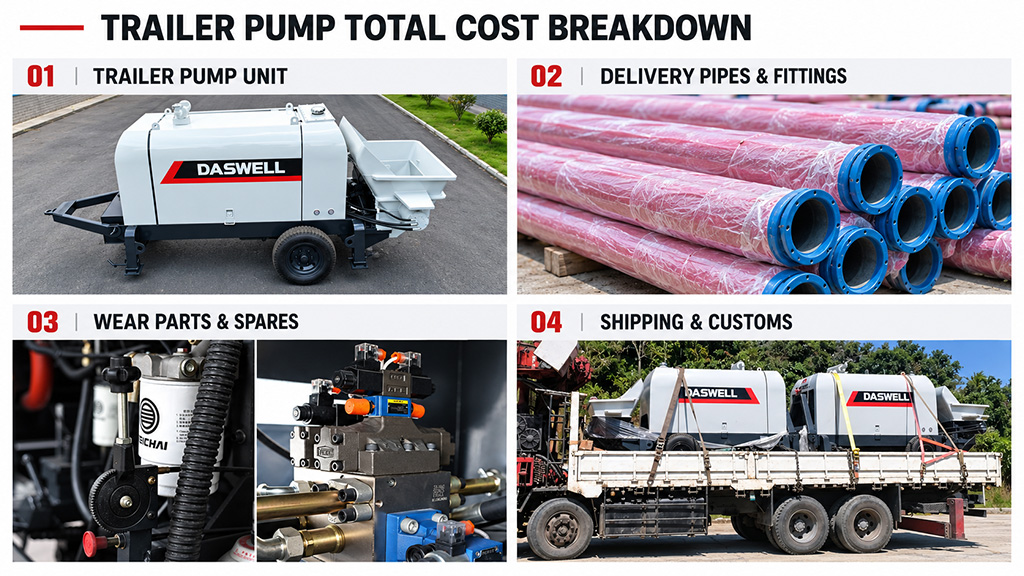
The total purchase cost of a trailer concrete pump usually includes:
- Trailer concrete pump unit
- Concrete delivery pipes and accessories
- Wear parts and spare parts
- Shipping and customs clearance
What Factors Affect Trailer Concrete Pump Price?
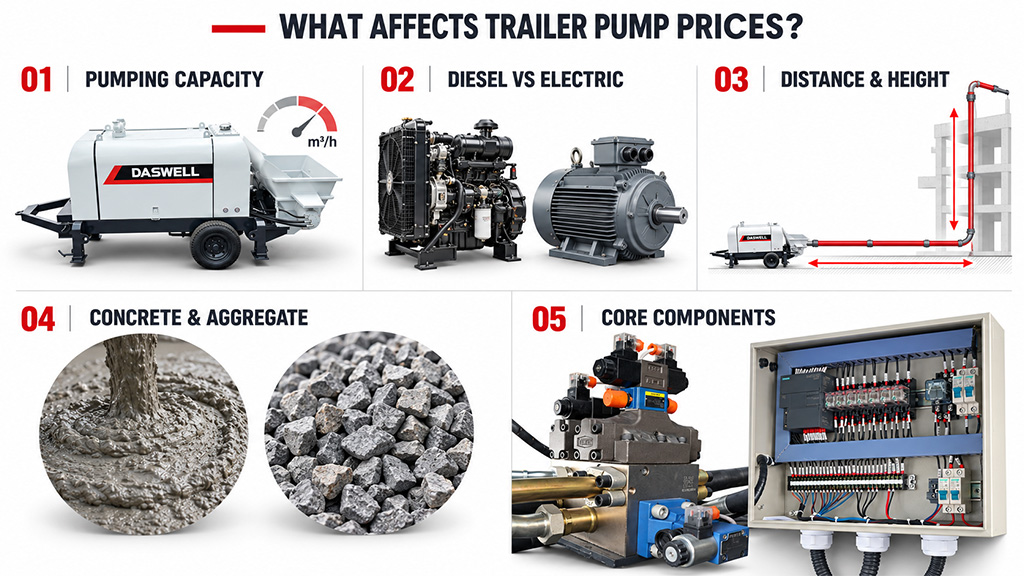
1. Theoretical Pumping Capacity
Generally, a higher pumping capacity requires a more powerful drive system and more robust pumping components, which typically leads to a higher purchase price.
Generally, a higher pumping capacity requires a more powerful drive system and more robust pumping components, which typically leads to a higher purchase price. Determine the required hourly and daily concrete output before choosing a model. This helps avoid paying for capacity you do not need.
2. Power Type: Diesel or Electric
The power type affects both the purchase price and long-term operating costs.
Diesel trailer pumps are usually suitable for sites with no electricity or an unstable power supply. Electric models may have lower energy costs when the power supply is stable and electricity prices are reasonable.
For more details, read our guide on diesel vs. electric trailer concrete pumps.
3. Pumping Distance and Height
Longer pumping distances and greater heights generally increase pipeline resistance. This also increases the required pumping pressure.
To find out whether a trailer pump is suitable for high-rise construction, read our previous article: Is a Trailer Concrete Pump Suitable for High-Rise Buildings?
4. Concrete Mix and Aggregate Conditions
Aggregate size, grading, slump, and mix proportions all affect concrete pumpability and pumping performance.
Oversized aggregates or unsuitable concrete mixes can increase the risk of pipeline blockages.
5. Hydraulic System and Main Components
The brands and specifications of main hydraulic pumps, hydraulic components, S-valves, and concrete delivery cylinders can affect the equipment price.
These components play an important role in equipment reliability and service life. The cost of unexpected downtime during construction may be much higher than the money saved on the initial purchase.
What Other Costs Should Trailer Concrete Pump Buyers Consider?
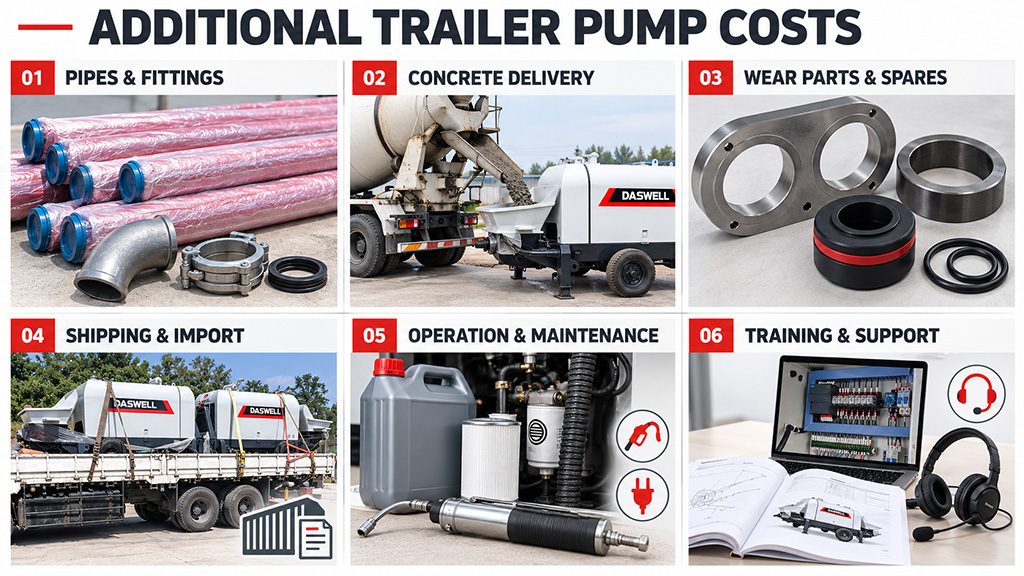
1. Delivery Pipes and Accessories
Concrete delivery pipes, elbows, rubber hoses, pipe clamps, seals, and cleaning tools should be selected according to the pumping distance.
For long-distance pumping, pipeline costs can be considerable.
When working on high-rise construction or long-distance concrete transport, ensure that the pressure ratings of the pipes, clamps, and connections meet the project requirements.
2. Concrete Supply Costs
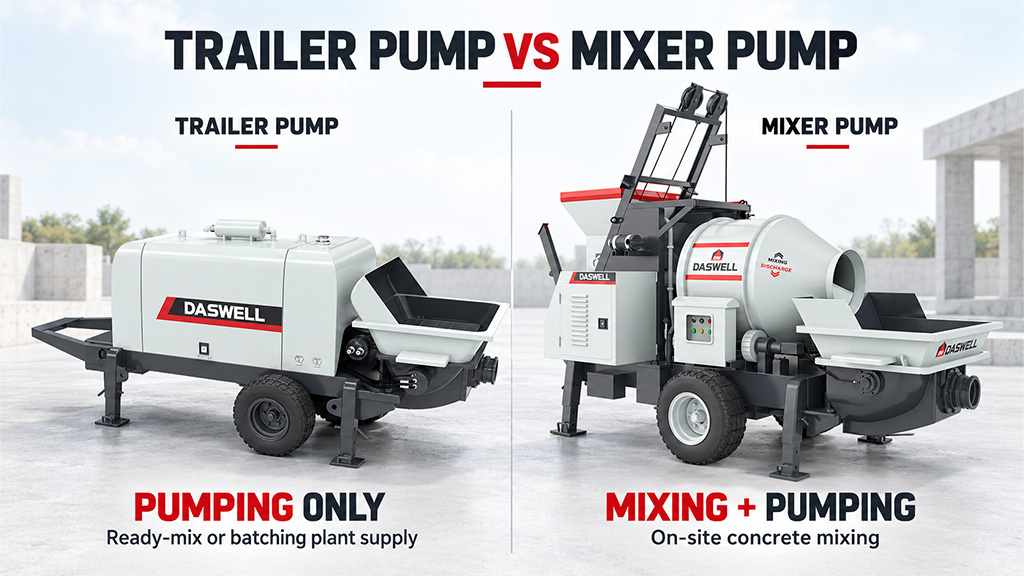
A trailer concrete pump only pumps concrete. It does not mix concrete.
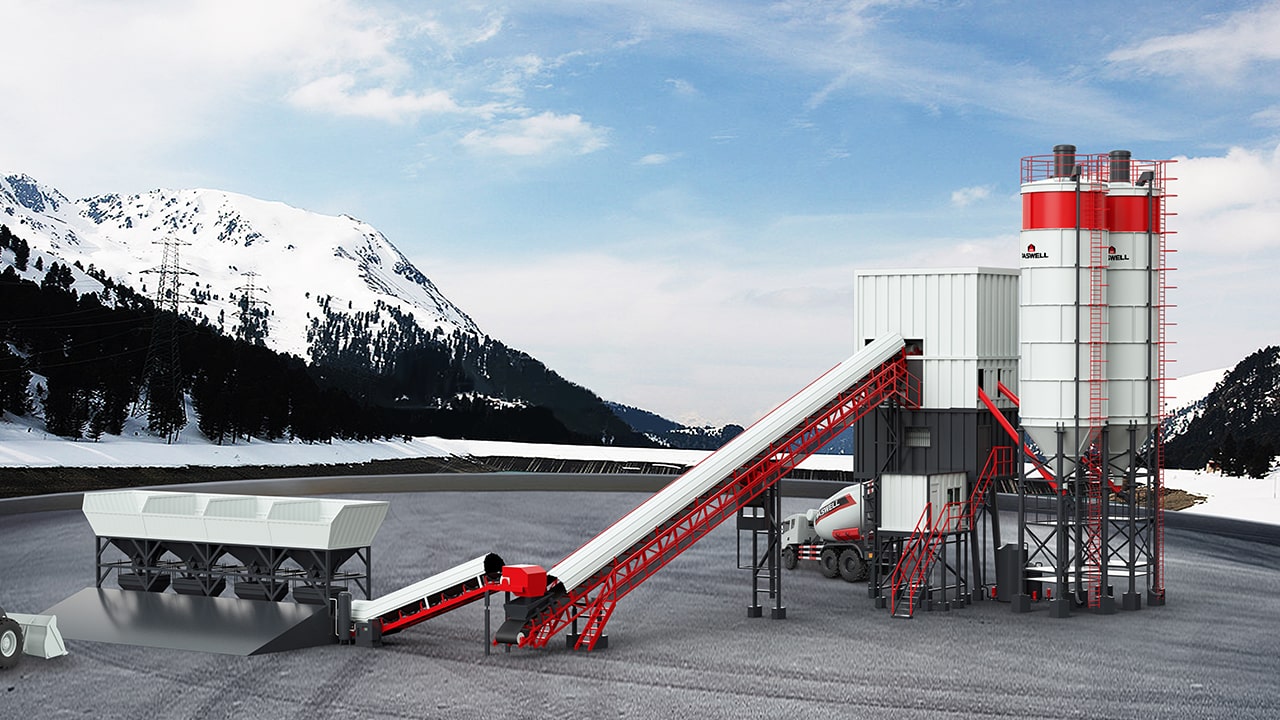
If you do not use ready-mix concrete, you will need separate mixing equipment, such as a self loading concrete mixer or a concrete batching plant.
You can also consider a concrete mixer pump, which combines mixing and pumping in one machine.
3. Wear Parts and Spare Parts
Concrete delivery pistons, spectacle plates, cutting rings, and seals gradually wear out during operation.
4. Equipment Shipping Costs
Shipping costs depend on the destination country, port, equipment dimensions and weight, container requirements, and current ocean freight rates.
Import duties, taxes, inland transportation, and local unloading costs should also be considered according to the destination country’s requirements.
5. Operating and Maintenance Costs
Budget for fuel or electricity and routine maintenance. Proper care helps key parts last longer.
6. Training and After-Sales Service
When choosing a supplier, check whether they can provide spare parts, troubleshooting guidance, operator training, maintenance training, and timely parts delivery.
Daswell has local teams and warehousing facilities in Indonesia and the Philippines. We provide local equipment consultation, technical assistance, and after-sales support for customers in these markets.
Trailer Concrete Pump vs. Concrete Mixer Pump: Which Should You Choose?
- Trailer concrete pump: Designed for pumping concrete. It is suitable for projects with an existing concrete supply, such as ready-mix concrete or an on-site batching plant. It can be a better choice for projects requiring higher pumping pressures or longer pumping distances.
- Concrete mixer pump: Combines concrete mixing and pumping in one machine. It is suitable for projects that mix concrete on-site, such as house foundations, rural roads, and small construction projects.
For more information, read our guide on concrete mixer pump prices.
What Information Should You Provide Before Requesting a Trailer Concrete Pump Quotation?
Before requesting a quotation, provide the following information to help the supplier recommend a suitable configuration and give you a more accurate price:
- Required hourly and daily concrete output
- Horizontal pumping distance, vertical height, and pipeline layout
- Available power supply and preference for diesel or electric power
- Concrete mix proportions and maximum aggregate size
- Destination port
- Requirements for delivery pipes, spare parts, and operator training
Get a Trailer Concrete Pump Quote for Your Project
When comparing quotations, do not focus only on the equipment price. Check whether the configurations, delivery pipes, spare parts, and services are included.
Daswell offers diesel and electric trailer concrete pumps with different pumping capacities. We can recommend a suitable configuration based on your project requirements. We also provide delivery pipes, accessories, spare parts, and technical support.
If you are looking for a trailer concrete pump for sale, contact Daswell and share your project requirements. Our team will help you choose a suitable model and provide a quotation.