Portable Concrete Mixer Pump: What to Check for Frequent Site Changes
If you have only one jobsite, you just need to arrange transport for the portable concrete mixer pump at the start and end of the job. For contractors moving equipment between several jobsites, ease of transport matters. It can have a big impact on equipment utilization and project schedules.
“Portable” is a common word on product pages. But it does not mean the machine can be towed directly on public roads. It also does not mean that any vehicle, road or crew will be suitable for the move. Let’s look at the three questions contractors most often face.
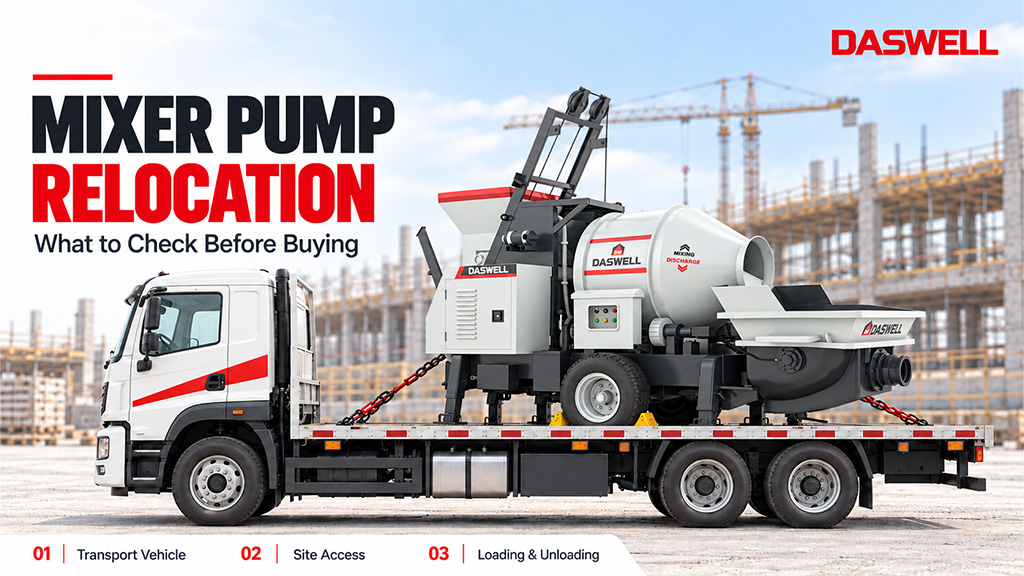
Can You Transport Your Concrete Mixer Pump?
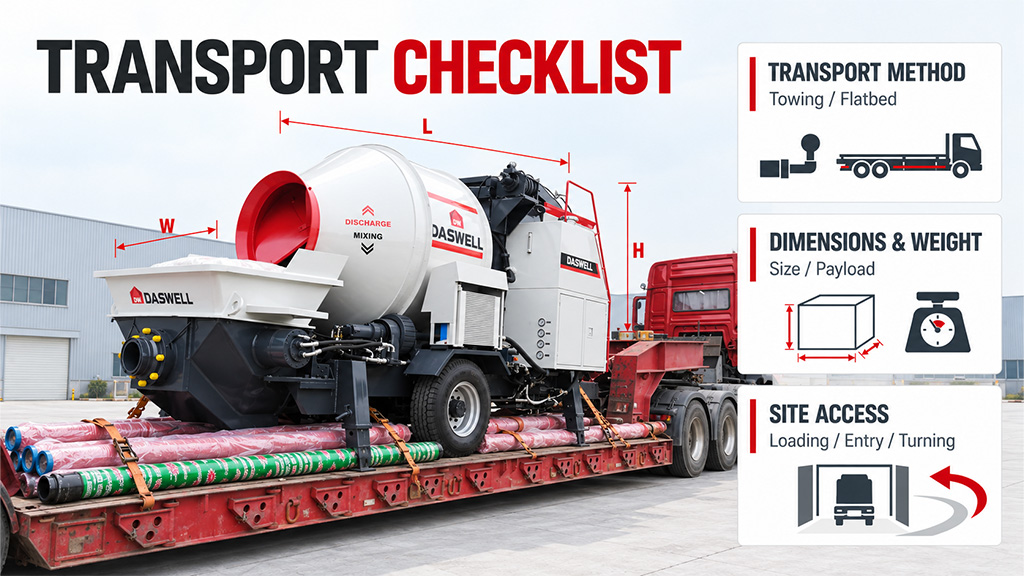
1. Towing or Flatbed Transport?
First, ask the manufacturer how this model is designed to be transported. There are two cases to consider:
- Towing: Confirm the towing conditions allowed by the manufacturer. Short moves within a jobsite and towing on public roads are different. Before towing on public roads, check the machine’s configuration and local road transport requirements.
- Transport on a flatbed truck or lowbed trailer: Use this method if the machine is not equipped for road towing or is unsuitable for towing over long distances. You also need suitable loading and unloading arrangements.
2. Mixer Pump Size and Weight
The dimensions on a specification sheet may describe the machine in its working position or its transport configuration. Ask the manufacturer for its length, width, height and total weight in the transport configuration.
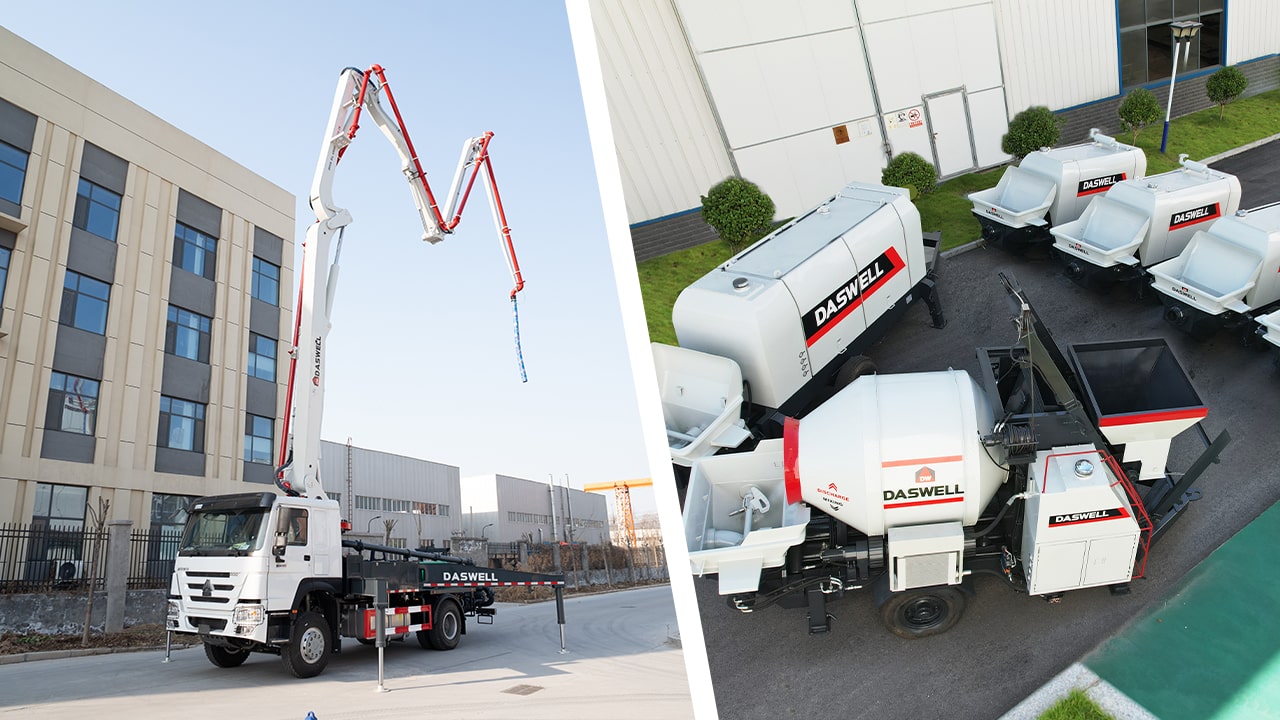
For example, the Daswell concrete mixer pump specifications list a total weight of 4,000 kg for the EMP40 and 5,300 kg for the DMP50. These figures give you a general idea of the machine’s weight. Before loading, refer to the transport dimension drawings, transport weight and loading plan for your specific model.
3. Can Your Mixer Pump Enter the Site?
- Does the towing vehicle have a suitable towing capacity, hitch type and braking system?
- Is a crane, ramp or loading platform available? Does it meet the loading and unloading requirements for this model?
- Are the entrance width, turning radius and ground bearing capacity at the next jobsite suitable for the machine?
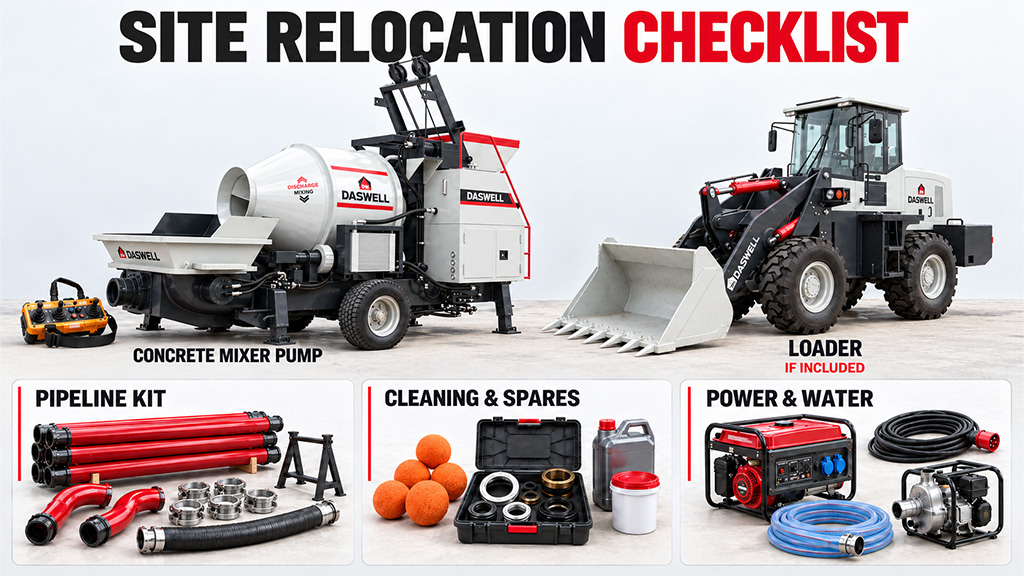
What Travels with Your Concrete Mixer Pump?
| Category | Common Items | What to Confirm |
|---|---|---|
| Main unit | Concrete mixer pump and remote control | How will the machine be secured for transport? Which parts need to be removed and packed separately? |
| Delivery pipeline | Delivery pipes, elbows, pipe clamps, hoses and pipe supports | What are the total weight and length? Is a separate transport vehicle needed? |
| Cleaning supplies and spare parts | Cleaning balls, wear parts, hydraulic oil and grease | How will these items be packed, secured and transported so nothing is missing on arrival? |
| Feeding equipment | Loaders, batching hoppers, belt conveyors, etc. | Does this equipment also need to move? Will another flatbed truck be needed? |
| Water and power equipment | Generators, cables, water hoses and water pumps | Are these already available at the new jobsite, or do they need to be brought along? |
If a loader feeds your concrete mixer pump and must move with it, you are actually transporting “two machines plus a load of pipes.” You must assess the number of transport vehicles required and the associated costs based on this total load, rather than considering the pump alone.
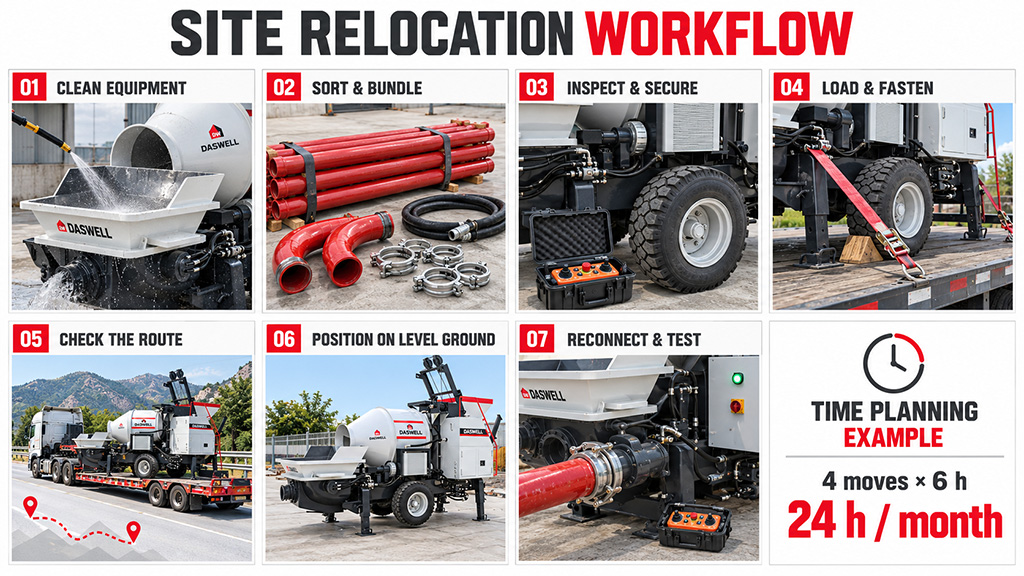
Moving Your Concrete Mixer Pump: 7 Steps
- Cleaning after work: Once pumping is finished, clean the hopper, pipeline and mixer as instructed by the manufacturer. This prevents leftover concrete from hardening.
- Pipe removal and sorting: Disconnect the delivery pipes. Count and bundle them by type, and check parts for wear.
- Inspection and securing: Check the hydraulic oil, fuel, tires and connections. Secure the remote control and any removable parts.
- Loading or hitching: Check the towing connection, brakes and lights. For flatbed transport, secure the machine as instructed by the manufacturer.
- Road transport: Check the route, height and weight limits, and permitted travel times.
- Unloading and positioning: Place the machine on level ground that can support its weight. Leave clear access for material feeding and concrete discharge.
- Setting up the pipeline again and pre-start checks: Connect the pipes, check oil levels and the power supply, and carry out a trial run. Start pouring only when everything is working correctly.
If you move several times a week, speak with the manufacturer in advance. Ask which parts take the most time to clean. Also ask whether there are design features that make cleaning easier and allow faster dismantling and reassembly.
Suppose you move the equipment four times a month. Each move takes six hours, from packing up to being ready to work at the next jobsite. You would need to allow 24 hours a month for these moves.
Portable Concrete Mixer Pump Buying Checklist
| Item | Questions to Ask |
|---|---|
| Transport method | Is towing within a jobsite or on public roads permitted? Is flatbed transport required? |
| Transport dimensions | What are the length, width and height in the transport configuration? |
| Machine weight | What is the actual weight in the transport configuration? Which components and items carried with the machine are included? |
| Towing or loading requirements | What are the requirements for the towing vehicle, hitch, brakes and flatbed truck? |
| Loading and unloading | Is a crane, ramp or loading platform needed? |
| Transporting other equipment | How will the delivery pipes, spare parts and feeding equipment be transported? |
| New jobsite conditions | Are water and the required power source available? Are the material storage areas, ground bearing capacity and access routes suitable? |
| Time needed for the move | Given our site conditions, how many people and how much time are needed from cleaning after work to restarting at the next site? |
| Wear parts and spare parts | Which parts need extra protection during transport? Which spare parts should travel with the machine? |
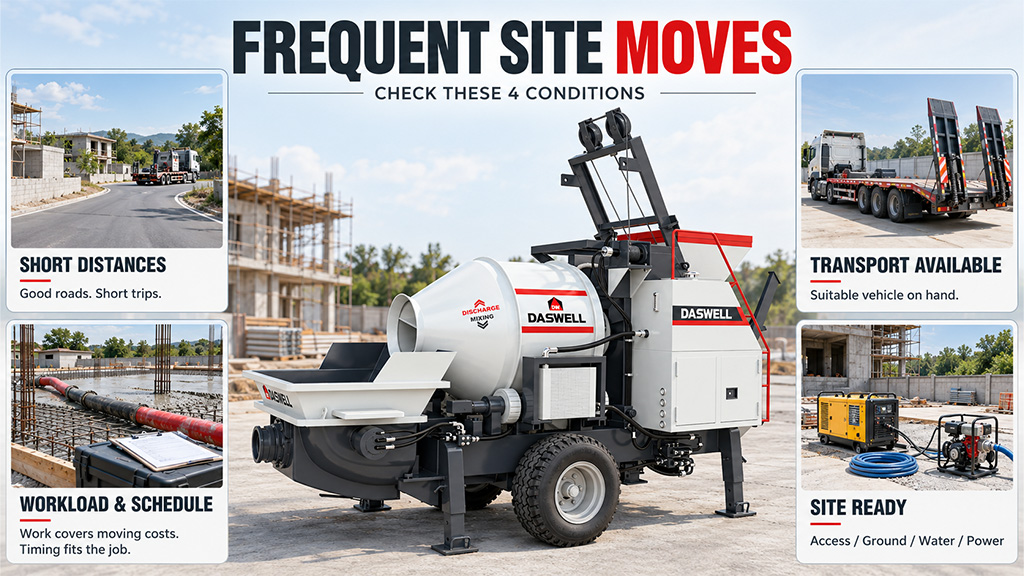
Frequent Site Moves: Is a Mixer Pump Worth It?
- Jobsites are close to each other, roads are in good condition, and travel times are short.
- The workload at each jobsite justifies the cost of moving. The time the machine stays at each site also fits the construction schedule.
- Suitable towing or transport vehicles are already available, so moving the equipment does not add major costs.
- The site entrance and layout allow the equipment to move in and out. The basic water supply and power requirements are met.
Choose the Right Concrete Mixer Pump
To decide whether a portable concrete mixer pump is suitable for frequent site moves, answer three questions: Can your existing vehicles transport it? What else needs to move with it? How long will it take to go from finishing one job to starting the next?
Want advice from Daswell Group for your project? Please provide the following:
- The country or region where your project is located;
- How often you expect to move the equipment each month and the average distance between jobsites;
- Photos of the entrances and work areas at the jobsites;
- The models of your existing towing vehicles, flatbed trucks or loaders;
- The average concrete volume required at each jobsite and the pumping distance.
We will use this information to recommend a suitable model and help confirm the transport method and supporting equipment you need.