Concrete Mixer Pump Capacity: Balancing Mixing and Pumping Output
When you select a concrete mixer pump machine, you can see two different capacity figures: mixing capacity and pumping capacity. These two specification describe different parts of the working process.
Therefore, if you are planning to buy a concrete mixer with pump machine, you had better not focus on just one specification. You need to check whether the pump can meet your project requirements. You also need to check whether enough concrete can be supplied. This is important for keeping the concrete machine working efficiently. A suitable concrete mixer pump should balance concrete production, pumping performance, and actual site conditions.
Why Are Mixing and Pumping Capacities Different in a Concrete Mixer Pump?
Mixing capacity means how much concrete the mixing system can prepare within a certain time. Pumping capacity means how much prepared concrete the pumping system can deliver through the pipeline. Although the concrete mixing pump has both the mixing and pumping capacity, their outputs are not necessarily the same.
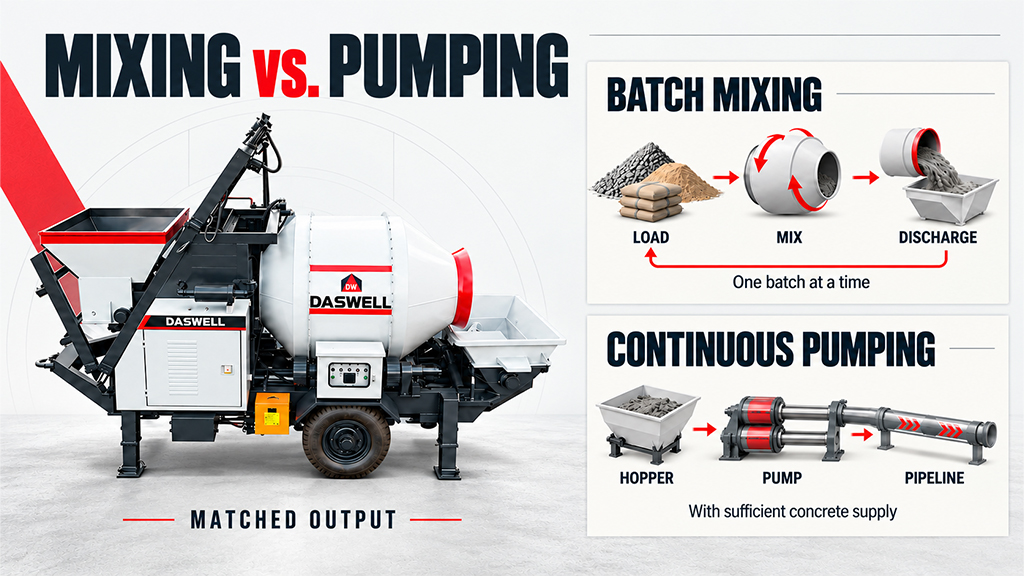
For this reason, the pumping capacity can be higher than the built-in mixing capacity, and the actual output of the concrete mixer pump depends on how well the mixing and pumping processes work together.
| Item | Mixing Capacity | Pumping Capacity |
|---|---|---|
| Definition | The amount of concrete the mixer can prepare within a given time | The amount of concrete the pump can deliver through the pipeline within a given time |
| Main Function | Mixing raw materials into fresh concrete | Transporting mixed concrete to the required location |
| Working Method | Batch operation: loading, mixing, and discharging | Repeated pumping cycles that push concrete through the pipeline |
| Key Factors | Usable batch volume, mixing time, loading time, and discharging time | Pump cylinder volume, pumping cycle, pump configuration, and pipeline conditions |
| Measurement | Usually expressed in m³/h | Usually expressed in m³/h |
| Main Limitation | The time required to prepare each batch | The pump’s delivery capability and actual operating conditions |
| Relationship | Determines how quickly fresh concrete becomes available | Determines how quickly the prepared concrete can be delivered |
What Limits the Actual Output of a Concrete Mixer Pump?
The mixing and pumping systems of concrete mixer pump are designed to work together. In general, the built-in mixer supplies concrete for the pumping process. However, the concrete mixer pump real output depends on the whole working process. It is not just the number shown on the specification sheets.
Even with a matched system, it may also be interrupted because of the delays in supplying cement, aggregates, or water. Actual mixing output depends on consistent batch sizes and complete loading, mixing, and discharge cycles. Keeping materials and loading equipment ready helps you maintain the planned production rate.
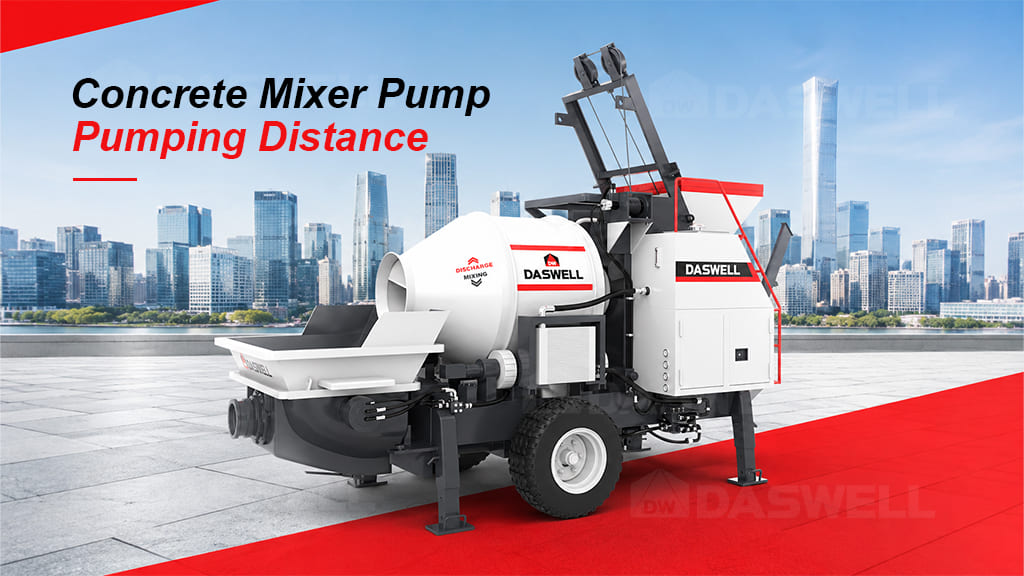
Horizontal distance, vertical lift, pipe diameter, and bends affect the resistance the pump must overcome. Concrete workability and aggregate size also influence pumping performance. Our concrete mixer pump pumping distance guide explains how pipeline routing and vertical lift affect equipment selection.
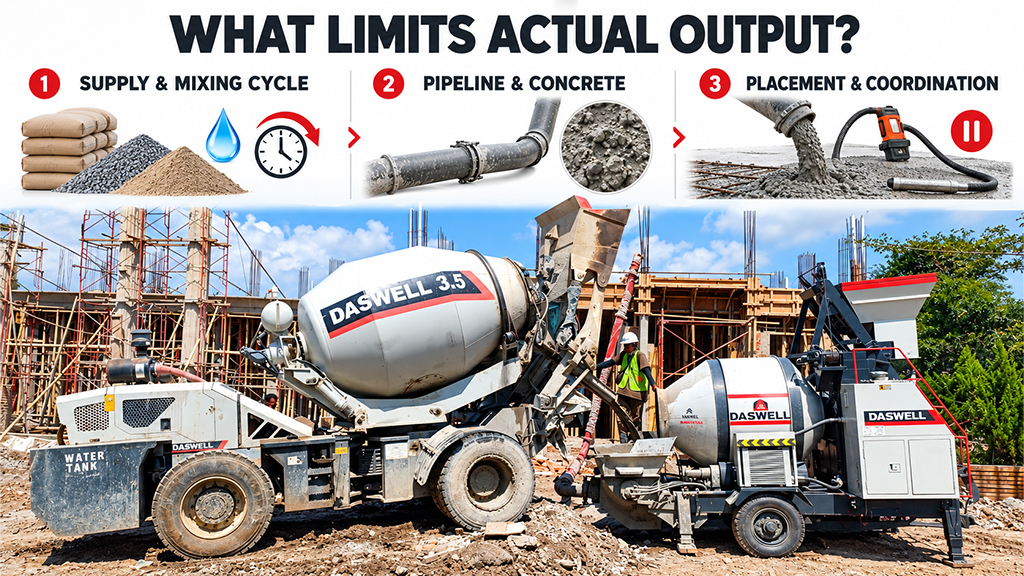
Pumping may need to pause while workers reposition the delivery hose, move between pouring areas, or complete placement and compaction. These interruptions WILL reduce the average volume placed per hour.
Therefore, the theoretical pumping capacity should not be treated as the amount of concrete the project will place every hour. The real output should account for the integrated machine’s production cycle, actual pumping conditions, and the crew’s working pace.
Why Choose a Concrete Mixer Pump?
It is worth to consider the concrete mixer pump machine when your project needs both on-site mixing and concrete delivery through a pipeline.
For small and medium projects without reliable ready-mix supply, it will be a suitable choice. This pump have both functions in one unit can simplify equipment setup and coordination. The built-in mixer can provide enough concrete for normal pumping operation. You do not need an additional mixer or pumper for complete these two tasks.
The integrated design is also useful when working space is limited. Concrete can be prepared on site and pumped directly to the pouring point. This helps shorten the process between mixing and placement.
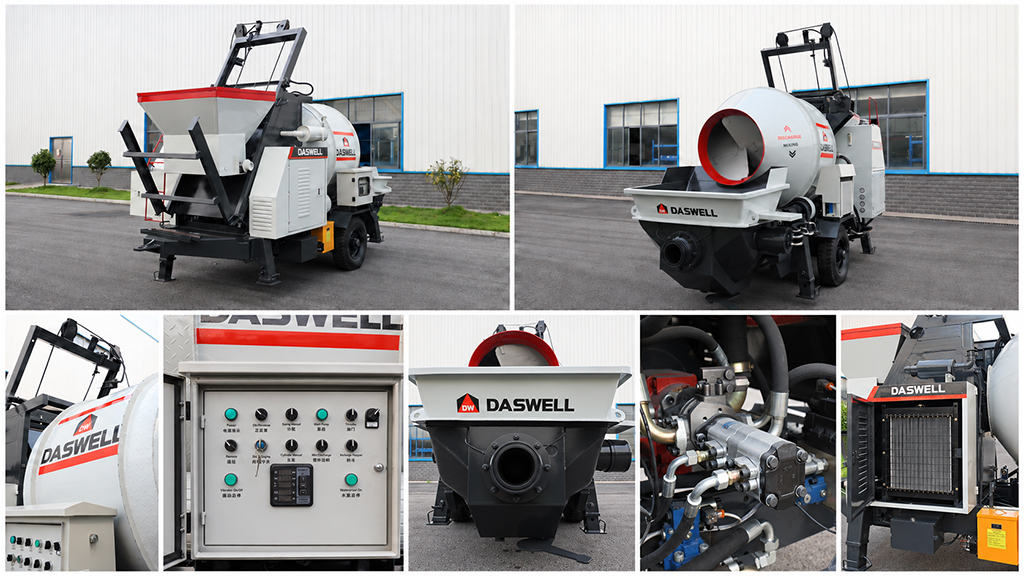
The main advantage of a concrete mixer pump is not simply having the highest output. It is the ability to combine concrete production and pumping in one machine. Meanwhile, it matches these two functions to the actual needs of the project.
For your reference, if most of your concrete will come from an external source, a concrete trailer pump machine will be a better fit. And we also have separated mixing machine and concrete transit mixer for you to choose. You can visit our comparison guide of these two pumping machines to help you decide.
How to Match Mixing and Pumping Capacity for Your Project?
When selecting a concrete mixer pump, you should first determine how much concrete you want to place each hour. Based on this requirement, you can then evaluate whether the pumping system can meet the job conditions and whether the concrete supply can keep up with the required output.
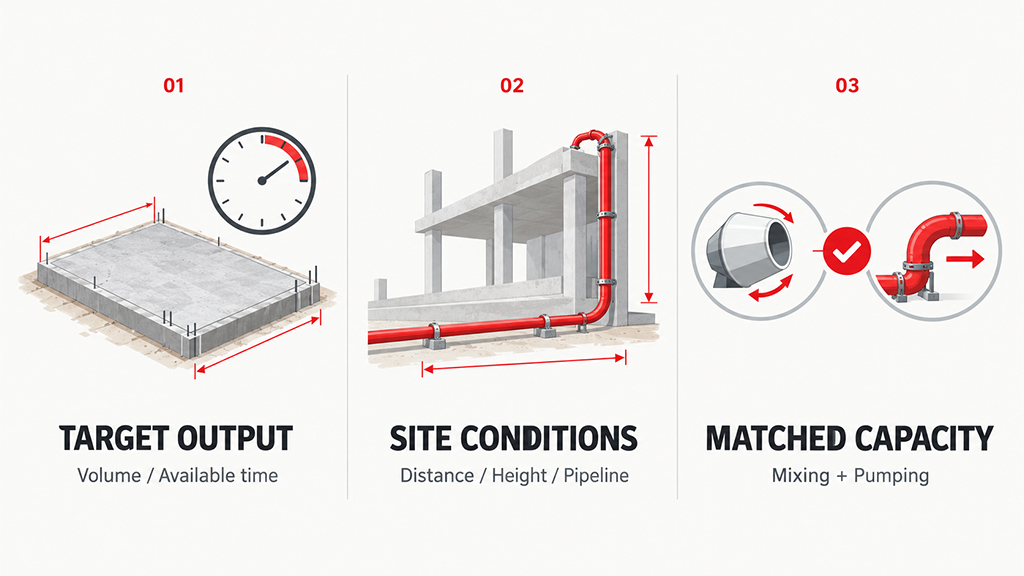
You should estimate the total volume of concrete to be placed and the available pouring time. This gives you a basic hourly output target.
The actual pumping conditions, including the horizontal distance, vertical height, pipeline layout, concrete slump, aggregate size, and required pumping pressures affects the pumping performance.
You can contact Daswell and tell us about your site conditions. We can recommend the most suitable machine for meeting your required output.
Share your target pouring rate with us, and we will compare it with the machine’s expected output when the machine mixes and pumps for matching your target. We also consider your material loading and normal site interruptions for recommending the most suitable equipment for you. If that model cannot meet your production requirements, we can assess other models or equipment configurations.
To help us select a suitable concrete mixer pump for your project, provide your required hourly output, pumping distance, site layout, and concrete mix specifications. These details allow us to evaluate mixing and pumping performance together against your project needs. Contact us now and get your concrete mixer pump machine.