Trailer Concrete Pump Pressure: Theoretical vs. Actual Pumping Pressure
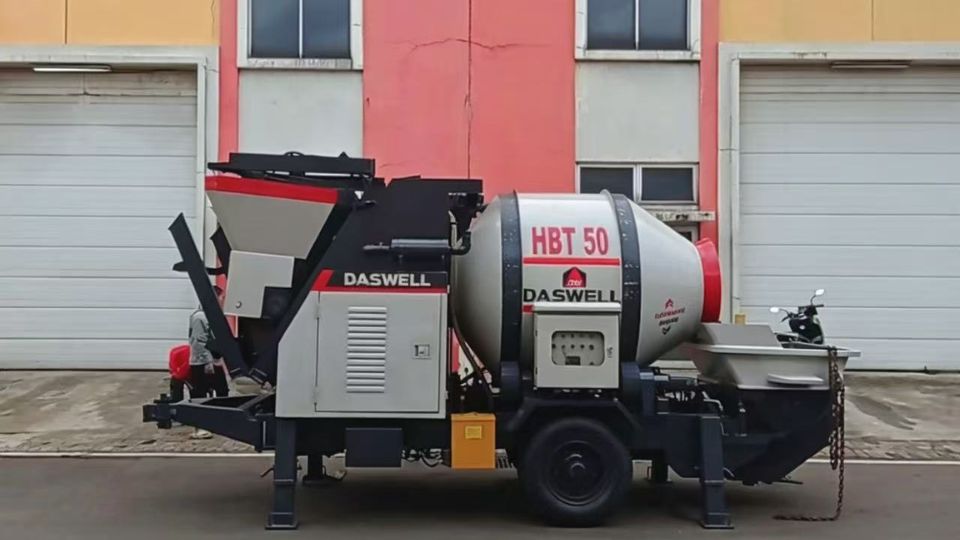
When reviewing the product specifications for a trailer concrete pump, the pumping pressure is generally considered as a key indicator of the equipment’s capacity. You may have a question: if a machine is rated for an outlet pressure of 16MPa, does that mean it will always deliver concrete at 16MPa during actual construction operations?
The answer is no. The pressure rating specified in the equipment parameters reflects the pressure capacity of the trailer concrete pump itself, but the actual pumping pressure required on-site depends on a variety of factors and conditions.
What is the theoretical pumping pressure of a trailer concrete pump?
1.What is the theoretical pumping pressure?
Theoretical pumping pressure primarily reflects the concrete output pressure that a trailer concrete pump is capable of delivering. It is closely linked to the design of the equipment’s hydraulic system, cylinder configuration, and pumping mechanism.
A trailer concrete pump utilizes its power system to generate hydraulic force, which drives a piston within the concrete cylinder to push concrete into the delivery pipeline. The hydraulic driving force and the design of the cylinders collectively determine the maximum concrete output pressure the equipment can produce.
Thus, theoretical pressure is specifically reflected in the design capabilities of the equipment itself, rather than the actual pressure that can be achieved in every instance on a construction site.
2. How does trailer concrete pump generate pumping pressure?
Let us understand pumping pressure by looking at the basic operating process of a trailer concrete pump. The pumping pressure is generated through the transmission of power between the hydraulic system and the concrete cylinders.
Whether powered by a diesel or an electric engine, the system starts, then drives the main hydraulic pump. The main hydraulic pump pressurizes the hydraulic fluid, which in turn provides power to the entire pumping system.
Next, pressurized hydraulic fluid enters the main cylinder, driving the piston rod in a reciprocating motion. The piston rod is connected to the conveying piston within the concrete cylinder; as the piston moves forward, the concrete is pushed into the delivery pipeline.
The S-valve switches alternately between the two concrete cylinders. While one cylinder discharges concrete, the other draws in a fresh supply from the hopper. The two cylinders work in tandem to ensure continuous operation.
3. Which equipment parameters are related to pumping pressure?
The pressure capacity of a piece of equipment is not determined by a single parameter; ideally, it can be understood through a simplified relationship:
Concrete discharge pressure ≈ Hydraulic pressure × Effective area of the main hydraulic cylinder ÷ Effective area of the concrete delivery cylinder.
That’s why hydraulic systems can translate hydraulic force into varying levels of concrete output pressure by utilizing the area ratio of the hydraulic cylinders.
If you need a trailer concrete pump, of course you don’t need calculate these complex parameters; this information is provided simply to help you understand the conceptual relationship between hydraulic pressure and concrete discharge pressure.
What exactly does “actual pumping pressure” refer to in a trailer concrete pump?
1. Actual pumping pressure depends on the on-site conveying conditions.
Theoretical pressure indicates the maximum pressure a concrete pump is designed to deliver, while actual pumping pressure depends on the resistance the concrete encounters during transportation.
As concrete moves through the delivery pipeline, it has to overcome friction along the pipe walls. The required pressure also varies depending on the pipeline layout and the height of the delivery point.
Example: Short horizontal runs and high-rise pumping
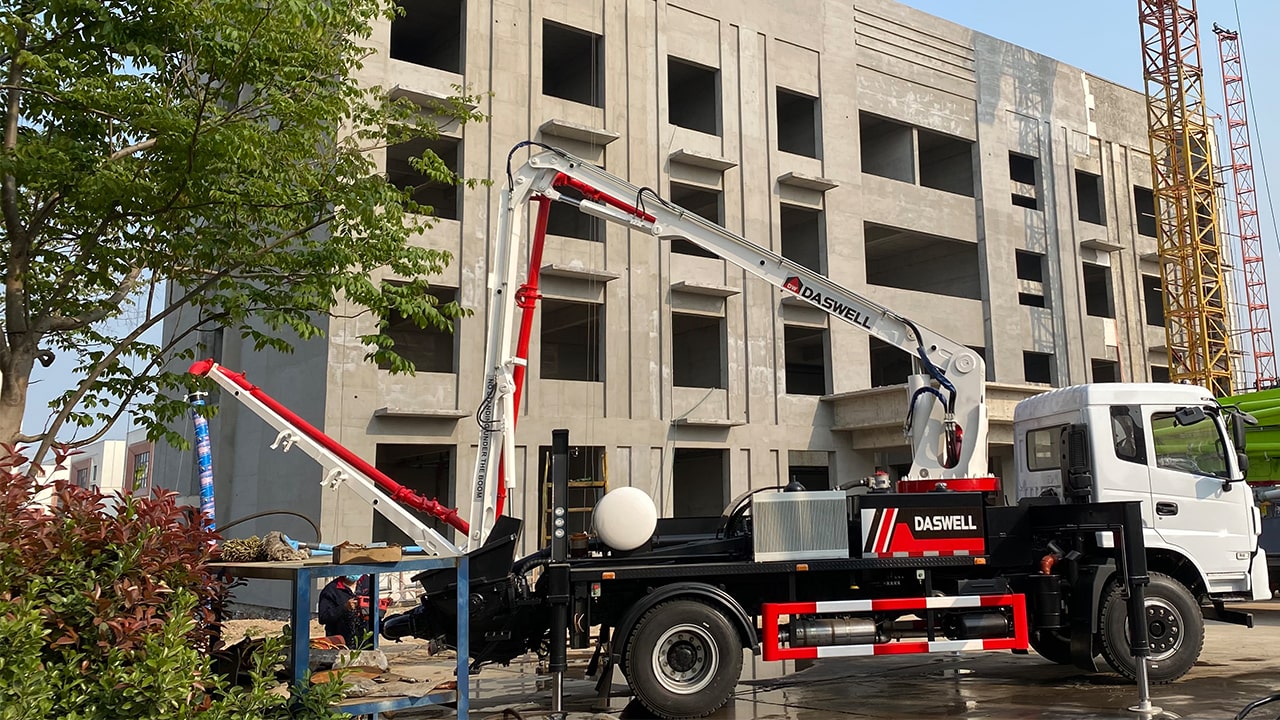
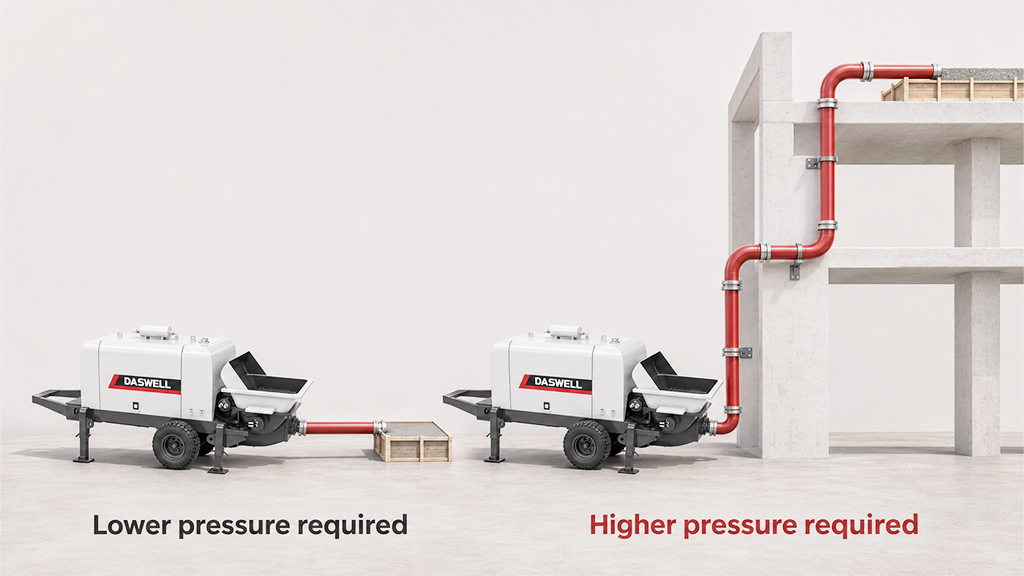
Here is a case: Pumping concrete over a short horizontal distance usually requires less pressure. However, when a trailer concrete pump is used for high-rise construction, it needs to push concrete upward against gravity while overcoming friction and resistance inside the pipeline. As a result, the pump must work harder to maintain a steady flow.
2. How does the pressure change during the actual pumping process?
During the operation of the trailer concrete pump, the pressure fluctuates.
As concrete enters the delivery pipeline, the equipment must provide sufficient pressure to push it forward. Resistance along the pipeline accumulates as the transport distance increases. If the pipeline contains multiple elbows, additional localized pressure loss occurs whenever the concrete changes its direction of flow.
In addition, the flow state of the concrete itself also influences pressure variations. When the concrete has good flowability, it generally moves through the pipeline more easily; however, if the mix proportion is improper or the flowability is poor, the resistance to transport may increase.
3. Does the actual operating pressure need to reach the maximum pressure?
Of course not.
For horizontal transport over relatively short distances, the actual pressure required may be far lower than the equipment’s maximum outlet pressure. As long as the pump unit can operate stably, there is no need to increase the pumping pressure.
On the contrary, operating equipment near its maximum pressure limit for extended periods can increase the strain on the hydraulic system and pumping components. Therefore, it is more practical to select a trailer concrete pump that meets project requirements while maintaining a reasonable pressure margin, rather than simply pursuing the highest possible maximum pressure.
What factors affect the actual pumping pressure of a trailer concrete pump?
1. Concrete Mix Proportion and Workability
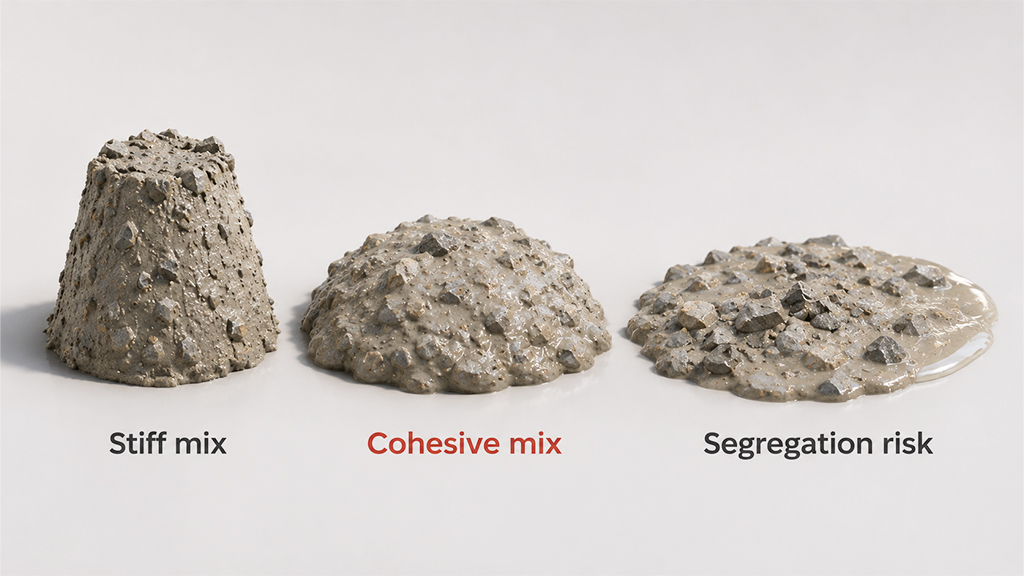
Even when using the same trailer concrete pump, different concrete mix proportions can result in varying pumping resistance. Factors such as concrete slump, water-cement ratio, aggregate particle size, and gradation all influence the flow characteristics within the delivery pipeline.
If the concrete has poor flowability, or if the ratio between the aggregates and the mortar is not well-proportioned, the concrete may encounter greater resistance as it moves through the pipeline.
Hold on, please remember the higher slump is not necessarily better. Construction personnel must also consider the stability of the concrete and the risk of segregation, ensuring the mix design is suitable for the specific requirements of the pumping process.
2. Length and diameter of the conveying pipeline
The delivery pipeline is one of the significant factors which affecting the actual pumping pressure.
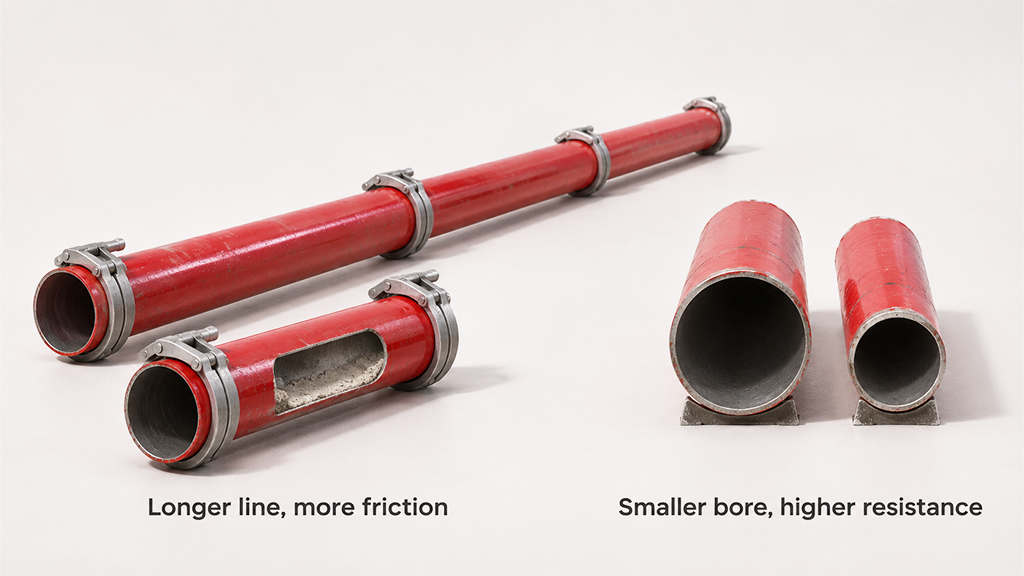
The length and diameter of the pipeline, wear and scaling on the inner walls, and the condition of the connection points all affect the actual pumping pressure of a trailer concrete pump.
The longer the pipeline, the greater the frictional resistance typically generated against the concrete. For projects requiring long distance transport, the equipment often needs to provide higher pressure to maintain a steady flow of concrete.
3. Conveying height and number of elbows
When concrete is conveyed upward, the equipment must overcome the gravitational force exerted by the concrete column itself. Generally, the greater the conveying height, the higher the static pressure that must be overcome. As the concrete passes through elbows, the change in flow direction generates additional local resistance.
Two projects use the same model of trailer concrete pump; one employs a shorter, straighter pipeline, while the other requires routing through multiple elbows and pumping to a higher elevation. Even though the equipment is identical in both cases, the second project will typically require higher pumping pressure.
4. The operating status of the trailer concrete pump itself
Components such as the hydraulic system, pistons, S-valve, and cutting ring may experience wear or develop irregularities after prolonged use, which can interfere with the proper operation of a trailer concrete pump. Like any tool, such equipment requires regular inspection and maintenance to extend its service life and ensure long-term, reliable operation.
If you encounter issues such as an abnormal rise in pressure, a decrease in pumping volume, or unstable delivery, you should promptly check the condition of the concrete, inspect the pipelines for blockages, and verify that the pumping system is functioning correctly.
Why shouldn’t you look solely at the maximum pumping pressure when choosing a trailer concrete pump?
1. Maximum pressure doesn’t mean that the equipment will always deliver the same level of performance.
Even if a trailer concrete pump boasts a high maximum discharge pressure, it doesn’t necessarily maintain the same pumping efficiency under all construction conditions. The actual performance of the equipment is closely related to its power system, pumping mechanism, concrete delivery cylinders, and overall configuration.
2. Pumping pressure and pumping volume need to be considered in conjunction.
Pumping pressure and pumping volume are two distinct yet interrelated metrics.
Pumping pressure primarily reflects the equipment’s capacity to overcome resistance during transport, while pumping volume indicates the amount of concrete the equipment can deliver per unit of time. In practical construction, both parameters are significant, and they should be evaluated based on the specific requirements of each situation.
Residential building construction:Requires selecting appropriate pumping pressure and output capacity based on building height, floor structure, and on-site pipeline layout.
Bridge and tunnel projects:Require consideration of long transport distances, complex pipeline configurations, and the need for continuous construction operations.
Water conservancy and mining projects:Require determining equipment configuration by taking into account the construction environment, transport height, and concrete supply conditions.
How can one determine whether a trailer concrete pump meets the pressure requirements of a project?
1. Specify the construction height and conveying distance.
First, you need to know how far and how high the concrete needs to be pumped, and whether the pipeline will include multiple bends. These details help estimate how much resistance the pump will need to overcome during delivery.
2. Confirm concrete materials and piping configuration
Next, look at the concrete mix, slump, and maximum aggregate size, along with the diameter and layout of the delivery pipes. These details affect how easily the concrete moves through the pipeline and whether the pump can maintain stable operation.
3. Evaluate actual pumping pressure requirements
Then, estimate the pressure required for the project based on the pumping height, horizontal pipe length, number of elbows, and concrete properties. For more complex projects, it is better to have an engineer check these conditions and calculate the required pressure rather than rely only on experience.
4. Select a trailer-mounted concrete pump with an adequate pressure margin.
Finally, choose a pump that can provide enough pressure for the project, with some extra capacity for changing site conditions. The pump’s rated outlet pressure should cover the expected demand, while the working pressure of the pipes, clamps, and connections should also be considered. A suitable setup helps the pump run smoothly and keeps the project on schedule.
Theoretical pressure shows what a trailer concrete pump is designed to handle, while the actual pressure depends on the concrete, pipeline, and site conditions. So when choosing a trailer concrete pump, look beyond the maximum pressure and make sure it matches your project. If you need help choosing the right model, feel free to contact our team.