How to Plan Concrete Supply for Continuous Mixer Pump Operation?
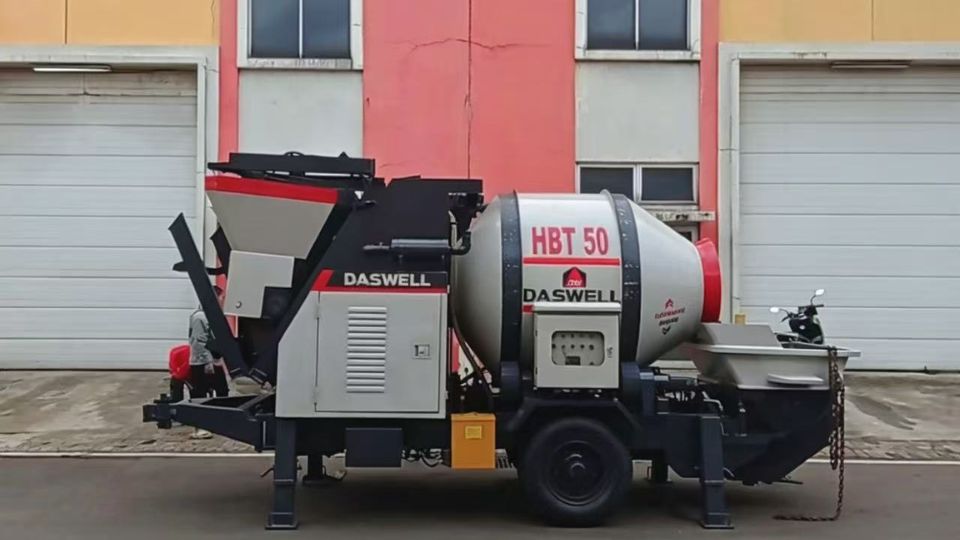
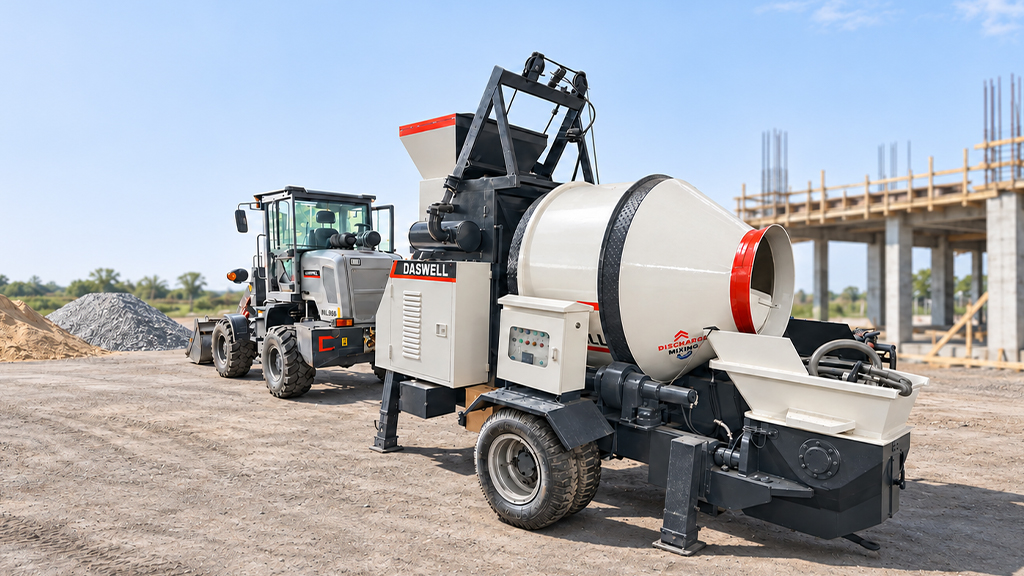
A concrete mixer pump is popularly used for concrete construction projects. It combines mixing and pumping functions in one machine. Using this machine, you can prepare concrete on site and deliver it directly to the pouring location through a pipeline. For your small and medium-sized construction projects, this is a practical solution.
However, the continuous operation depends on more than the machine itself. Close cooperation and coordination among raw material supply, mixing capacity, pumping performance, pipeline arrangement, and the on-site pouring team are also very important. If one part of them falls behind, the pump may wait for concrete, and the pouring operation may be interrupted. It is key for you to ensure proper concrete supply planning. This helps maintain a steady workflow and reduces unnecessary downtime.
How can you plan concrete supply for continuous mixer pump operation? Daswell will show you the key steps, from estimating concrete demand to coordinating equipment and workers on site.
What Information Do You Need Before Planning Concrete Supply?
When you plan to buy a concrete mixer pump for your concrete construction project, you should start with the actual construction work.
Before arranging concrete supply, you should identify the pouring site, required concrete volume, and the specific construction method.
Pouring Area
Identify the location and size of each foundation, floor slab, road section, or other concrete structure.
Total Concrete Volume
Estimate the concrete quantity required for the entire project and each individual pouring zone.
Construction Schedule
Determine the planned working hours and how long each pouring section should take.
Site Conditions
Check the available space for the mixer pump, material storage, and concrete delivery pipeline.
If your construction area is large or divided construction areas, it is helpful for you to break this work into manageable zones. This gives the crew clear pouring targets and makes it easier to organize material preparation and equipment movement.
How Do You Prepare Raw Materials for Continuous Operation?
A continuous concrete supply starts with sufficient raw materials. Before your pouring, you can estimate the total concrete volume required for the project. Then calculate the corresponding material quantities according to the concrete mix formulation.
Determine the concrete volume needed for each pouring section based on its dimensions.
Add the quantities for all these sections to estimate the total project demand.
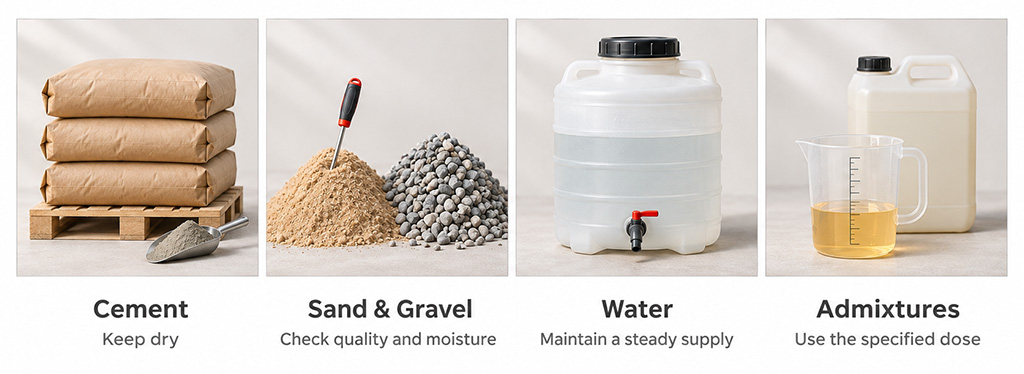
Use the specified mix proportions to calculate the required amounts of cement, sand, aggregates, water, and admixtures.
For your reference, you had better maintain a reasonable reserve to avoid matrials shortages during construction.
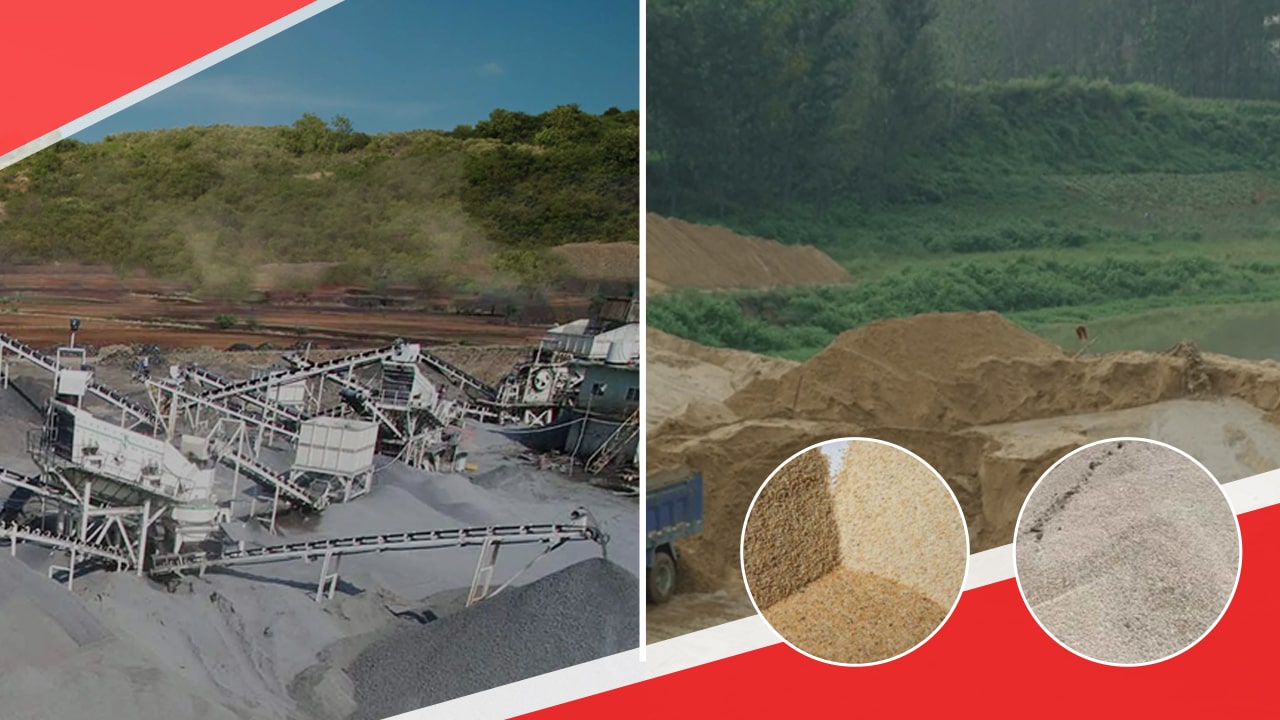
The main materials usually include:
How Do You Organize Material Feeding and Batch Preparation?
When the required materials are available, you can feed them according to the concrete mixer pump’s working cycle. Workers should prepare the next batch of cement, sand, aggregates, and water when the current batch is being mixed or pumped. This helps reduce unnecessary waiting between batches.
Typical workflow includes:
- Measure the Raw Materials: Weigh cement, sand, and aggregates according to the mix proportions. Measure water and admixtures accurately to maintain the required concrete consistency.
- Feed the Materials: Load the materials in the specified sequence, making sure proper mixing.
- Mix the Concrete: Maintain the recommended mixing procedure and time to achieve a uniform concrete mixture with the required workability.
- Discharge and Pump the Concrete: When the mixing is complete, the concrete will be discharge automatically into the pumping system.
- Prepare for the Next Batch: After completing the current batch, repeat the measuring and feeding process. Organize material preparation and worker assignments to minimize waiting time between batches.
How Do You Prepare the Site for Continuous Pouring?
A stable concrete supply requires both an organized material delivery system and a suitable pipeline arrangement.
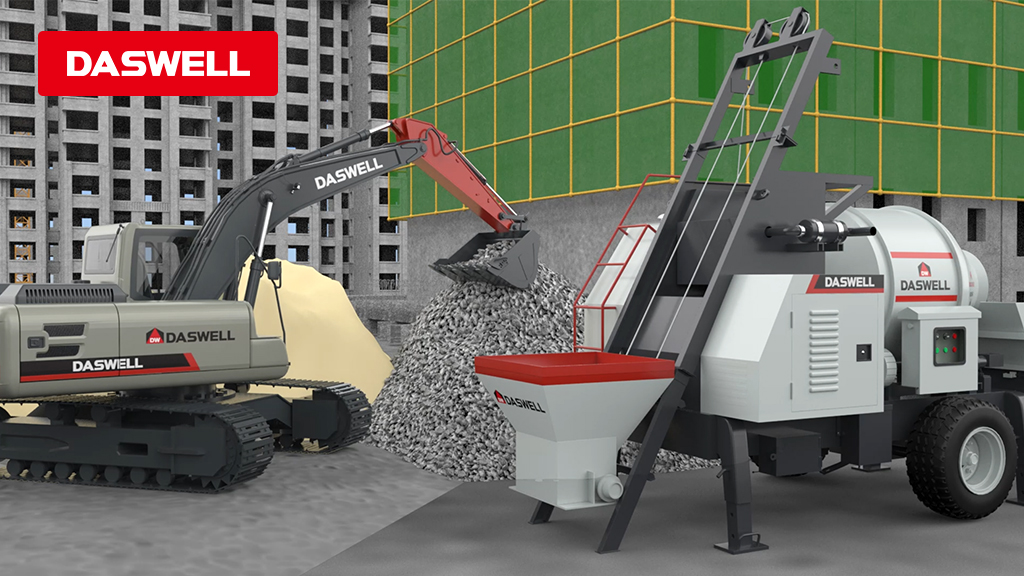
Before starting operations, it should be clearly determined how the raw materials are transported to the mixing pump and where they are stored. A well-designed site layout can reduce unnecessary material handling. It also helps the team maintain a more consistent concrete delivery process.
Material Transportation and Storage
Concrete Delivery Pipeline
The distance between the mixer pump and the pouring location can affect pumping performance.
Here are the pumping parameters of our hot selling concrete mixer pumps for your reference. If you can not ensure whether the concrete mixer pump can meet your needs or not. Just send an inquiry to us. Our professional team will design and recommend the most suitable machine for you.
| Model | Maximum Pumping Height (m) | Maximum Pumping Distance (m) |
|---|---|---|
| DMP30 | 30 | 100 |
| DMP40 | 50 | 200 |
| DMP50 | 120 | 500 |
How Do You Coordinate Concrete Mixing, Pumping, and Placement?
Concrete mixing, pumping, and placement are closely connected operations. Even the sufficient materials and suitable equipment are available, poor coordination can interrupt the entire pouring process. To maintain a steady workflow, the mixing rate, pumping demand, and on-site placement capacity should be properly matched.
Ensure Sufficient Raw Material Supply
Prepare enough cement, sand, aggregates, water, and admixtures before pouring begins.
Arrange material replenishment according to the planned construction schedule to avoid interruptions caused by material shortages.
Maintain Clear Communication
During the pouring operation, the equipment operator and site supervisor should stay in contact. If there are any changes in material supply, pumping conditions, pipeline performance, or placement progress, the team can solve it promptly.
Prepare for Unexpected Interruptions
Material delays, water shortages, equipment failures, or pipeline blockages may interrupt supply.
Ensure the team knows how to respond and arrange backup resources when needed.
With proper preparation and coordination, the construction team can maintain a steady pouring process and make better use of the concrete mixer pump.
Daswell provides concrete mixer pump solutions for different construction requirements. Based on your concrete output requirements, pumping conditions, and jobsite layout, our team can help you select suitable concrete mixer pumps and plan the concrete delivery process.
Contact Daswell today to discuss your project requirements and find a suitable concrete mixer pump solution.