One Dry Mix concrete Plant Delivered to South Africa | Concrete Case
Overview of dry mix Concrete plant projects in South Africa
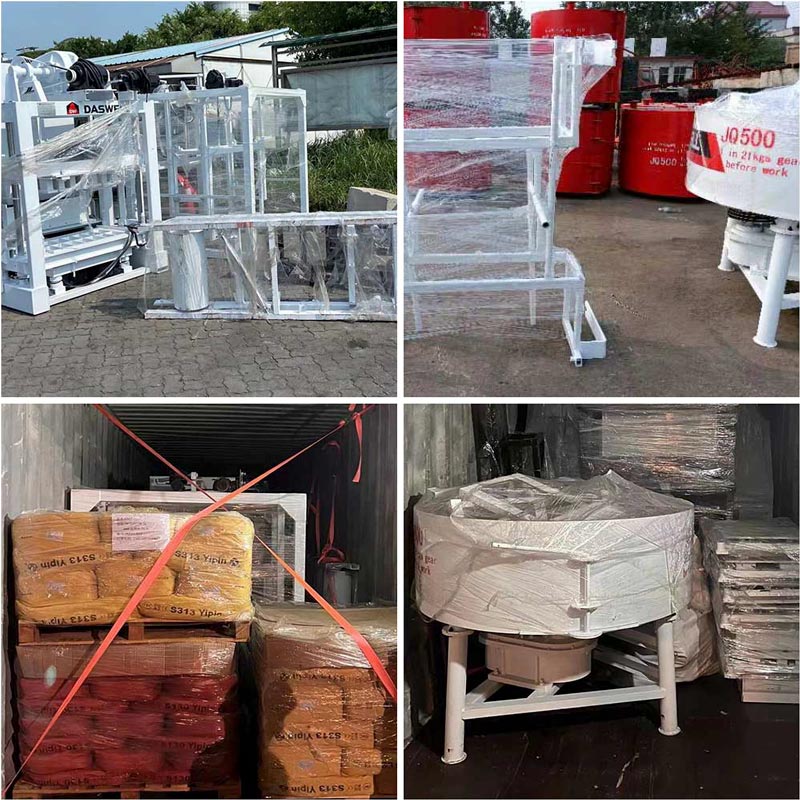
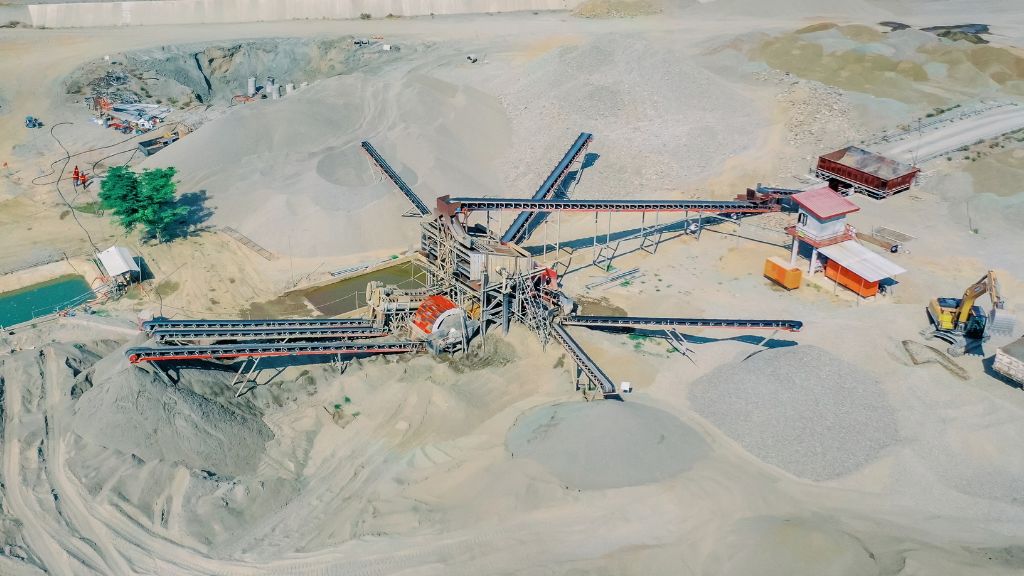
In 2025, DASWELL delivered a dry mix concrete plant to a dry mortar producer in South Africa. The line has been installed, commissioned, and is now running smoothly.
The customer’s requirements were straightforward:
- Consistent output quality — the same recipe should not produce “good batches and bad batches.”
- Less dust around loading and discharge areas — especially during bulk handling and truck loading.
- Automation without complexity — operators should be able to follow clear steps, and shift changes should not affect stability.
Based on their site conditions and production goals, we configured a solution centered on stable recipe execution + standardized operating steps + dust control at the source. The system includes material silos, a precision weighing system, PLC-based automation, and a dust collection system. After delivery, the equipment was put into operation, and the customer shared positive feedback.
What Problems Face Before Purchasing the dry mix batching plant?
1. The same formula did not always produce the same results
The customer did have a formula — the challenge was that the formula could “drift” during execution. Even small differences in weighing, feeding, or sequence can accumulate over time and show up as batch inconsistency, such as:
- One batch looks fine, and the next one is slightly off
- More checks and rework during peak production hours
- Frequent interruptions that break the production rhythm
2. Heavy dust in bulk handling and truck-loading areas
Dust was concentrated where people work most often — around transfer points and loading points. Over time, this led to practical daily issues:
- The site looked messy and required more cleaning time
- Material loss during handling
- Lower loading efficiency and more effort in on-site management
3. They wanted automation, but not a system only “experienced operators can run”
The customer wanted to reduce reliance on individual experience, but they did not want an overly complicated control process. If each shift relies on “figuring it out,” production quality and output can fluctuate after handovers.
DASWELL Solution —— dry concrete batching plant
To address these challenges, DASWELL focused on four practical elements that directly improve day-to-day operation on a dry mix batching plant:
- Silo storage: Keeps materials organized, supports steadier feeding, and reduces repeated on-site handling.
- Precision weighing: “The right amount is the right amount,” making recipe execution more reliable and reducing batch variation.
- PLC automatic control: Steps are built into the program, so operators follow a clear sequence and shift changes are less likely to cause disruption.
- Dust collection system: Captures dust at key generation points, helping keep truck loading and discharge areas cleaner.
What Changed After using the dry mix concrete plant?
Before commissioning, operators often spent time on “small but frequent” problems — extra checks, extra cleaning, and repeated parameter adjustments. Each task seems minor, but when it happens every day, it adds up and slows the line down. Also, because different operators have different habits, output and stability could change after shift handovers.
After the dry concrete batching plant went into production, improvements were felt in daily routines:
- The line runs the same way each time, and fluctuations are reduced
- The loading area is easier to manage, and the work environment is more comfortable
- Less reliance on last-minute corrections based on experience, so the production rhythm becomes smoother
The improvement is not about one single feature — it’s about fewer interruptions, less rework, less cleaning, and a more controllable daily operation.
Key Advantages of the dry mix batching plant
- More stable quality: Accurate weighing and standardized PLC sequences help keep batches consistent.
- Cleaner site conditions: Reduced dust around bulk handling points lowers the ongoing cleaning burden.
- Smoother shift handovers: A fixed operating sequence helps new operators get up to speed faster.
- More predictable production: Less time spent on manual corrections and repeated adjustments.
Commissioning and Operator Training for the dry concrete batching plant
During commissioning, DASWELL focused on building a workflow that operators can repeat consistently — not just powering on the equipment, but running it reliably day after day. On-site guidance covered:
- How to run the batching procedure step by step
- Daily weighing checks and basic routine inspections
- Dust collection checks at loading and transfer points
The goal was to standardize “how the line is run,” so long-term stability depends on process—not on individual habits.
Customer Feedback on dry mix concrete plant
After a period of operation, the customer reported that the system helped them keep product quality more consistent and made the loading area easier to manage. Operators also noted that once the process is standardized, daily operation becomes clearer and easier to control.
Need a Similar Solution? Contact us now!
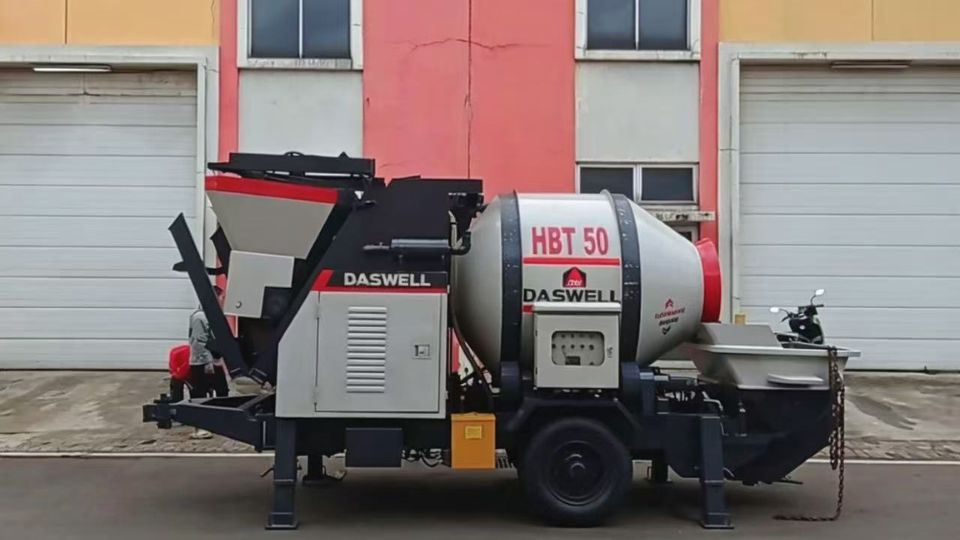
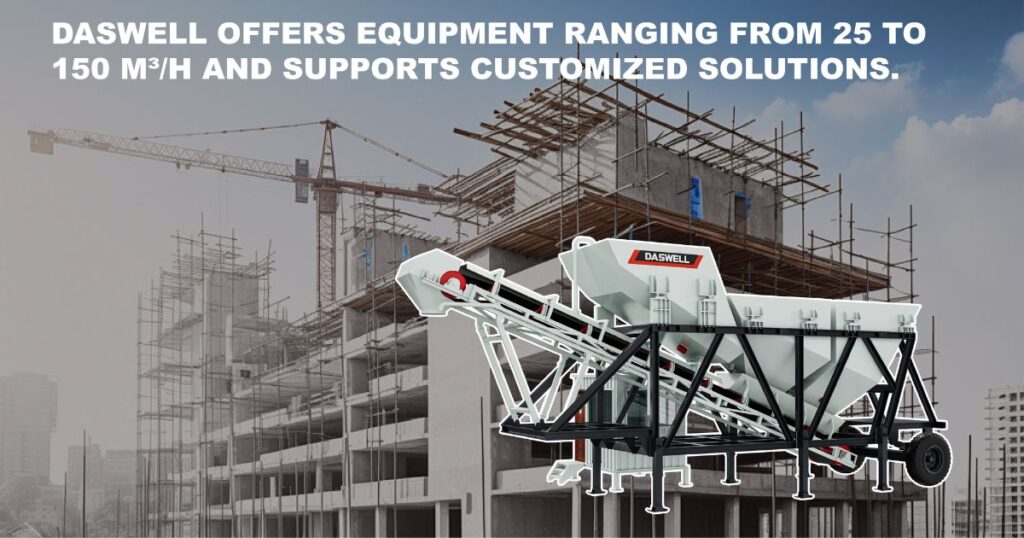
If your production scale is expanding—or you are facing challenges such as batch inconsistency, dust issues, or complicated operation—contact DASWELL, we can also provide complementary solutions beyond dry mix batching plants, including mobile concrete batching plants and concrete mixer pumps for different production and jobsite requirements.
Share your application details—materials, storage method, and loading method—and we can recommend a configuration suited to your real operating conditions.