How Does a Concrete Mixer Pump Reduce the Complexity of On-Site Concrete Production efficiently?
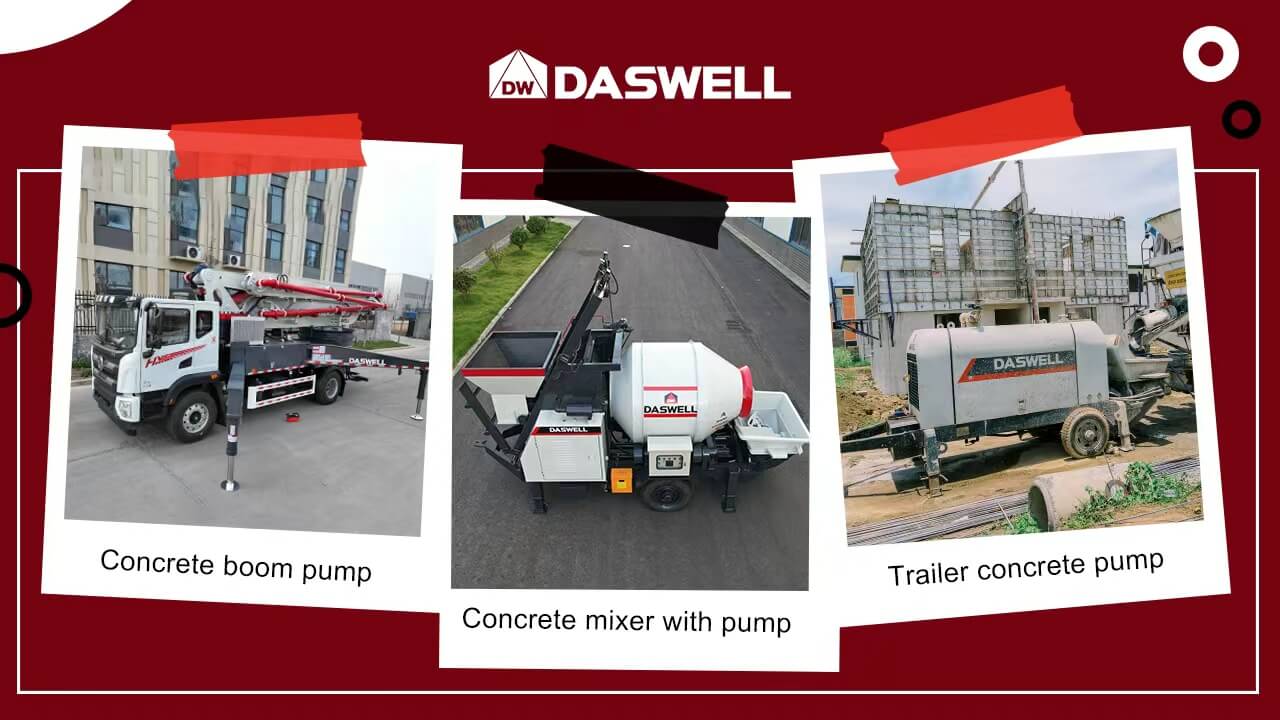
One machine is responsible for mixing the concrete, while the other transports it to the construction site. This is how traditional concrete mixers and concrete pumps work together. Although it may seem that the only difference is the addition of another machine, the actual process requires workers to coordinate the operating schedules of both machines, arrange concrete transfer, and manage personnel. If one step falls behind, it can affect the entire workflow.
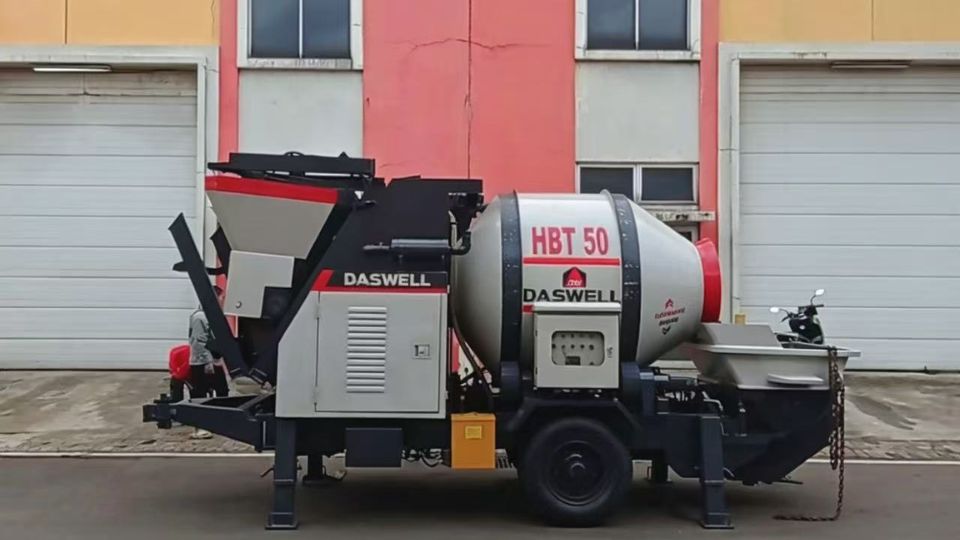
A concrete mixer pump combines these two functions in a single machine. Once the concrete has been mixed, it can move directly into the pumping stage without requiring separate arrangements for transferring concrete between two machines. This makes on-site operations much easier to manage.
How Does a Concrete Mixer Pump Combine Mixing and Pumping?
The mixing and pumping systems are integrated according to the sequence of concrete production, allowing both processes to work together as one coordinated system.
An Integrated Design for Two Key Production Processes
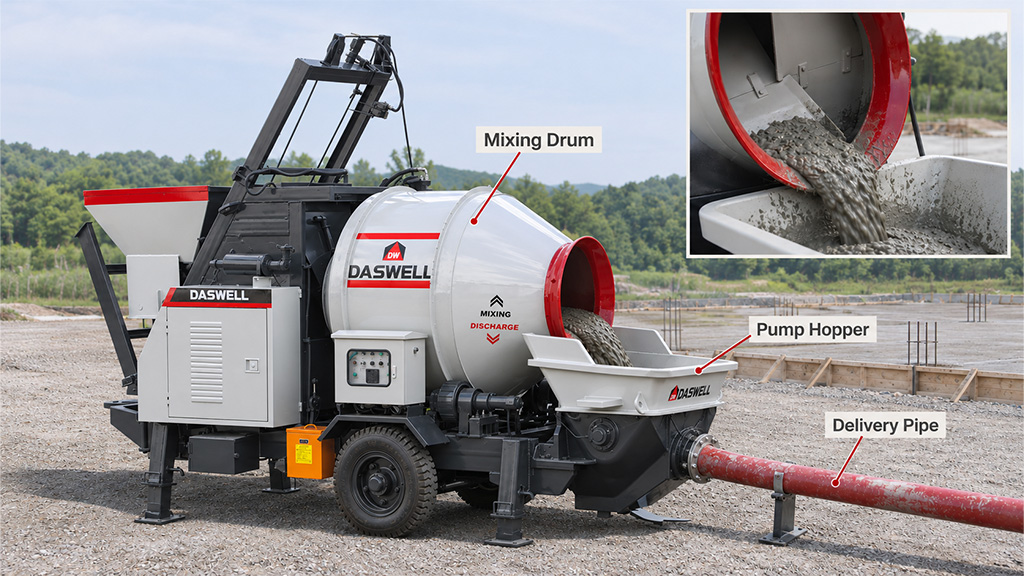
A concrete mixer pump mainly consists of a mixing system, a pumping system, a power system, a hopper, and the related control and delivery components.
The mixing system is responsible for preparing the concrete. Workers add cement, sand, aggregates, water, and other required materials according to the project specifications, then mix them thoroughly using the mixing unit.
Once mixing is complete, the concrete enters the machine’s pumping hopper. The pumping system then uses hydraulic power to push the concrete through the delivery pipeline to the required construction location. Both systems are built into the same machine and work together to complete the process, reducing the need to coordinate separate mixing and pumping equipment.
From Raw Materials to Concrete Delivery
To better understand how the process works, we can break the operation of a concrete mixer pump down into four steps:
1. Material Preparation: Workers prepare cement, sand, aggregates, water, and other materials according to the required concrete mix ratio.
2. Concrete Mixing: The mixing system combines the different materials to produce concrete that meets the project’s requirements.
3. Feeding the Pumping Hopper: Once mixing is complete, the concrete is transferred into the pumping hopper, ready for delivery.
4. Concrete Pumping: The pumping system pushes the concrete through the delivery pipeline to the designated construction area.
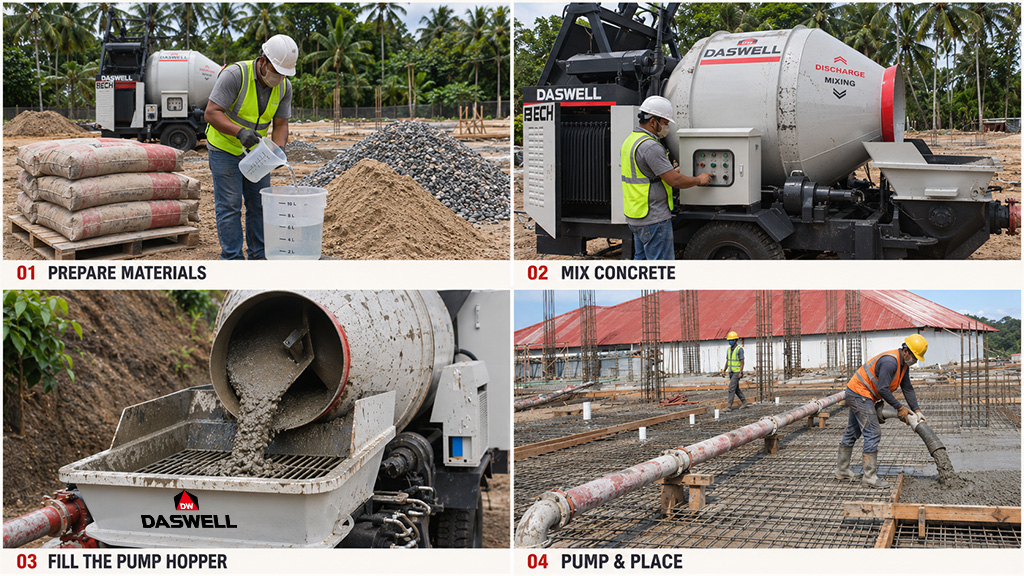
From material preparation to concrete delivery, the mixing and pumping processes are connected within a single machine.
Although workers still need to handle material preparation, mix ratio control, equipment operation, and routine inspections, a concrete mixer pump eliminates many of the unnecessary steps involved in coordinating separate machines.
What Work Does a Concrete Mixer Pump Actually Reduce?
Let’s look at the specific tasks a concrete mixer pump can eliminate or simplify on a construction site.
Less Material Transfer Between Separate Machines
When using separate equipment, workers need to figure out how to transfer the mixed concrete from the mixer to the pumping machine. Depending on the site layout, this may require additional transfer tools or manual assistance.
A concrete mixer pump combines the mixing and pumping systems in one machine. Once mixing is complete, the concrete can go directly into the pumping hopper, eliminating the need for a separate transfer step. This is particularly helpful on projects where space is limited or equipment placement is difficult.
Fewer Equipment Coordination Tasks
When mixing and pumping are handled by two separate machines, workers often need to monitor both operations and divide their attention between them.
For example, the mixing machine needs to prepare concrete according to the pumping schedule, while the pumping machine must adjust its working pace based on the available concrete supply. If either process is delayed, it can affect the other.
With a concrete mixer pump, workers can arrange both mixing and pumping around a single machine. This makes it easier to coordinate the two processes and keeps the overall workflow more manageable.
Reduced Equipment Space Requirements
When working on small construction sites, such as rural housing projects, small buildings, or construction in remote areas, available space is often limited. Workers need to make room for raw materials, equipment, tools, and daily operations, so finding a suitable place for every machine can be challenging.
A concrete mixer pump brings mixing and pumping together in one machine, reducing the need to position separate pieces of equipment. This leaves more room for other construction activities and makes better use of the available site space.
Simpler Operator and Site Management Arrangements
When two separate machines are used, the construction team usually needs to assign operators to both the mixing and pumping processes and make sure they communicate effectively.
With a concrete mixer pump, site management can focus on the workflow of a single machine. Workers can coordinate equipment operation, material supply, and concrete pumping more easily, reducing the management effort involved in running multiple machines.
How Does an Integrated Concrete Mixer Pump Improve the Overall Workflow?
Reducing the number of machines and intermediate steps is only part of the picture. More importantly, these changes can make the entire concrete production process run more smoothly.
Smoother Coordination Between Mixing and Pumping
In traditional concrete production, mixing and pumping are handled by separate machines, with an additional handover step between the two processes. Workers need to make sure the mixed concrete is transferred from the mixer to the pumping machine in time.
A concrete mixer pump eliminates this extra step by allowing the mixed concrete to move directly into the pumping system. This makes it easier to coordinate material supply, concrete mixing, and pumping schedules, while reducing unnecessary waiting and handling.
Better Use of Available Site Resources
Equipment layout affects how workers use the available space and resources on a construction site. Every additional machine requires room for installation, operation, and coordination.
A concrete mixer pump brings two separate operations together in one machine, reducing the need for additional equipment and some of the work involved in coordinating them. For projects with limited equipment and labor resources, this setup gives construction teams more flexibility when organizing their work.
Which Projects Can Benefit from a Concrete Mixer Pump?
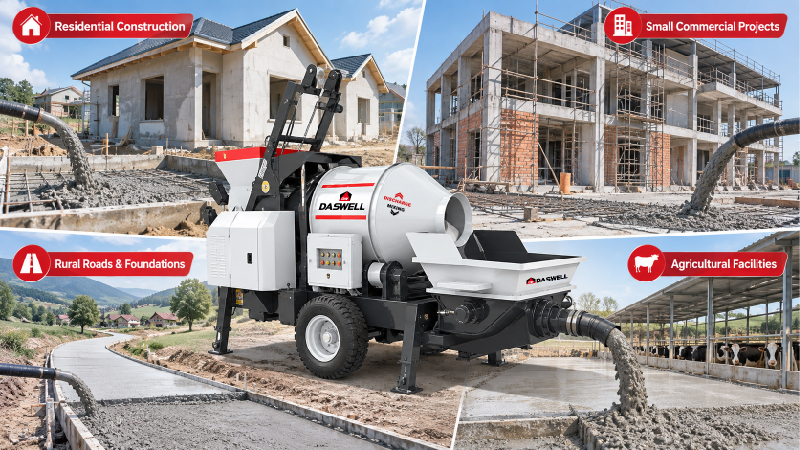
Small Residential Construction
Rural houses, small residential buildings, and other low-rise construction projects often require concrete to be prepared and delivered in batches according to the construction schedule.
Small & Medium Infrastructure Projects
Road construction, drainage systems, foundation work, and other small and medium infrastructure projects often require concrete to be prepared and delivered directly on-site.
Remote Construction Sites
When working in remote areas, construction teams may face limitations in equipment transportation, available site space, and labor arrangements.
Projects with Limited Equipment and Labor Resources
For construction teams with limited equipment and staff, operating several separate machines at the same time can make daily work more difficult.
What Should You Consider Before Choosing a Concrete Mixer Pump?
Mixing and Pumping Capacity
Mixing capacity and pumping capacity are the first two specifications to consider when choosing a concrete mixer pump.
The mixing output should be sufficient to meet the project’s concrete demand, while the pumping capacity needs to keep up with the actual construction schedule.
If the mixing system works significantly faster than the pumping system, the concrete supply and delivery processes may become unbalanced. Therefore, it’s important to consider the performance of both systems rather than focusing on just one.
Pumping Distance and Height
Different construction projects have different requirements for concrete pumping distance and height.
For example, a residential foundation project has different pumping requirements from a project that needs to deliver concrete to higher floors. These differences affect the pumping pressure and delivery capacity required.
When choosing a machine, consider the actual horizontal pumping distance, vertical delivery height, and pipeline layout to make sure the equipment can meet the project’s requirements.
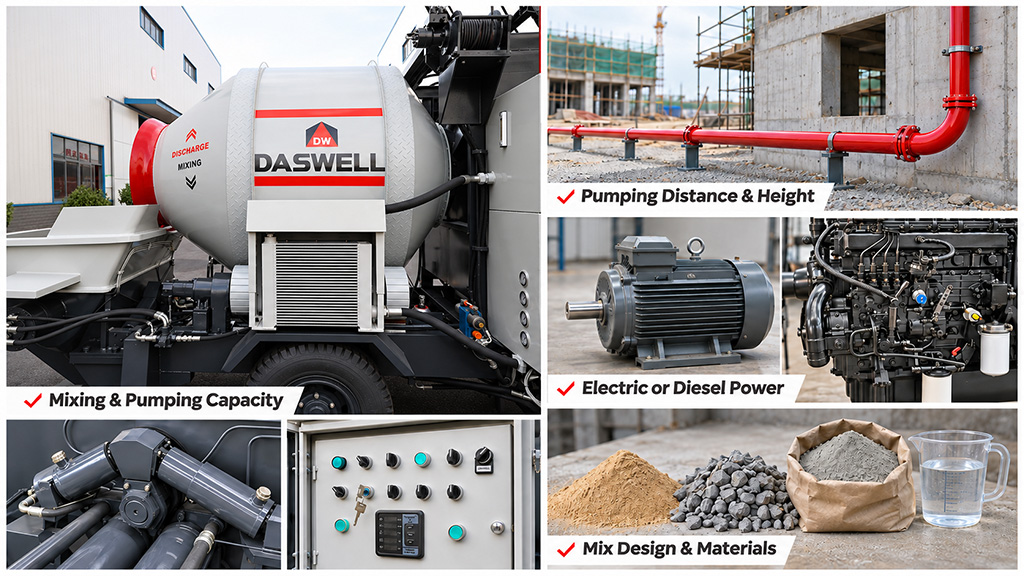
Power Configuration
A concrete mixer pump needs to be equipped with a suitable power system based on the conditions at the construction site.
If a stable power supply is available and meets the machine’s requirements, an electric model may be a good choice. For projects where electricity is difficult to access or the construction site is relatively remote, a diesel-powered model is worth considering.
Before making a decision, also consider whether fuel or electricity can be supplied reliably and whether the machine will be convenient to operate and maintain over the long term.
Concrete Mix and Material Requirements
Last but not least, different construction projects may require different concrete mix designs. Factors such as aggregate size, grading, and mixing ratios can all affect the mixing and pumping processes.
Choosing the right concrete mix is important not only for the final construction quality but also for smooth pumping. The aggregate size and concrete workability need to be suitable for the equipment to ensure reliable operation.
By combining two steps in one, a concrete mixer pump reduces the need to coordinate separate equipment, transfer materials between machines, and arrange multiple pieces of equipment on-site. This integrated design makes it easier to adapt to different construction environments and helps construction teams complete their projects more efficiently.