How to Choose the Right Concrete Pump for Your Project Size
Choosing a concrete pump is not about buying the biggest machine you can afford. It’s about getting a setup that matches your project size, your site conditions, and the way concrete actually arrives and gets placed on your jobs. When the pump is right, the hose flow stays steady, the crew doesn’t fight the pipeline, and you finish pours with fewer stops.
Below is a practical way to pick between a concrete mixer pump, trailer concrete pump, and concrete boom pump, with a few details that buyers usually learn only after they’ve run a pump for a while.
1. Select a concrete pump based on project scale
Square meters don’t tell the full story. A concrete pump cares about three things:
- How fast you need to place concrete (your real m³/h on site, not the brochure number)
- How hard the push is (distance, height, bends, and hose handling)
- How stable the feed is (continuous supply vs stop-start loading)
If any one of these is off, the pour slows down—no matter how strong the pump is.
A quick site-friendly checklist:
- Pour volume per shift and the time window you can’t miss
- Horizontal run + vertical rise (and how many bends)
- Access: can a truck park and set outriggers, or do you need a towable unit?
- Concrete supply method: ready-mix trucks, on-site batching, or manual feeding
- Mix basics: slump range, aggregate size, and whether the mix stays consistent in heat
2. Choose a concrete pump suitable for your construction site
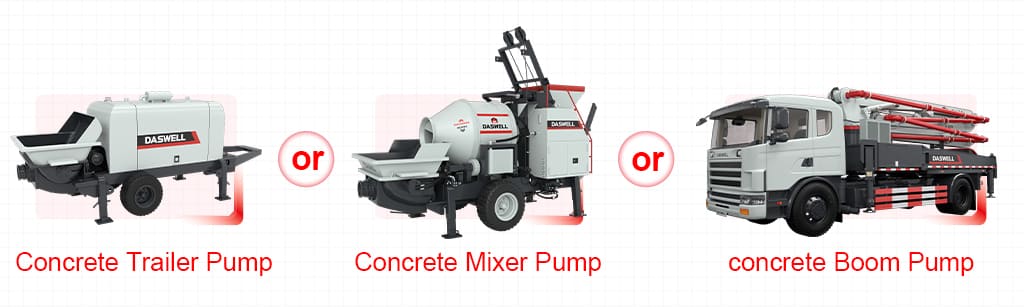
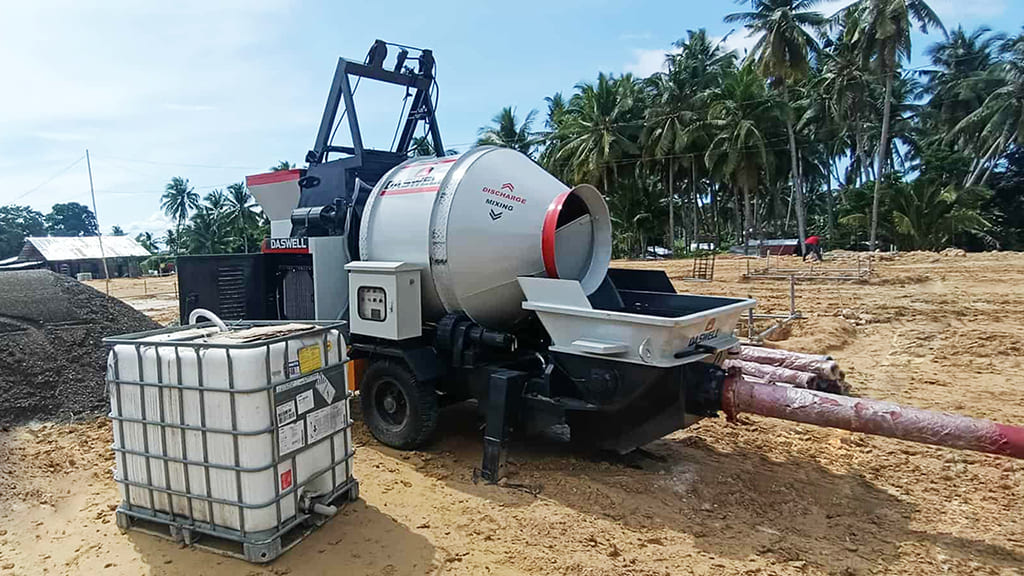
A. Concrete Mixer Pump: Suitable for small to medium-sized projects; one machine is sufficient
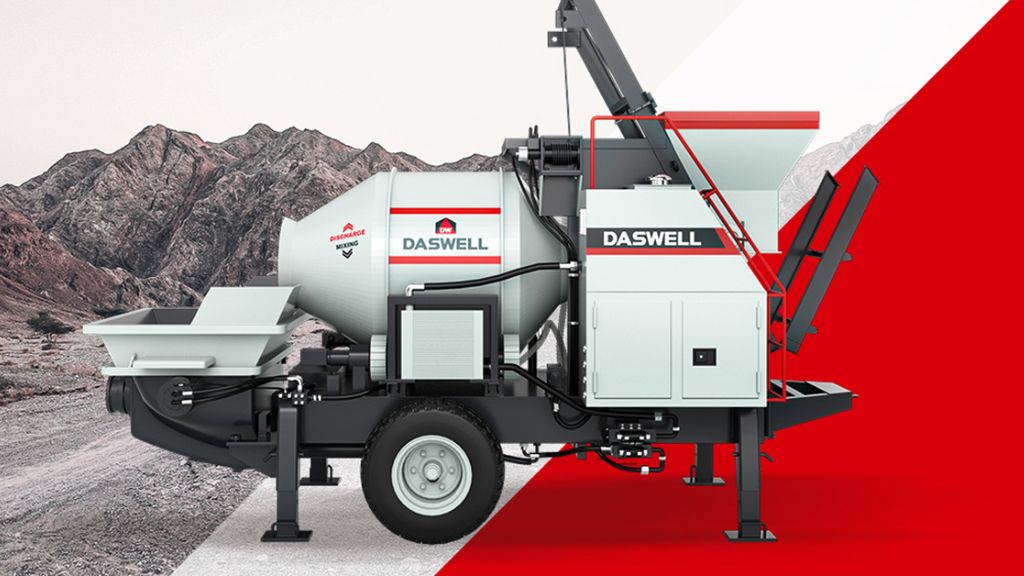
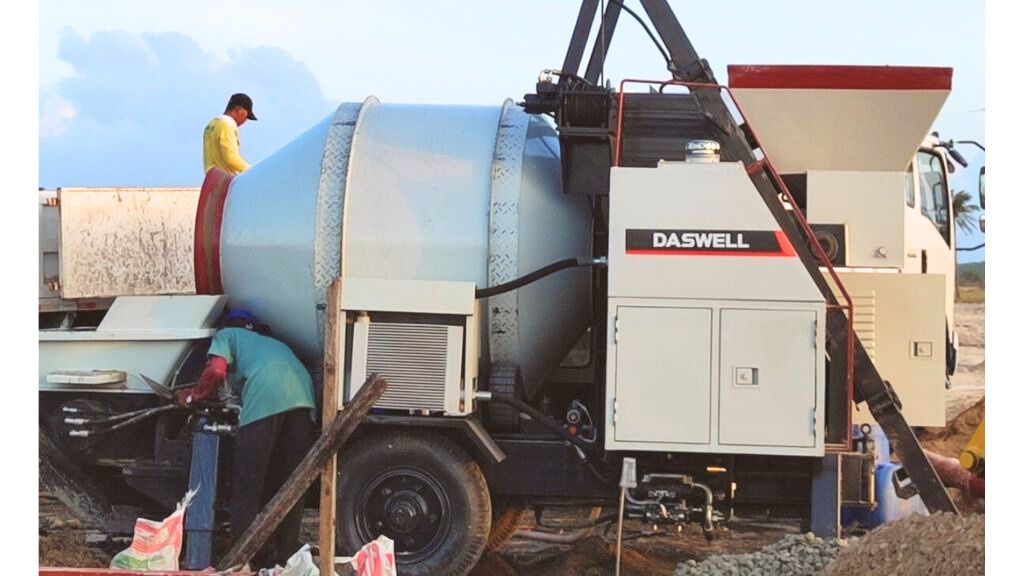
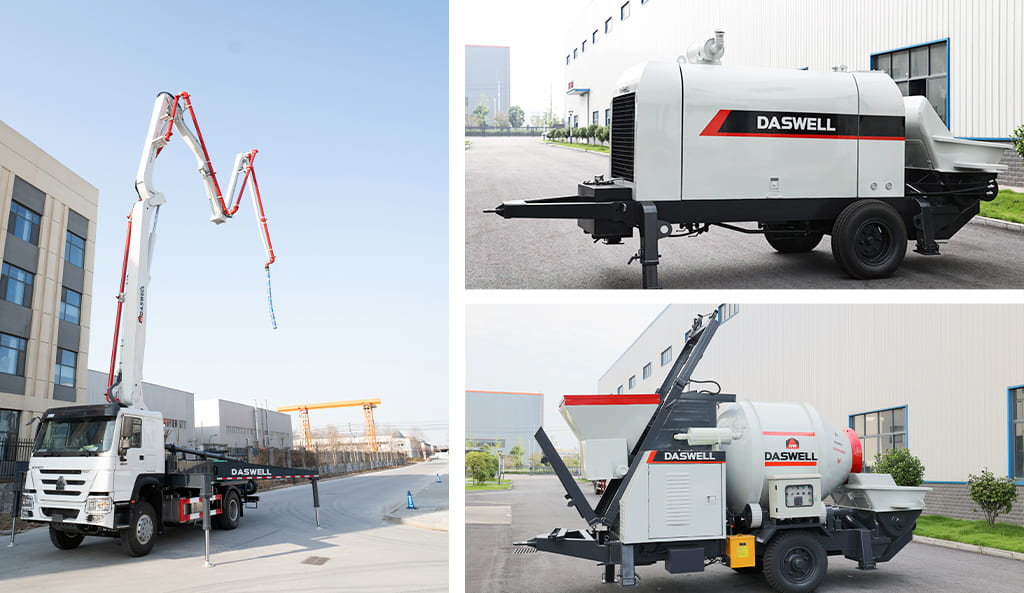
A concrete mixer pump combines mixing and pumping in one unit, which makes it a strong fit when your site does not want extra machines or extra coordination.
Pick a concrete mixer pump if:
- Your pours are small to medium and you want a simple routine
- Sites are scattered, rural, or change often
- Ready-mix delivery is not always reliable, or you prefer on-site control
- Your crew is small and you don’t want multiple handoffs
Where it performs well:
- House foundations, small commercial slabs, drainage, retaining walls, farm projects, hillside builds
- Jobs that need a steady hose flow rather than extreme output
A simple reality: on smaller projects, delays usually come from workflow. A concrete mixer pump reduces the “waiting points” because mixing and pumping happen in one process.
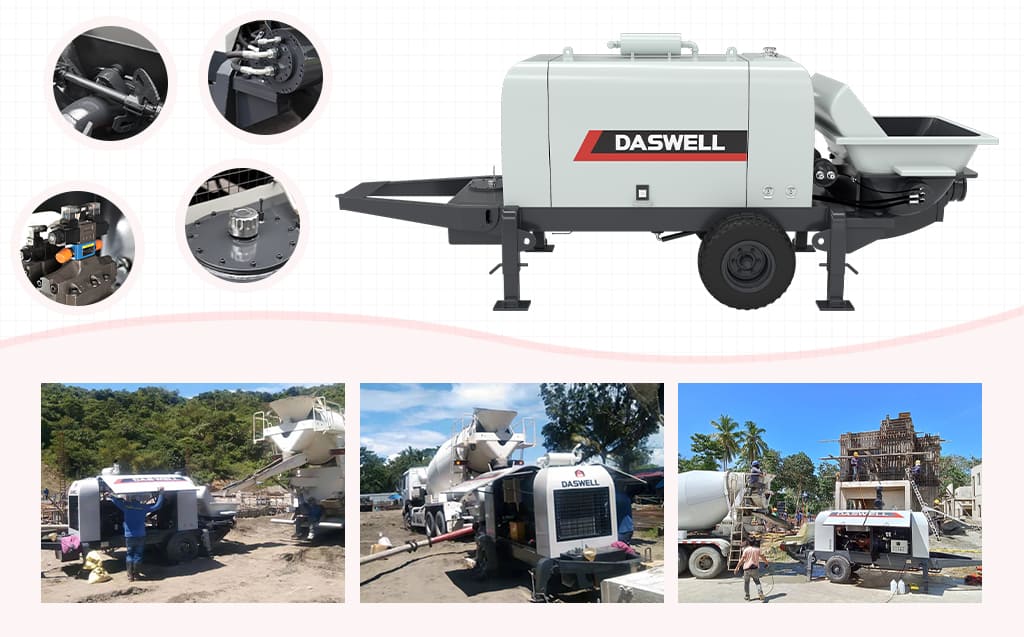
B. Trailer Concrete Pump: for mid-size jobs with longer lines and repeat pours
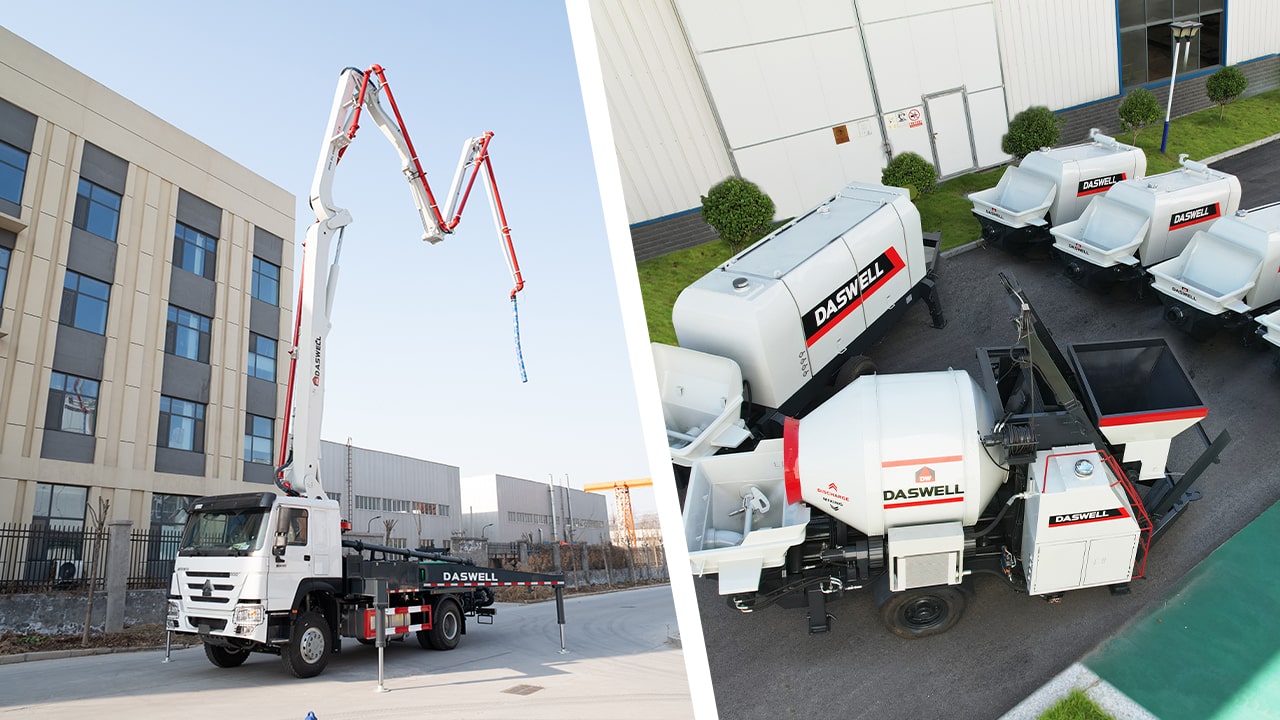
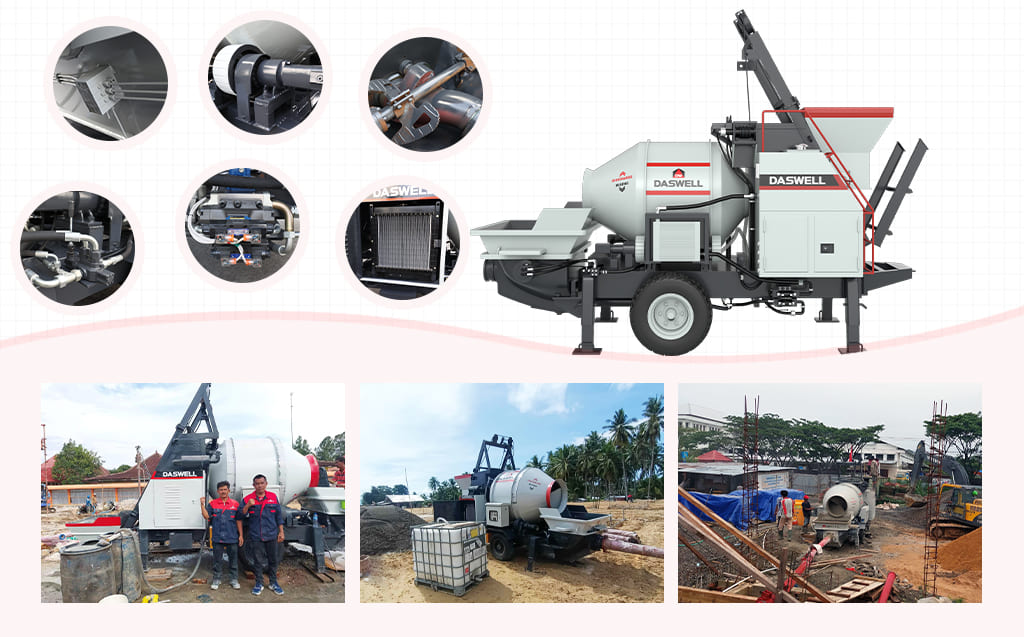
A trailer concrete pump is a dedicated pumping unit. It works best when your concrete supply is stable—either from ready-mix trucks or an on-site concrete batching plant.
Pick a trailer concrete pump if:
- You often pump through pipelines over longer horizontal distances
- You pour regularly and want a consistent pumping routine
- Sites are narrow or busy, but you can run a line to the pour zone
- You want flexibility: different line layouts, different pour areas, different days
Why mid-size contractors like it: a trailer concrete pump gives you more freedom on pipeline layout than a boom setup, and it’s easier to transport than a truck-mounted boom when the jobsite is tight.
C. Concrete Boom Pump: for big pours, height, speed, and hard-to-reach placement
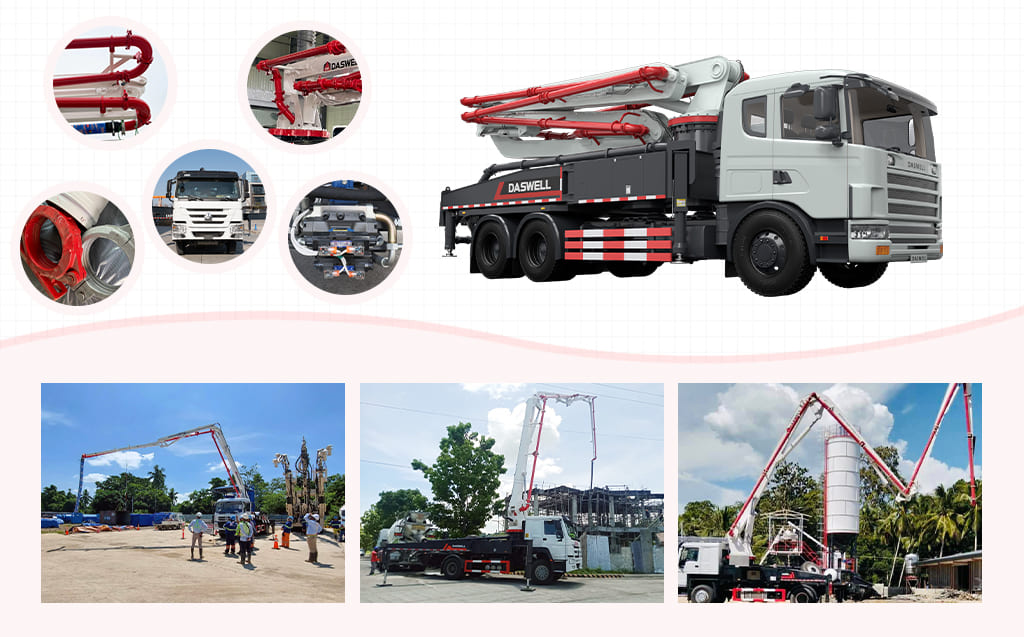
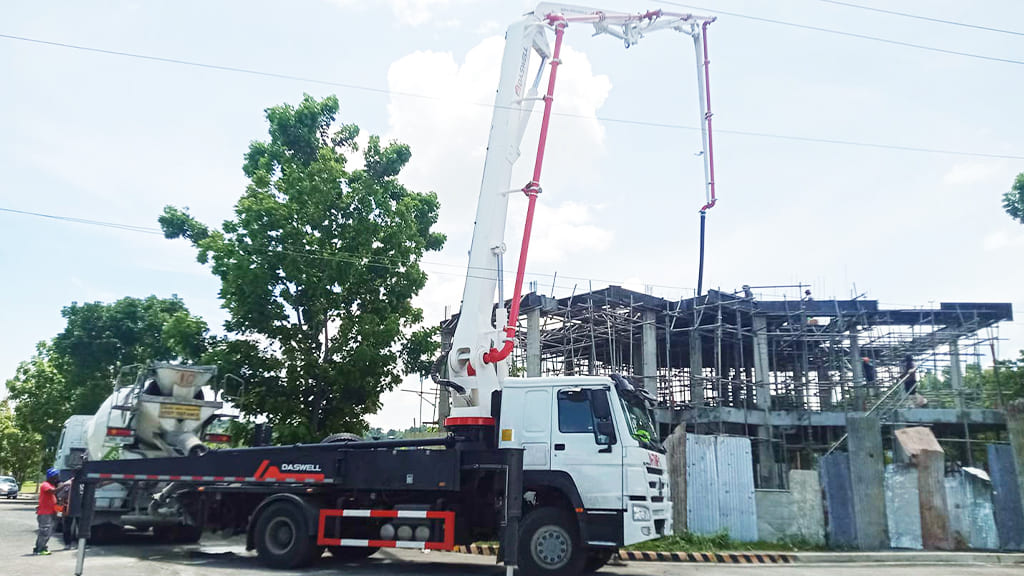
A concrete boom pump is mainly about placement efficiency. When volume is high or access is difficult, the boom saves time because it puts concrete where you need it with less ground pipeline.
Pick a concrete boom pump if:
- Your pours are large and time-sensitive
- You place at height or across obstacles (formwork, rebar mats, restricted zones)
- You need wide coverage and quick repositioning
- You want cleaner placement control with less hose dragging on the ground
On large projects, a concrete boom pump often reduces labor pressure. That matters when your crew is already stretched and the pour window is tight.
3. Output sizing: focus on real placing rate
A practical way to size a concrete pump is to work backwards from your pour plan.
Example:
- You need 80 m³ and you want it placed in 5 hours
- That’s 16 m³/h site target
- Add buffer for truck changeover, repositioning, and breaks (real pours are never perfectly continuous)
So instead of buying exactly “16 m³/h,” you choose a pump that can maintain that rate without running at the edge all day. A machine operating comfortably usually gives smoother flow and fewer stop-start issues.
4. Distance and pipeline layout
Many buyers underestimate this part. The same concrete pump can feel strong on one job and weak on another because the line setup changes.
Check these before deciding:
- Vertical rise: pumping upward demands stability in mix and feed
- Horizontal run: long pipelines increase friction
- Bends and reducers: every tight bend adds resistance
- Hose length at the end: too much hose handling can slow the pour
If your jobs often require long lines, a trailer concrete pump usually gives you the best balance of transport + line pumping capability. If the main challenge is height and reach, a concrete boom pump becomes the cleaner solution.
5. very important mixing ratio of concrete
If the concrete isn’t pumpable, the best concrete pump will still struggle. To keep pumping reliable:
- Keep slump consistent load to load
- Avoid oversized aggregate for the pipe diameter
- Use well-graded sand (poor grading is a classic blockage trigger)
- Prime the pipeline every start (mortar or slurry first)
- Maintain a steady feed rhythm—big pauses create pressure swings
A lot of “pump problems” are actually mix or feeding problems. When buyers fix those two, the pump suddenly looks much better.
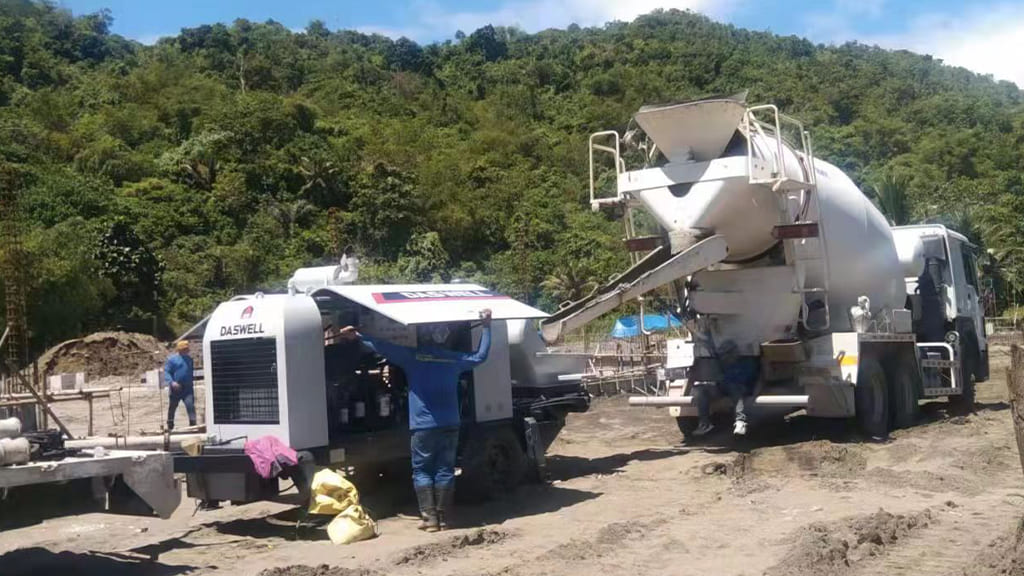
Quick guide by project size
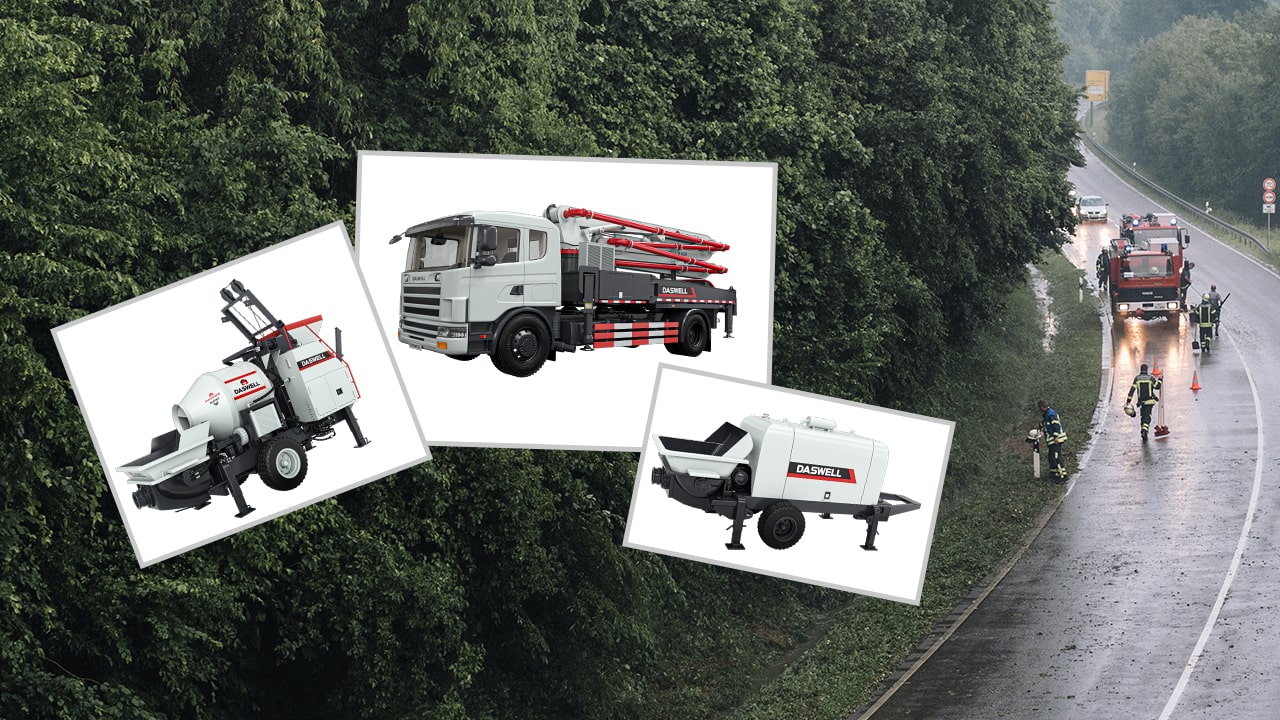
- Small projects: choose a concrete mixer pump for integrated “mix + pump” workflow
- Mid-size projects: choose a trailer concrete pump for flexible line pumping and repeat pours
- Large projects: choose a concrete boom pump for high-volume placement, reach, and speed
To pick the right concrete pump, prepare:
- Typical pour volume per day and your target hours per pour
- Horizontal distance + vertical height
- Jobsite access and setup space
- Concrete supply method (ready-mix or on-site batching)
- Aggregate size and slump range you normally use
- Whether you need frequent repositioning or wide placement coverage
Related Products to Enhance Your Concrete Pumping Efficiency
At DASWELL, we offer a wide range of machinery and equipment. In addition to concrete pumps, consider these complementary products:
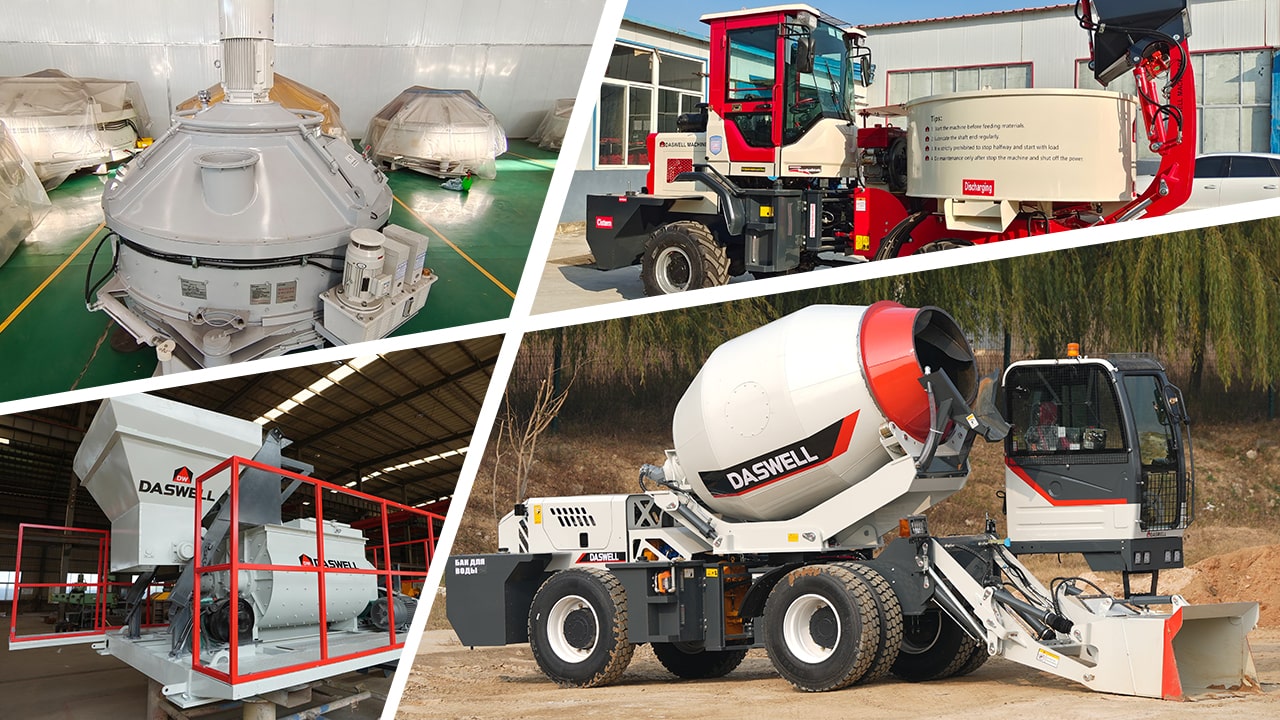
- Self loading Concrete Mixer: Ideal for smaller projects where mixing and transportation need to be integrated into one mobile unit. It simplifies your workflow and increases flexibility on site.
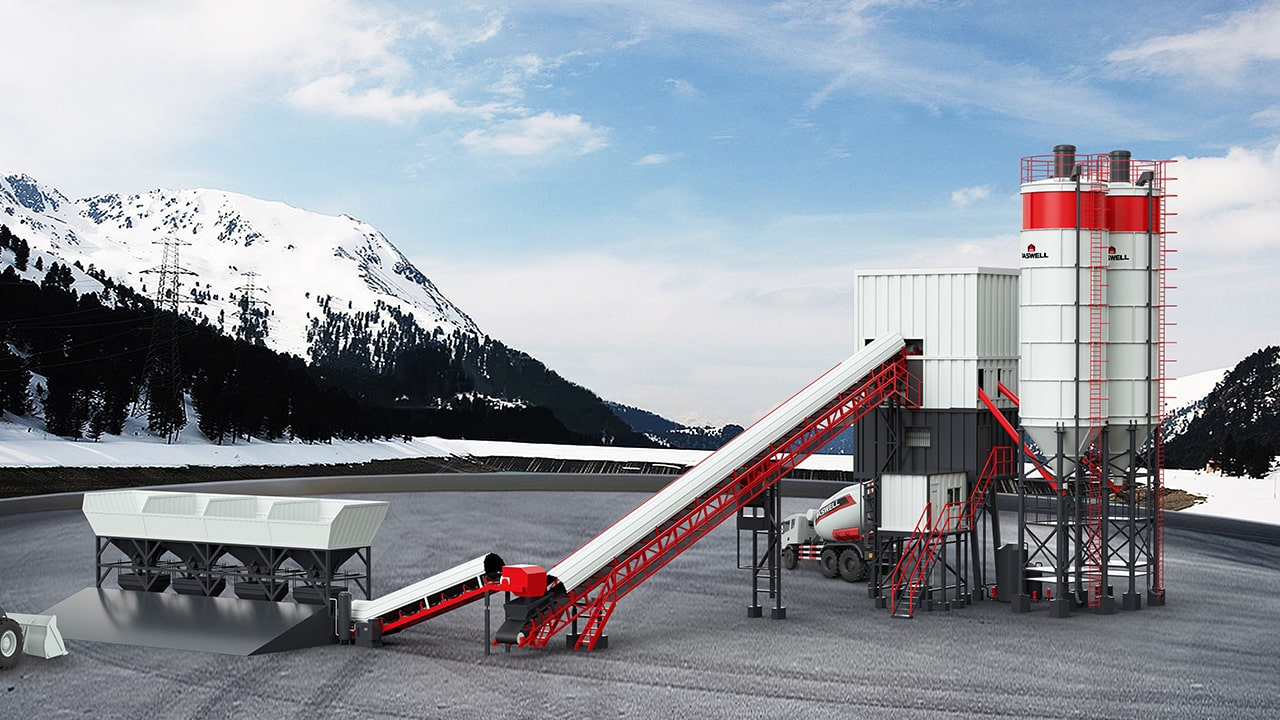
- Concrete Batching Plant: Whether you’re working with large pours or a series of small jobs, a concrete batching plant ensures a steady, reliable supply of concrete at the right consistency for every job.
- Concrete Mixer Truck: Our transit mixers offer reliable, long-distance transportation of ready-mixed concrete.
Contact Us for the Best Concrete Pump Solutions
Our experts at DASWELL are here to assist you in selecting the ideal machine based on your specific needs. Whether you’re working on a small residential build or a large-scale industrial project, we provide the best concrete pumping solutions tailored to your requirements.
For more information or a free quote, contact us now!