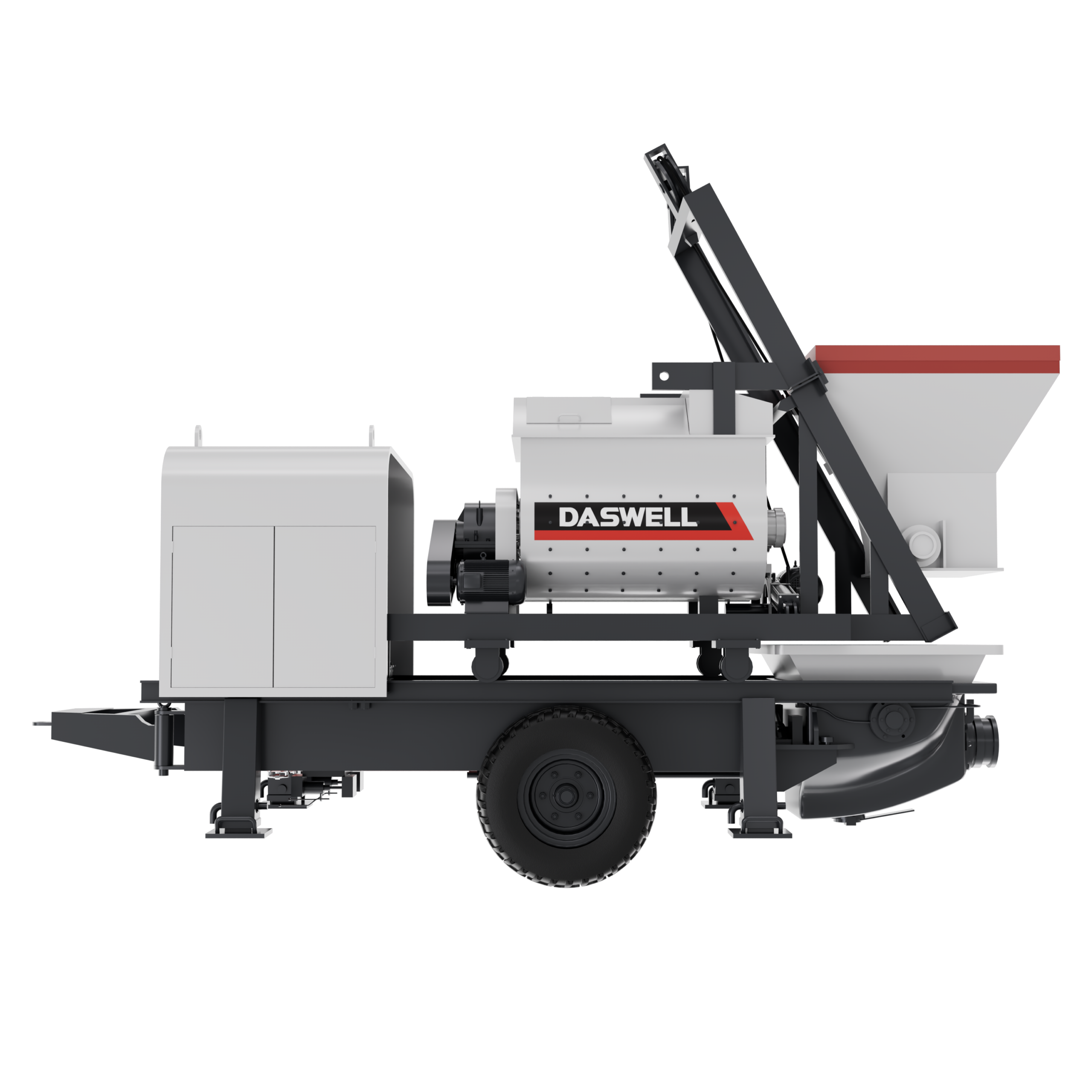
Twin Shaft Concrete Mixer Pump
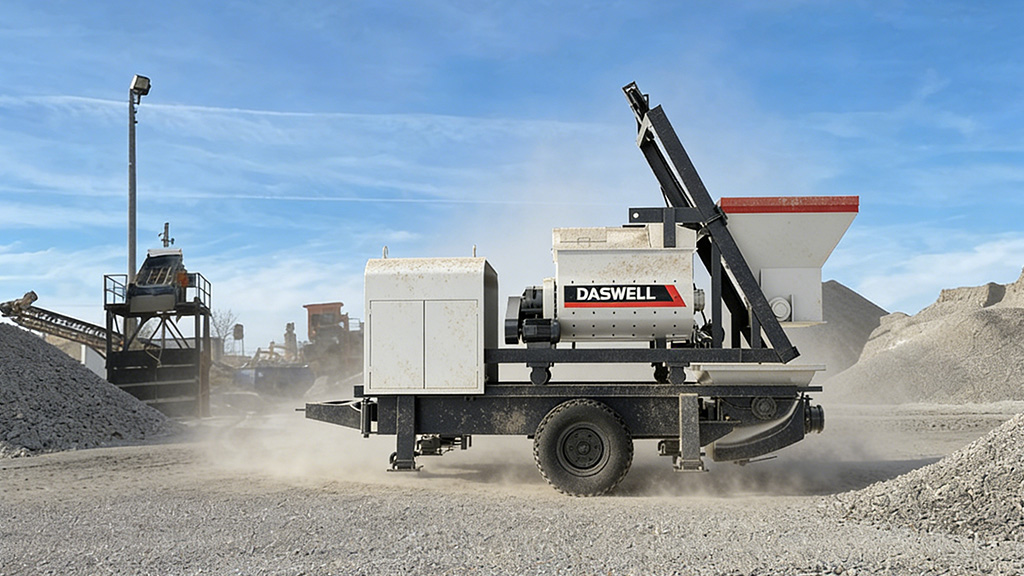
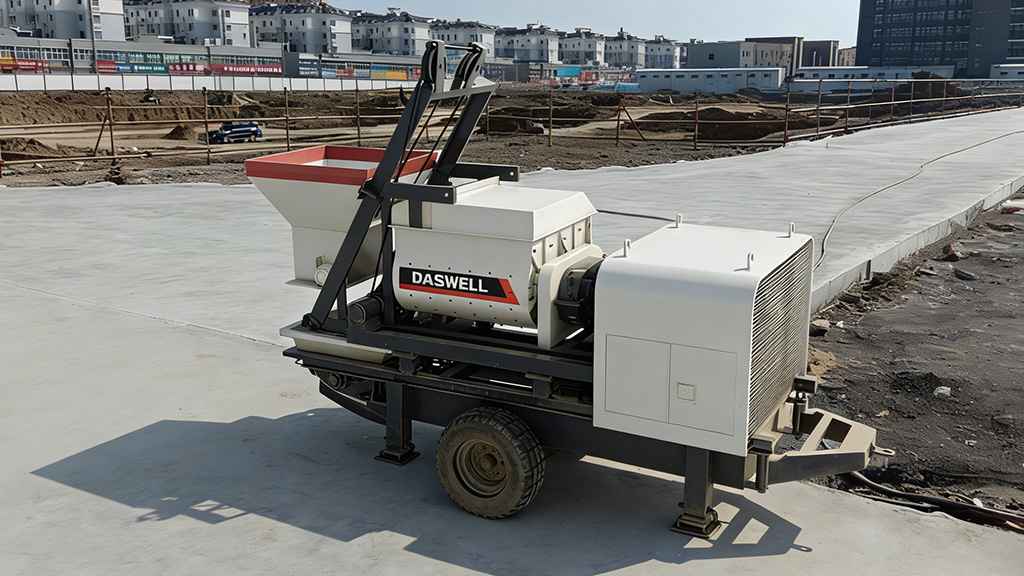
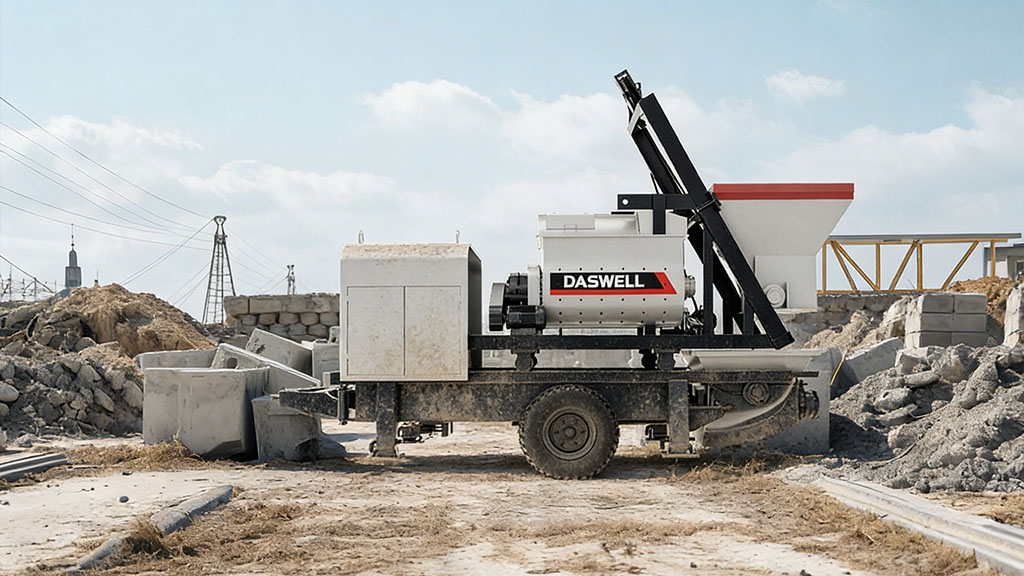
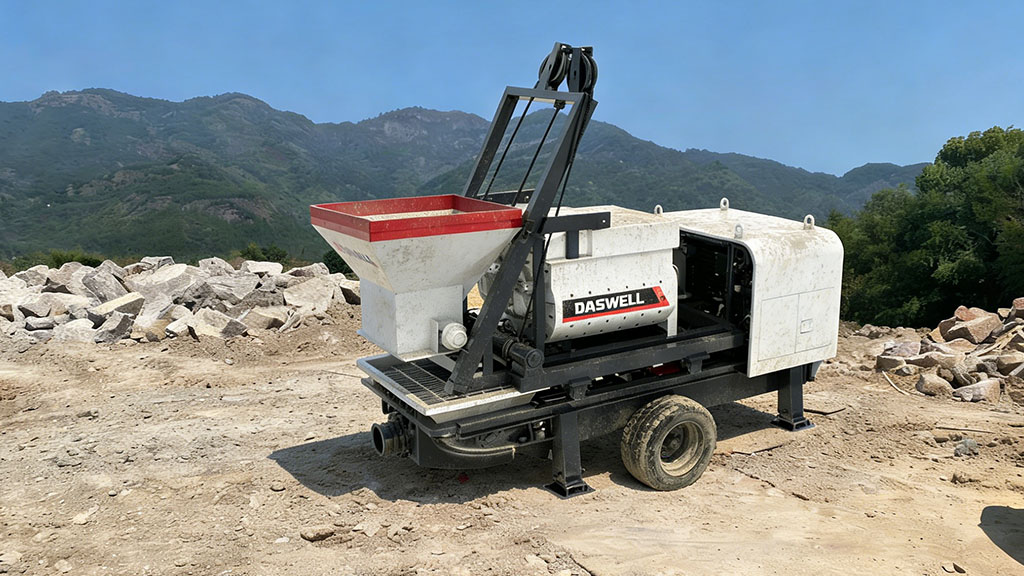
The Twin Shaft Concrete Mixer Pump is a trailer-mounted solution that combines forced twin-shaft mixing and concrete pumping in one compact unit.
Built for contractors who need more uniform mixing and a steady pumping rhythm, it supports on-site concrete production and placement with fewer workflow interruptions.
Compared with drum-type mixer pumps, twin-shaft forced mixing improves batch consistency and helps deliver smoother pumping performance on real job sites.
Mix and pump in one compact unit for efficient on-site concrete delivery
A twin shaft concrete mixer pump integrates forced twin-shaft mixing and concrete pumping in one trailer-mounted machine. It is designed for contractors who need consistent concrete quality and a steady pouring rhythm on site. Twin shaft forced mixing improves batch uniformity and helps the pump receive a stable feed, supporting smoother discharge and more predictable placement.
Key Advantages of Twin Shaft Concrete Mixer Pump
- Forced twin-shaft mixing for uniform concrete and stable feeding
- Mix → discharge → pump workflow in one unit, simpler site coordination
- Trailer-mounted mobility for easy relocation between jobs
- Suitable for small-to-mid projects, tight sites, and limited crews
- Stable output with proper priming and continuous feeding rhythm
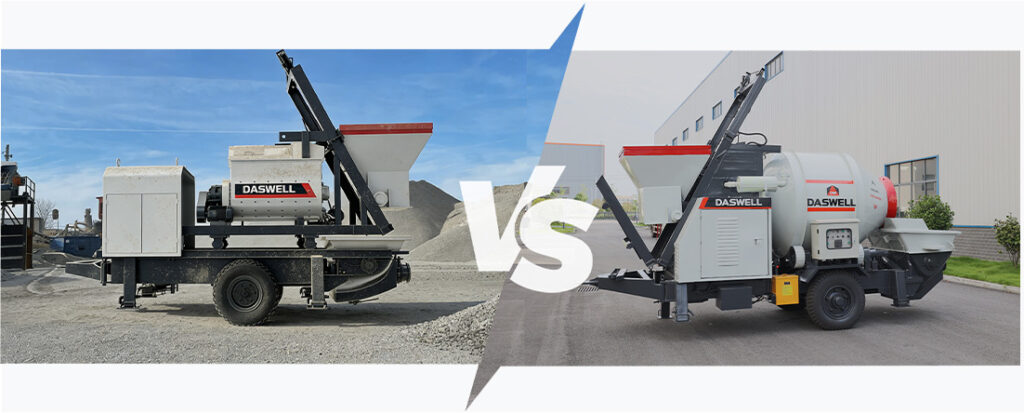
Forced Twin Shaft vs. Drum Type concrete Mixer Pump
A forced twin shaft mixer pump (twin shaft concrete mixer pump) uses a twin-shaft forced mixing system to blend materials through strong shearing and counter-rotating action. In comparison, a drum type concrete mixer pump relies mainly on rolling and lifting the mix inside the drum.
Why the forced twin-shaft design matters on real job sites:
- Faster, stronger mixing action: twin shafts actively cut and fold the material, which improves mixing efficiency.
- More uniform concrete: better distribution of cement paste, sand, and aggregate helps reduce dry pockets and segregation.
- More stable feeding to the pump: a consistent mix supports steadier pumping pressure and a smoother discharge rhythm.
- Better for continuous work: when you need to keep pouring without long pauses, stable mix quality helps reduce interruptions.
In short, if your priority is mix uniformity and stable pumping, a forced twin-shaft concrete mixer pump is often the better choice than a drum-type mixer pump.
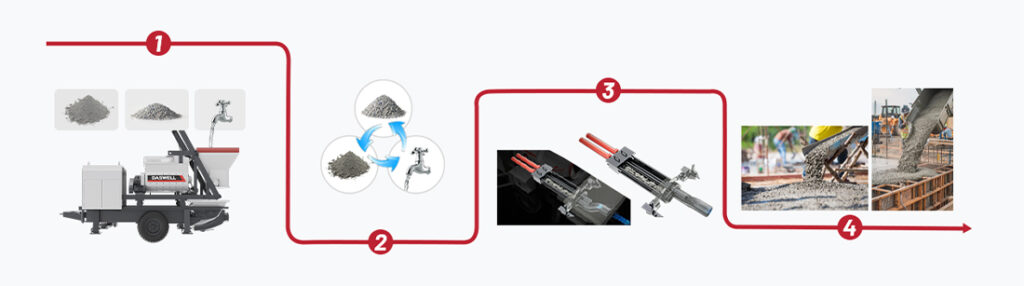
Twin Shaft Concrete Mixer Pump Working Principle
- Load cement, aggregates, water (and admixtures if needed).
- Twin shafts deliver forced mixing for consistent batches.
- Concrete discharges into the pumping chamber.
- The pumping system delivers concrete through the pipeline to the placement point.
Typical Applications of Twin Shaft Concrete Mixer Pump
- Foundations, footings, beams, columns
- Slabs, floors, driveways, sidewalks
- Small commercial pours and renovation projects
- Rural / remote sites with unstable ready-mix supply

Twin Shaft Concrete Mixer Pump Technical Parameters
|
Model |
TMP40 |
TMP50 |
TMP60 |
|
Max. Theoretical Output(m³/h) |
40 |
40 |
67 / 43 |
|
Max. Delivery Pressure(MPa) |
8 |
8 |
13 / 7 |
|
Main Motor Power(kW) |
37 |
37 |
75 |
|
Concrete Cylinder (Dia. × Stroke) |
Φ200 × 977mm |
Φ200 × 977mm |
Φ230 × 1400mm |
|
Overall Dimensions (L × W × H) |
5400 × 2150 × 3250mm |
8085×2950×3450mm |
8250×3100×3400mm |
|
Total Weight(kg) |
6800 |
13580 |
5800 |
How to Choose: Twin Shaft Concrete Mixer Pump TMP40 vs TMP50 vs TMP60
- TMP40: Best for compact job sites and small-to-mid pours where you want a simpler setup and easy relocation. A practical choice when space is tight and the crew needs a straightforward mix → pump workflow.
- TMP50: Designed for crews who want the same practical output class with a larger, more robust chassis and structure. A good fit when your site conditions are tougher, working time is longer, or you prefer more configuration margin for stability and durability.
- TMP60: Ideal when pipeline conditions vary. It supports dual working modes (higher output / higher pressure), helping you match the machine to different delivery distances, vertical height changes, and pipe layouts.
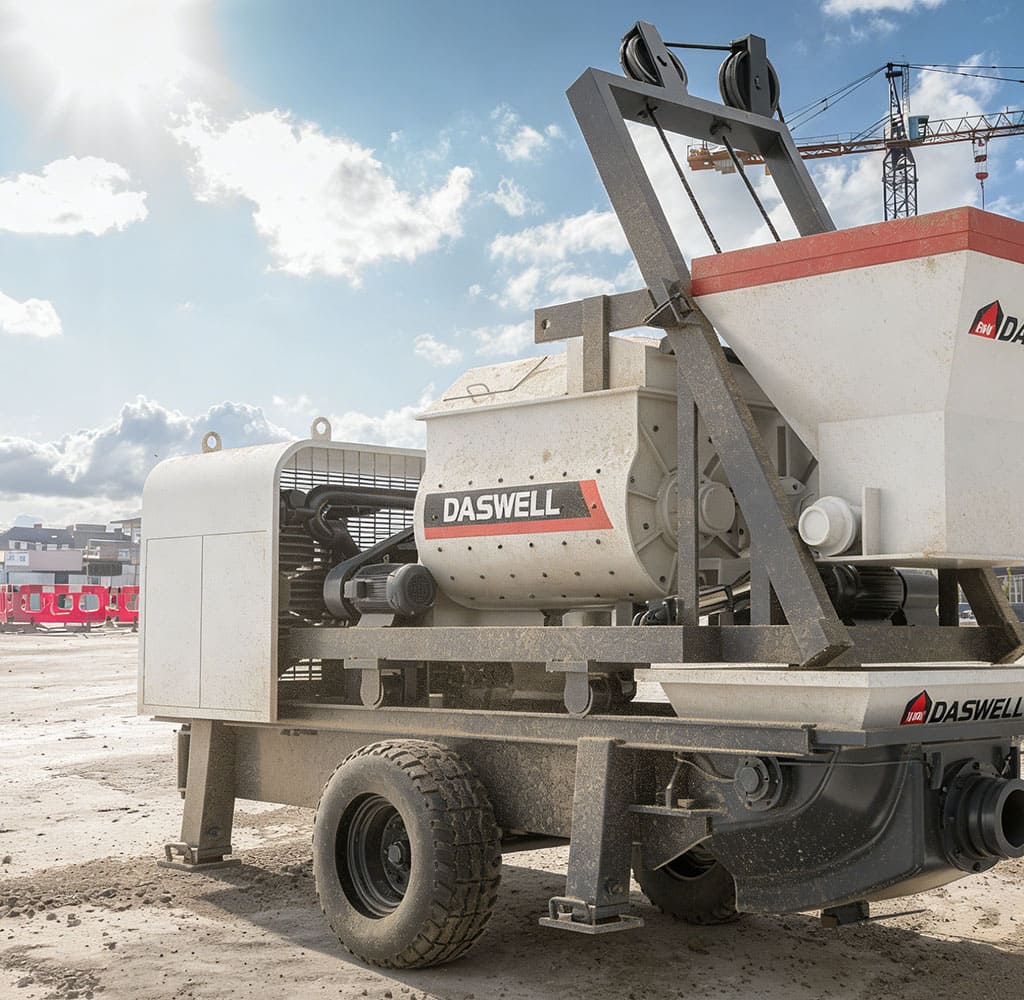
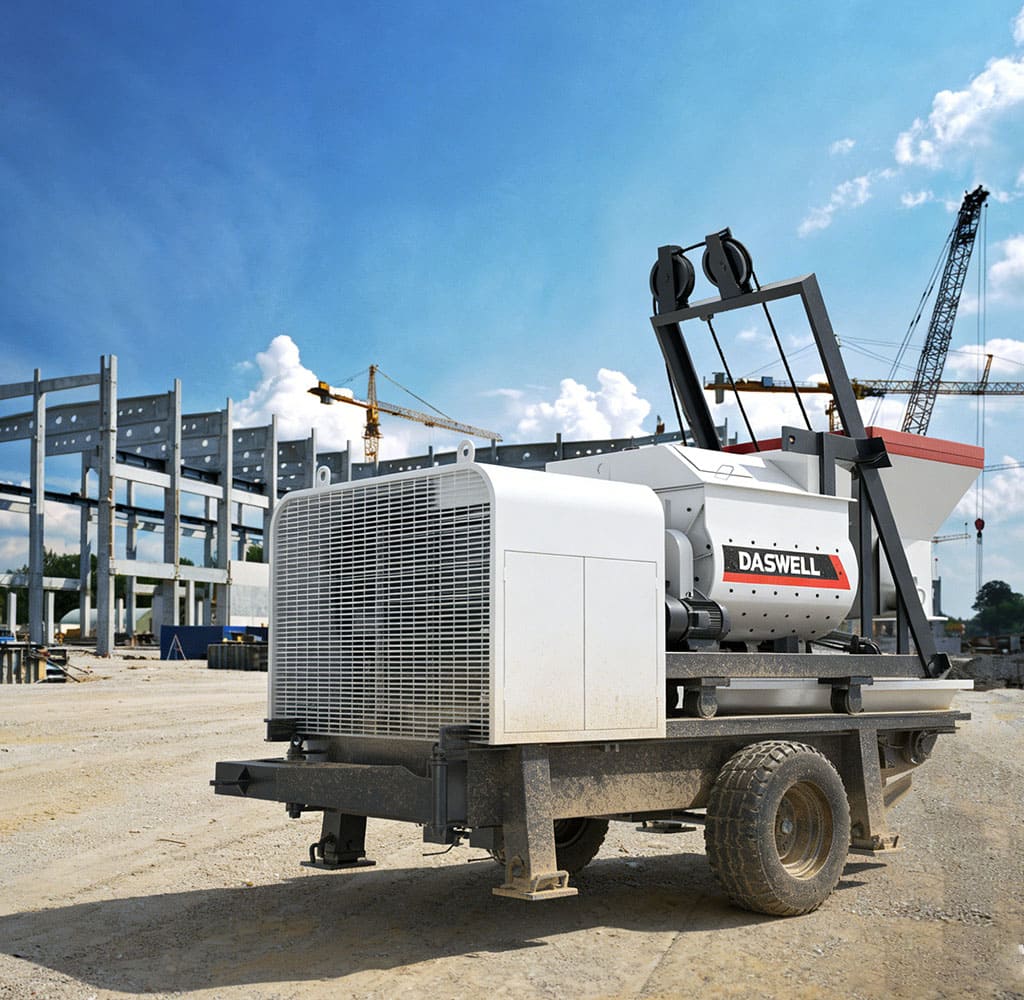
Twin Shaft Concrete Mixer Pump Component Highlights
1. Hydraulic Oil Tank & Steel Pipes
The hydraulic oil tank and steel pipes are treated with pickling and phosphating. Hoses and valve blocks are cleaned in dedicated flushing tanks. After diesel flushing, components go through high-temperature treatment and compressed-air blow-off to reduce residual impurities. This helps keep the hydraulic oil circuit cleaner, lowering failure risk and supporting longer service life.
2. Valve Block, Valve Group & Hydraulic Hoses
The valve group, oil tank, and hydraulic pipelines can be cleaned through high-pressure diesel flushing, improving oil-path cleanliness. Cleaner oil and cleaner lines help reduce hydraulic component wear and improve long-term reliability.
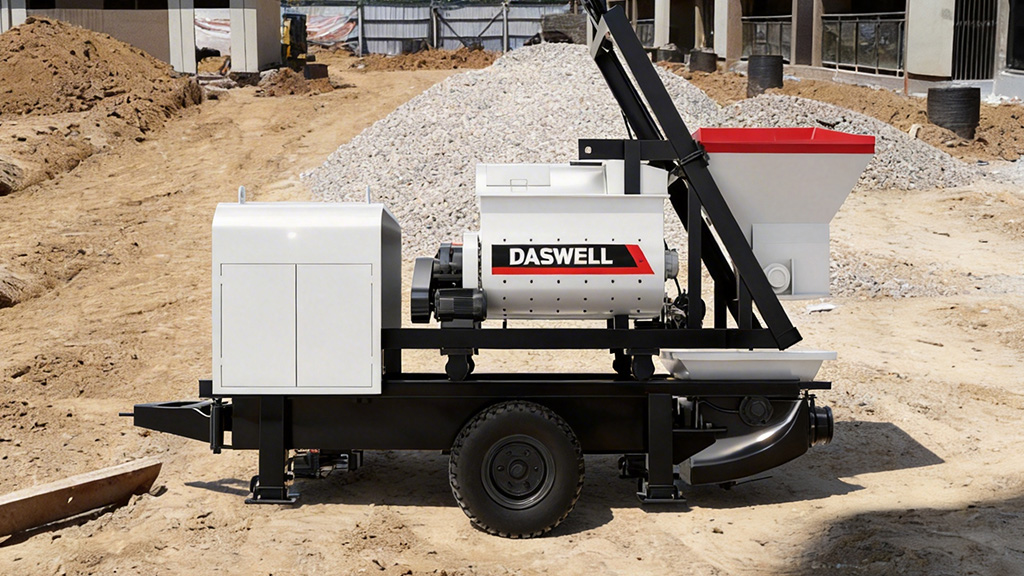
3. Hydraulic Oil & Commissioning
Genuine hydraulic oil is used.
Each unit undergoes extended commissioning with staged pressure testing at high / medium / low pressure to ensure stable operation before delivery.
4. Accumulator (Energy Storage Unit)
An accumulator is installed with a current compensation device, helping buffer performance when site voltage or current is unstable.
Twin Shaft Mixer Pump Jobsite Checklist For Smooth Pumping
Before you start pumping, confirm these items on site:
- Mix consistency: Use a pumpable mix with stable grading—avoid dry pockets and sudden slump changes.
- Aggregate control: Keep aggregate size and sand ratio consistent throughout the pour.
- Prime the line: Always prime the pipeline with slurry/mortar before pumping concrete.
- Continuous feeding: Avoid long pauses; keep a steady, uninterrupted feed to maintain stable pressure.
- Pipeline layout: Reduce tight bends and unnecessary connections; check clamps and seals for air leaks.
- End-of-job cleaning: Clean the hopper, mixing chamber, and pipeline immediately after work to prevent hardened buildup.
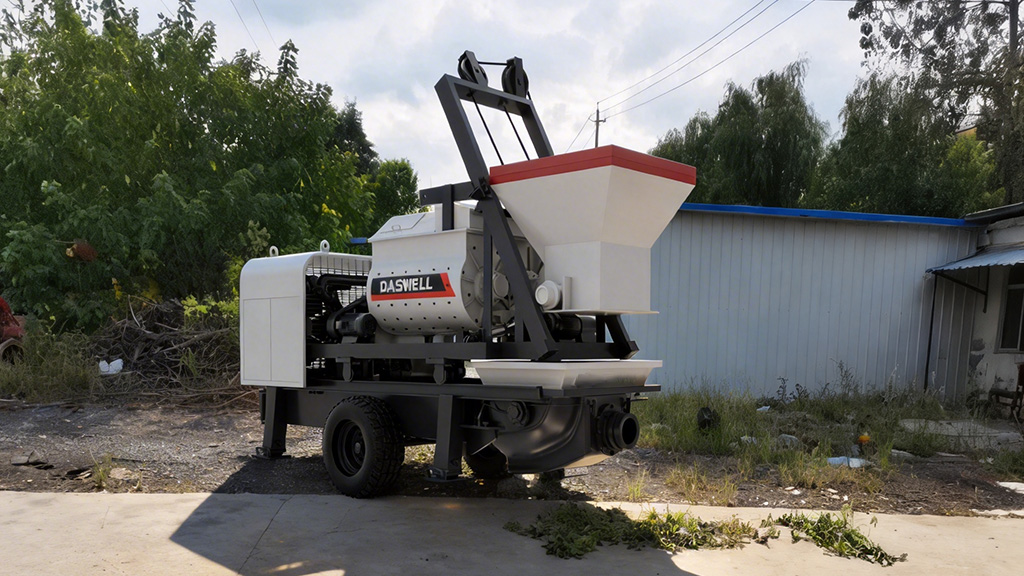
Engineering Case & Service Assurance
- Standardized specification: consistent configuration, no confusion about options.
- ISO-based quality control: structured quality procedures; key components selected for reliability.
- Tested before delivery: every unit is inspected and run-tested prior to shipment.
- Documentation available: inspection records can be provided upon request.
- Responsive support: technical assistance and spare parts support to minimize downtime.
Options & Support
To recommend a suitable model and setup, please share:
- Job type and target output (m³/h)
- Pipeline distance and vertical height
- Aggregate size and mix type
- Power supply requirements and site conditions
We will suggest a configuration and accessory package that matches your actual jobsite workflow.
Contact Us
Contact DASWELL to get a quote on TMP40 / TMP50 / TMP60 twin shaft concrete mixer pump, plus a recommended pipeline setup for your project.